Thursday, May 31, 2007

We have this problem called diversity

It's been quite a hectic week which can be also seen in the frequency of posts during the last few days. I am currently rather busy with organising a journalistic workshop taking place next week in Morocco and also preparing a big funding application to the European Commission. At times I must confess that I feel more like a juggler than an organiser.

We had a chat at work about our current focus, personal experience of diversity. The ECF is working on a publication showing how we as an organisation address the issue in our work. I have promised to contribute on youth cultures so need to find time for some intellectual work during the next weeks.

The thing I find myself constantly pondering is the concept of community. Especially when working with immigrant groups, the word community is a frequent visitor in the sentences. People wish to address certain communities, get an access to a community and what have you. On a political level this is very much the way multiculturalism is seen, a society consisting of smaller communities.

I find myself running into problems with this notion especially when dealing with youth. I fear often that we impose an identity on people without asking them whether they want it and then we make assumption on what does this identity - as in ethnic or religious background - means to them and their daily life. I know several friends of mine with an immigrant background who have been driven into situations where they are being asked to interpret something that people with the same background are doing, like for instance a Moroccan businessman would by definition have some greater knowledge into the minds of Moroccan teens.

What I would like to see us working on are identities that people choose themselves and working with communities people associate themselves with. On a simple level I could see this working in a way that we see the online gaming community as a relevant community and the visitors of a local mosque as another relevant community (sometimes overlapping) but we do not expect that someone from the gaming community could by definition represent all teenagers owning computer games or that an imam can by definition represent all Muslims in his neigbourhood.

The headline of this post is a sentence I hear very often. The mindset behind it advocates for a simple straight-cut solution that would "take care" of diversity for good. I really detest this approach. With the educational level and access to information most of us, we should be able to do better and accept complexity and mediation as an exciting daily practice.

Saturday, May 26, 2007

Release The Stars


Zurich airport
Originally uploaded by amsterboy
Today has been a good day. After having a second brilliant session with the design students in Zürich, I made my way to the airport with the new Rufus Wainwright CD in my iPod. Sunny streets and his flirtatiously clever voice in my head was just the ultimate start for the weekend. And just to make my sister jealous I need to mention the perfectly salty crispy bretzel at the railway station.

By the way the Zürich airport is quite an experience. I would dare to name it as the most impressive airport I have seen. The share amount of empty space, the size of the airport compared to the size of the city (only like 300.000 inhabitants) and the fact that the airport is completely spotless all support an image of a city quite comfortable with its prosperity.

In our second session today with the students we focused on self-representation, migration and contextualisation. We compared for instance presenting a video on one's own MySpace site and on YouTube which is much less contextualised. The longest discussion was on "the story" behind a video of a teenager girl shaking her ass in her bedroom to 50 Cent's openly sexist song Candy Shop. The group slightly divided between those who did not see a reason to worry and those seeing signs of a lack of parental control.

After watching a lot of oneminutes, hip hop videos and parkour videos we dived into the question whether there are differences in the visual languages based on the teenagers ethnicity or nationality. My own gut feeling is that the differences are much more on subjects and in the tone of communication but the visual structure follows relatively unified paths.

I also got a question on why we do not indicate on theoneminutesjr website whether the maker is for instance an asylum seeker or an orphan or belonging to a cultural minority in a country. My answer was that we give the context of youth but after that it is up to the young maker to decide which particles of their identity their wish to highlight in their video. I have lobbied and will keep on lobbying for strategies where young people - whether or not with an immigrant background - are allowed to choose the communities they wish to attach to.

Friday, May 25, 2007

It's a completely other world out there


50 Cent
Originally uploaded by weirdoldhattie
Sun is shining here in Zürich where I am for a lecture I gave this morning at the University of Zürich on visual languages and strategies of young Europeans. I flew here yesterday from London where my colleague and I met potential partners for next year's video festival in Amsterdam. We also took some time for ourselves and went to see a new musical called Wicked. It was fun, have to give you that. Just listen to the clips on the site. And I bought the new album from Rufus Wainwright which is just fab.

London was hitting record-high temperatures which both showed the city and its beauty at its best but also showed how little oxygen and how many people there are on that spot. Heathrow especially was horrendous with the air-conditioning not working properly and with the stinking carpets all over. The change to the slick Zürich airport (huge but empty) was dramatic.

But about the lecture. My main points were that the generational difference in media consumption and production is underestimated and that there are much more possibilities than risks in the current change. I also said that entertainment and popular culture offers great possibilities for political engagement which I sensed caused some people to raise their eyebrows.

I think the message went down well when I spiced it with funny comments from baby-boomers "But I mean when do you find the time to watch all these videos") and teenagers "Come on, don't give me that bullshit" and strong visual material from theoneminutesjr. I have spent the afternoon now compiling stuff from YouTube for a playlist I will use in our session tomorrow morning.

Preparing the lecture has been a good exercise. It made me realise that I actually can consider myself an expert on this subject and that I know what I am talking about.

Tuesday, May 22, 2007

Lutheran - To be or not to be?


May 2007 in Barcelona
Originally uploaded by amsterboy.
My new Year's resolution last year was not to kill myself with work. I decided to take more time for myself. I must confess that I have not been too successful with abandoning the protestant work ethics. It has been one exhausting April and May. For weeks and weeks my life has been only full-on work which was starting to show on my face, on my skin and on the quality of delivery. In that sense the 5-day holiday in Barcelona scheduled months back really came at the perfect moment.

One of the best outcomes of this work is a network of wonderful people across Europe. My Europe is really a pool of great people. Partying in the middle of the night at the office of my friends' magazine in Gracia is something you just cannot do as a pure tourist. Having a glass of whiskey in your hand, seeing the cleaners wash the silent square and listening to Daft Punk really makes one forget work.

And like we people of the north every year, I went overboard with the warmth and the sun. One just does not learn. In the first two days I managed to burn my chest on the beach, get a decent blister between my toes from the new flip-flops, barely make my way through a completely random absent-minded work call and party until six in the morning.

Barcelona really is high on my list. I think every city in the world should have quiet cool streets, heavy investments in public art, boutiques instead of supermarkets and decent priced food made from fresh ingredients.

This week my colleague and I are in London for meetings and I continue on Thursday to Switzerland to give a lecture on visual strategies of teenagers. The emails keep flooding in but after the holiday I answer them much more in peace.

Monday, May 14, 2007

Bizarre times we live

It's spring and bizarre things are happening. I am overswamped with work, many of my friends are driving (or are driven with) their relationships into a crisis and people seemed to have managed to wake their hormones from the winter. All and all emotions are IN again - in better and worse.

I worked this weekend both Friday and Saturday evenings. I can tell you that on the verge of thirty it has its price even if the occasions were quite special. Saturday's highlight was kissing a real princess. Or to be exact, she actually kissed me. My royal story made me the king of the evening at the Eurovision party following the official event.

Due to the prosecco in the Helsinki-driven party, my Sunday was one of the slower ones. The new CD of the Dutch singer Trijntje Oosterhuis suited the Sunday perfectly. Her perfectly sad voice and the underappreciated songs of Burt Bacharach really made my Sunday into a beutiful solitude.

Saturday, May 12, 2007

This is how to do it


American Apparel Bag
Originally uploaded by amsterboy.
Lately this blog has been turning very serious and political. As a counteract, some heavyweight consumerism. I wish to share my ideal shopping experience of today. All store owners, take notes.

I enter the American Apparel store on Amsterdam's Westerstraat. The guy working in the store smiles and says hi. I glance around for 3 minutes before one of the salespersons comes to me (following translated into English):

"If you need any other sizes, just ask."
"Would you have this T-shirt in XS, what is this colour again in Dutch?"
"That's brown."
"No, this is not brown. Or is it?"
"Yeah, it is sort of graphic brown."
"Ok, well, I will try that then. Brown it is."

Once coming out of the booth, she comes to me again.
"Let me take the things you are not taking."
"Oh, thanks. Yep, even this XS was too big. Funny. I did not think I am that small."
"Well, maybe you wanna try the other model. This one is a smaller cut."

I collect my stuff and go to the counter.
"Hi. Did one of my colleagues help you with your stuff?"
"Yes, thanks."
"Who did? Him?"
"No, she did. The girl with the curls. Why, are you making a survey?"
"Sort of. So she can keep her job, eh?"
"Yep, I agree. So, I helped today someone to keep their job. That qualifies as the good deed of the day, right? This is my lucky Saturday."
"Most definitely."
"Hey, I will take this magazine as well."
"Yep, it is a nice one. Did you check the photo book with the Mexicans crossing the border? It's really good."
"I'll have a look. Yep, nice. But maybe next time. Hey, nice plastic bags you have."
"Yep, it won a design award and it is now in MOMA in New York."
"Cool, so I got a design artefact for free."
"True, good day, eh? Here you go and have a nice day."
"Thanks."

Friday, May 11, 2007

Boldly on moral ground


DSC00141
Originally uploaded by Ferg.
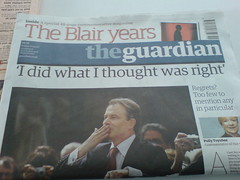
Yesterday it happened: Tony Blair announced his departure from the position of Prime Minister. And as always, the most talented public speaker of contemporary politics did it with class. Blair's 18-minute speech could be used as educational material for studies of rhetorics. It was personal, emotional, honest and uplifting.

The sentence there on the cover of The Guardian sums up to a great extent the reason why I still admire this politician who is so hated by so many. One could say that Blair is an old-fashioned politician with his firm belief in right and wrong. One can say a lot about the spin during his 10 years but I would dare to state that Blair will be remembered as one of the great politicians of our time. Together with Peter Mandelson and Gordon Brown they started a change of The Left which had influence on the entire social democratic movement in Europe. The concept often referred as New Labour brought the left closer to the middle, updated the collaboration mechanisms between public and private bodies and saved the individual from overcollectivism.

Stephen Frears' recent film The Queen reminds us well of the impact the landslide of New Labour had in 1997. Politics was once again cool and there was a sense of positive change. One could say that New Labour was not able to deliver what they promised but I would give credit to Labour and Blair for trying. In his speech yesterday Blair defended wonderfully his idealism and overambitious plans. As he said, he would not want to do things any other way. He apologised for mistakes and took credit of the improved social equality in Britain during their era.

For me the best part of Blair's speech was his defense of idealism and optimism. I was not able to find the exact quote online but it was something on the lines that he has always been an optimist and remains stubbornly as one. The marvellous part was saying that often people say that optimism does not work in politics and Blair saying that "in life we should give the impossible a go". Superb and brave. Blair is one of these politicians who is not afraid of making bold statements. I like that. Without him politics will be more boring, more cautious and less sexy.

Monday, May 07, 2007

One intellectual less


060306JSivonen_07miekkariHKI-16
Originally uploaded by Kepa ry.
Just got back from a fab evening with two Finnish friends who are visiting Amsterdam. We ended up into a fierce debate on Finnish politics which was really inspiring. I love talking about politics with people who know what they are talking about. I truly enjoyed the evening, especially with one of my friends who is a true leftist whereas I am more on the centre-liberal side.

I have not hidden in this blog the fact that I am rather optimistic when it comes to the new government but there is one thing that I really miss: having a leading figure like the Foreign Minister who is a clear intellectual. We had that in Finland for 7 years with Erkki Tuomioja. I sincerely look up to him as a person who does not fall into populist rhetorics, does not talk bullshit and has the courage to be himself. Tuomioja for me is the one thing I miss from the Social Democrats in the government.

This popped into my head again today when I was reading his blog. His Finnish is superb and lively, he does not beat around the bush and dares to take a stand. I do not agree on many issues with his rather old school leftish approach but I admire his passion and I acknowledge the level of accuracy in his writing. I think Tuomioja was a fantastic voice for the European Union during the EU presidency last year.

And when it comes to his own party he does not let people off the hook (himself included) too easy. Tuomioja was the one who dared to say after the election defeat that the reason for the loss was the politics of the last years, not a failed advertising campaign.

He writes in his blog:
"SDP:n julkisuuskuva kertoo ikääntyvästä ja nuhrautuneesta, ylimielisestä ja sisäänpäinkääntyneestä, omasta erinomaisuudestaan ja vallassaolonoikeutuksestaan vakuuttuneesta, pelotteluun ja negatiiviseen kampanjointiin turvautuvasta, SAK:hon nojaavasta ja uudistuksia karttavasta johtajakeskeisestä valtionhoitajapuolueesta. Tämä on ainakin se kuva, jonka valtavirtamedia meistä antaa. Ja vaikka itse tiedämmekin, ettei todellisuus toki näin synkeä ole, on tämä kuva kuitenkin riittävässä määrin totuudenmukainen. Siksi on tunnustettava, etteivät ongelmamme ratkea vain kosmeettisilla muutoksilla ja mainostoimistoa vaihtamalla."

What Tuomioja is saying is that the party has an arrogant and self-congratulating image which true to such a level that the problems can not be solved by changing advertising agencies. I could not agree more. What I said to my friends today as well: I actually hope that the kick on the bum makes the Social Democrats reinvent themselves and come out of the crisis stronger than ever.

Friday, May 04, 2007

What to do with retired statesmen?


Katse tulevaisuuteen
Originally uploaded by SannaL.
Last week I had a discussion with a British woman (voting Tories) on the legacy of both Blair and Thatcher. We actually managed to agree that both of them have done quite impressive work during their terms but Lady Thatcher has made very peculiar comments after retiring (or being ousted). As an open fan of Blair I sincerely hope he can retire with dignity in the same way as for instance Clinton.

The Thatcher phenomenon is not unfamiliar in Finland. The former Prime Minister Paavo Lipponen (Social Democrats) chilled for some years as the Speaker of the Parliament but is now completely retired. But what he still is determined to do is give advice on the pages of a regional newspaper. I just find this both awkward and difficult to cope with.

Lipponen writes in Turun Sanomat that the National Coalition (winner of the elections) gave too much in for the Greens and the Centre Party in the cabinet programme negotiations and he calls for them to sharpen up. This happens at the same time when polls show that National Coalition is the most popular party amongst the people and the Social Democrats are still struggling to get their figures on the rise.

Lipponen writes also that the government is calling for help and warns the National Coalition of the energy bogus of the Centre and the Greens (Lipponen himself being a firm supporter of nuclear energy and openly detesting the Greens). His columns remain to be very fatherly and condescending.

What is too common among retired politicians is this sense of bitterness. When you have been on the driver's seat for years of course it is of course difficult to let go. But the sad thing is that this fatherly approach seldom increases one's popularity. Lipponen who I actually find to be a wise man is in my judgement on a mission to destroy his rather fantastic legacy. Same goes for dinner parties and politics: no one really wants to sit next to the grumpy old man going on and on about how things used to be so much better.

Tuesday, May 01, 2007

Say no to dictatorship of the thieves!


New bike
Originally uploaded by amsterboy.
It is Labour Day. But unlike the rest of Europe, the Dutch work on 1 May. So I found myself today in situations when I called a colleague abroad only to find them either drunk or just otherwise disoriented. Well, the Netherlands has never been a flagship of the proletariat. They believe firmly in ownership.

Was just watching the Finnish TV news. Covering 1 May is nearly as exciting as working on a domestic news in July. "Shall we write another story on weather? Or how about alcohol today for a change, we have not written about it for like two days now."

As the rest of Europe is showing their dedication to the neverending battle of the working class, the Dutch go wild for the monarchy. Queen's Day was once again a nice carnival although someone should tell these people that orange does not look good on anyone.

My other reason for celebration next to Queen Beatrix was my new bike. After my bike was stolen some weeks back, i have postponed the decision to get a new one until this Saturday when I realised that i need to get this thing sorted. So rather than going for a bargain (rational consumption never been my thing), I walked to a closeby store and bought a used Peugeot. (see pic)

My flatmate told me when my bike was stolen that I should learn from my mistake of buying a bike that stands out of the crowd. My previous bike was bright green. I decided not to follow his advice and may end up paying for my stubborness but until then I am going to enjoy my fantastic new steelblue fiets (Dutch for bike). Down with the tyranny of the bike thieves!

Saturday, April 28, 2007

Keeping it together


* Willem Alexander & Maxima *
Originally uploaded by am5terdam.
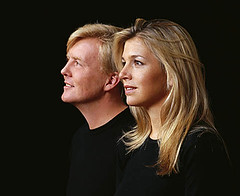
We are two days from the biggest celebration of the Netherlands, Queen's Day. All newspapers in the country strive for finding a new twist for covering the monarchy. One of the magazines wrote extensively on the costs of the royal family indicating that they cost the taxpayers over 95 million on an annual basis. Based on a poll they conducted most people would want to royal family to start paying taxes but an overwhelming majority still supports the monarchy.

i checked the issue with a friend of mine on Thursday afternoon. He is one of those wonderful Dutch people who both get paid and spend free time on citizen participation and democratic development. He was very clearly in favour of the monarchy. He used one of the most common arguments: the monarchy has played a big role in keeping the country together acting as a balancing force. "I don't know where we would be without them taking into consideration the turmoil of the last years", he estimated.

There was an interesting article yesterday in the main intellectual newspaper NRC Handelsblad on the way the monarchy builds their networks. They wrote about the dinners Crown Prince Willem-Alexander and his wife Princess Maxima host on a nearly weekly basis. Based on the article more than 100 key players of the Dutch society from politics, academia, culture and business have dined at their home in small informal gatherings. The article compared Willem-Alexander's networking to the work of his mother and concluded that Willem-Alexander is both building a network of people of his own generation and with Princess Maxima they do this in a very subtle and approachable manner.

The family Oranje is strongly involved in the society. They chair a number of foundations, give their support for societal projects and use silent power. The NRC guessed that Queen Beatrix would be stepping down next year and make room for Willem-Alexander. I am curious to see what that would mean for the visibility and popularity of the monarchy. As the NRC wrote, Willem-Alexander and Maxima started their networking from young politicians - the people who can decide on the future of the monarchy. They have a basis well built: especially Princess Maxima but also Prince Willem-Alexander have star-rocketing popularity rates and a clean but interesting public image.

Thursday, April 26, 2007

It's all made up


Kinderdijk-28.jpg
Originally uploaded by Manchester Snapper.
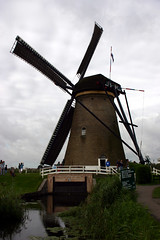
On Tuesday evening I took part in a wonderful evening at the Frascati Theatre here in Amsterdam. A theatre group called Dood Paard (Dead Horse) organised an evening on the state of the Netherlands. In a well built-up setting they showed three documentaries of public space in the Netherlands and invited six foreigners living in the Netherlands to make a statement of the country. I was one of those people.

In my own statement i talked about the difference in handling public space in Finland and in the Netherlands. I pointed out that at the same time as the famous Dutch ignorance (I don't care what the people in the next table are doing if it does not interfere with my evening) leads to diverse settings and relaxed atmospheres, it also turns easily to arrogance like very often on KLM flights back to Amsterdam (I can be as loud as I want to because it is my right). That is one of the things that at the same time disturbs me and charms me in this country.

From the other statements a phrase stuck to me head: land van mens. For the non-Dutch people, it means the land of man. One of the speakers rightly so pointed out that the Netherlands has no natural attractions. All the things that people come here for are things built up by men (not in the gender-specific sense).

I kept pondering that all through yesterday. In Finland we are always very much linked to the nature. Whereas the Finns live from their natural resources, the Netherlands lives from interaction. Somehow that also explains why the Dutch debating culture is so much more developed than the Finnish ones. If we would have been forced to negotiate everything and everywhere (plus make our income from that), maybe we would also be less awkward in the presence of others. As a Dutch historian Geert Mak once pointed out in a discussion about Dutch tolerance:"It is based on a business model. It is not economically wise to make people with money and connections feel that they are not welcome." I guess he is right. We all know that from a nice salesperson you end up easily buying more.

Monday, April 23, 2007

Brighter four years?


House of the Estates Shod
Originally uploaded by dronir.
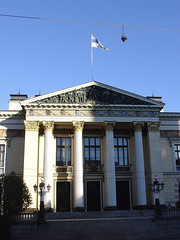
After an exciting work weekend in Istanbul I spent my flight back to Amsterdam going through the programme of the new Finnish government. (Just as a clarification: the country got a new centre-right/liberal government only last week). I know, most people would find other things to do on a Sunday evening after partying until two o'clock on the previous night but hey, I have never really hidden the fact that I am a political junkie.

I have been in somewhat opposition with my friends as I have been rather happy with the result of the elections and also with the government coalition. I think a liberal breath is only good for Finland. Maybe exactly for this reason I found myself being actually rather content with the direction that the cabinet has chosen. My only main disappointment is the part on culture which really does not say a thing. The great paradox is that the half page on creativity and culture is the least creative part of the 71-page pamphlet. But to express the reasons for my overall optimism, the followings are quotes from the programme with some comments of mine:

"When building the Finnish welfare state, the government wants to clarify the relationship between individual responsibility, shared responsibility and the responsibility of the society."
(Leftish people usually freak out with these wordings but I think this is exactly the major challenge for the Nordic welfare states, maybe adding corporate responsibility on the list.)

"Cross-generational and cross-border thinking is the leading principle of the blue-green government."
(As both of these themes are in the core of my own work and pose in my mind the biggest challenges to Western European nation states, my view is rather optimistic. This is exactly as the person I voted for stated things: the interest of Finland is the interest of the world.)

"Finland's foreign and security policy is based on good bilateral relations, strong influence in the EU's foreign and security policy and efficient multilateral collaboration and credible defense."
(The revolutionary move for Finland is abandoning the notions of neutrality and stressing relations. This for me is a sign of understanding the essence of international politics far better. The new directions shows wonderfully in the programme in the way climate change is addressed and how Russia is raised to a significant role. The government is now talking of a concept of wider security which also creates room for notions of soft power.)

Astonishing in the programme to me is also how fresh the environmental approach is. I believe for the first time there is a clear distinction between climate change and environmental policy. Climate change is now linked to energy, economics and employment - the cores of the programme rather than staying in the nature protection ghetto. I guess in the Finnish discourse culture still needs some advocacy in this sense.

I know a lot of people who would say that this is merely words and it is the actions that count. I tend to disagree with that simplification. As a political scientist for me the way things are addressed also creates the windows of opportunities and this fresher approach builds less on fear and more on empowerment. As an example, this government's programme explicitly states why we need an information society - a task that it's predecessor failed to do even if they even had a special cross-sectoral programme and a secretariat for that. Same goes both for diversity and climate change - they are addressed not as ideological good causes, but as issues crucial to GDP, security, welfare and happiness. This brings them to the forefront, stops the discussion on their necessity and gets us going.

I am optimistic but we shall see.

Thursday, April 19, 2007

Wonderful as itself


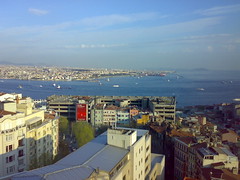
The Bosphorus
Originally uploaded by amsterboy.
I am once again in Istanbul. The governing bodies of my employer are meeting here which is why I was also flown in to present plans for the coming years. I could not be more excited as I have really fallen in love with this city and its people during the last 1,5 years. This time the stay is more or less three days which is wonderful. In a minute I should head out to have dinner with my great Turkish friends.

By coincidence I watched yesterday a reportage my good friend made for the Finnish TV on Istanbul last September when we both took part in a pop culture journalism workshop here. I could not be more proud of how she grasped the city through interviews with two young Istanbullers.

In the interviews they say wonderful things that I think should be shared and commented:

"We don't wake up every morning thinking about the European Union."
- this country is magnificent as itself and filled with people who strive for freedom and equality. The EU accession prospect might have speeded up some things but the modernisation agenda comes from within.

"I have friends all over the world but the Turkish friendships are somehow deeper."
- the way people get close with you here is something even I have not experienced elsewhere. It's real and sincere from the first moment on. And people take the time to share and to listen.

Wednesday, April 18, 2007

Subtle development


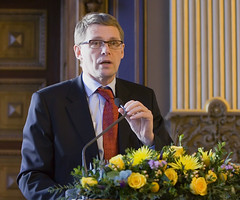
Matti Vanhanen
Originally uploaded by villoks.
Today is a good day. I am extremely proud of being a Finn. The country lives up to its reputation as a nation of gender equality. The list of ministers in the new cabinet was published today and I was astonished when I realised that for the first time in the country's 100 years of parlamentarism we have a government with more women than men.

This calls for celebration. And my (virtual) flowers are sent to a very peculiar direction, the Centre Party. The party branded as the voice of the conservative farmers is the first one in Finnish history to elect a woman as Prime Minister (in 2003) and now lead a government with female majority.

The Centre Party seems to be now the voice of progress and optimism in Finland. They are the party that actually develop the society and suggest alternative agendas. For instance in this government they pushed for combining the ministries of employment and industry. And all this done with the leadership of a man who still in 2003 declared that being Prime Minister was a personal sacrifice, not something he ever wanted.

Matti Vanhanen, the Prime Minister from 2003 on and the head of the new cabinet is a modest man. He lives up to the Finnish values of sincerity and honesty to the extent of turning boring. But if one evaluates what he has done during the last years, one has to say that it was a clever move from the Centre Party to elect him as their leader. The economy is doing brilliantly. Even if he does not have the charisma to charm masses and win the presidential run, he does a good job in leading a team of ministers.

All and all, I am rather optimistic when it comes to the next four years with our centre-right government. I may be proven wrong but we shall see.

Monday, April 16, 2007

(Not Entirely) A Holiday in Rome

I am writing this post at the Vatican of all places in the world. Bizarre. And if the amount of priests and nuns complemented with the massive scale of things at the Vatican would not be enough to raise some eyebrows, there is a German trumpet orchestra in the traditional leather shorts (lederhosen) just crossing the main square.

The walk to the Vatican was the saddest moment of my three-day work visit to Rome. The street leading to St. Peter’s is occupied by African young men selling fake bags, watches, tripods and sunglasses. A sense of panic emerged the moment I crossed the street as the men saw a policecar approaching on the bridge. They rushed to collect their merchandise inside a white blanket, threw it on their shoulders and ducked into the bushes. Heads popped up every now and then to see whether the patrol had left the street. As the police turned around the corner, it took less than two minutes for them to organise their stuff on the streets in neat lines and constantly glancing left and right for the next carabinieri. This is today’s Europe in most metropoles - also five minutes’ walk from the richest and most powerful institution in the world.

During Easter the Finnish TV showed by coincidence the classic film A Holiday in Rome so I was well prepared for my visit. Although my three days were slightly less eventful than Audrey Hepburn’s (no romance with an American journalist, no fights with the secret police and not a new haircut), I got a fair taste of what Rome is about.

As always, I was greatly more impressed by the people than by the Spanish Stairs of the Colosseum. As my colleague from the Italian TV phrased it, the Romans take more time with the people they meet than we tend to do in the North. Even if I was in town only for work, I was still guided through all the main sights, invited to dinners, introduced to a great number of people and taken around at night with a scooter. I also managed to have the ultimate Rome experience by ending up chatting with the group in the next restaurant table and going on the next evening to the opening of their literary cafe.

All and all Rome strikes me as a city of contradictions - ultimate poverty meets the richest institution in the world, glorious history meets the chaos and disorganisation of today and ancient Roman ruins meet Mussolini’s out-of-proportion fascist architecture. And yes, the best past in my life meets cannellonis worse than any airline would ever dare to serve. But the unsolvability (not sure if that is English) is what makes me want to come again.

Thursday, April 12, 2007

Strolling towards spring


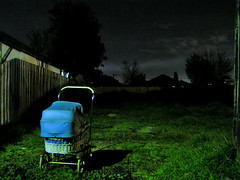
baby cart in peril
Originally uploaded by littlegirllost.
Just got back from Finland after an Easter break. The holiday was so wonderful. I spent four whole days with the family in the countryside, just eating and not doing to too many things. Well, we got some exercise due to my cousin's new Nintendo Wii Tennis game. If you have not tried Wii, I would recommend correcting that fault quickly. To quote an American friend of mine: awesome. As I have no idea how to explain its wonders, I am going to use Wikipedia for this:

"A distinguishing feature of the console is its wireless controller, the Wii Remote, which can be used as a handheld pointing device and can detect motion and rotation in three dimensions."

In non-nerdy language this means that you play tennis with a console as your racket. It is astonishing.

But now from Wii to we and to the best experience of the vacation. It was still relatively cold in Finland over Easter and the ice from the lakes was just starting to melt which meant that we spent most of our time inside. On the second day my sister said that she would take my nephew for a walk and I volunteered to go along. Five minutes later I found myself pushing the cart (or is it a trolley..no idea) without my sister on a muddy countryroad as she took a well deserved break to chat with my mum.

The wind was harsh, the sunshine was extremely bright, the wheels got stuck into the mud every now and then. But it was just superb. It was the first time I spent time alone with my nephew. He was looking at me curiously as I pushed him forward. It was just the two of us. I felt a sense of pride and joy when realising that my sister trusted me so much that she let a single urban guy take a 1,5-year-old for a walk without supervision.

My nephew did not cry one single time during the walk. I made it and we made it. To conclude: Kids and sisters rock.

Tuesday, April 10, 2007

Flamboyant boys and unbalanced girls

I have been spending lately a lot of time with people who are totally obsessed with music. I mean those who go from blog to blog and speak of bands that never enter Top 100 charts. The role I have taken often is to just write down names of bands they mention and then turn to my friends Google, MySpace and YouTube.

In one of those discussions someone turned to me a while ago and asked what kind of music I like. I was a bit puzzled in that situations but now I have a better answer. I have two categories:
- unbalanced women: Sort of women on the verge of a nervous breakdown like Martha Wainwright, Marit Bergman, Joni Mitchell, Carole King or even some stuff from Macy Gray.
- flamboyant and funny men: the people who do not take themselves to seriously but make witty and over-the-top music. I mean such as Patrick Wolf (see video), Rufus Wainwright, Mika, Antony and the Johnsons, Jonathan Richman and Sufjan Stevens.

More posts on music are going to follow as I make my way through my new albums and the CD of 127 songs that my pop wizard friend made me.

Monday, April 02, 2007

Plugged generation


Reduced.
Originally uploaded by *nathan.
As a professional youngster (phrase used by our Director a while ago) I am very often in situations where I am being asked to explain youth phenomena. I also engage myself into discussions on this topics without much hesitation.

The discussion is very often ridiculously simplistic. Either you have people putting it all in one basket without distinction (Commission report stating that young people publish their personal issues "on the Internet"). Then you have the ones blindsightidly focused on new things with no sense of proportion (YouTube has beaten television). And then you have people stating that there is nothing radical whatsoever in YouTube or so (it is just a phase). Oh and yes, you also have the concerned and worried: the ones thinking like Neil Postman in his book Amusing Ourselves to Death that we live in a egocentric "peek-a-boo world" where young people are immoral, lazy and have no concentration skills. This notion also has the victimising parental guidance subgroup.

Exactly for frustrations developed in the numerous debates it was a pleasure reading a new Demos report on the subject. Very often these pamphlets praising the digital revolution have no historical perspective which is why I was quite charmed by the findings. TheirSpace report also avoided the trap of falling into this nerdy technomasturbation of all the wonders of the Internet. To me this quote made the TheirSpace report stand out:

“Teenagers today can do things that teenagers ten years ago could not have imagined. As software and hardware have simultaneously become cheaper, more sophisticated and easier to use, this generation is burning self-shot home movies, composing and recording music and editing photos. There is nothing new about young people being creative and expressive (...) The difference is that by digitising their creative efforts this generation of young people can share the fruits of their labour with a worldwide audience.”

In the report the researchers seem to make a conscience move to stress the positive features of the digital revolution. I support strongly this slightly biased take. I believe that there is a paradigm change which is 90 % positive. It is a more engaging, non-hierarchical, participatory and revolutionary approach to the world than the ones dominating our political landscape currently. It is all about doing, testing, molding things for your own use and fitting to your own interests.

But what makes the change most remarkable to me is the high level of sharing. Take the picture of this post as an example. A colleague of mine asked a while ago why someone would put their own photos on a website for public use. My answer was very simple:"If it is a nice photo, I only have one question: why not? When you are credited for the use of your photo, where is the problem?"

Saturday, March 31, 2007

Back to people


firestoned
Originally uploaded by Rotten Jimmy.
“Kivekäs, Walden, Wihuri, Hellberg, Rosenlew, Frenckell, Ahlström, Donner, Wasastjerna, Ehrnrooth, Schauman, Grönblom, Wahlroos, Julin, Björnberg, Rettig, Honkajuuri, Virkkunen, Erkko, Serlachius.”

The chorus of the Stalinist song from the 70s on the richest families of Finland sung with great passion out of tune by Kristiina Halkola popped into my mind today while listening to the debate about corporate social responsibility here at Sabanci University in Istanbul. The second day of the Network Effect paid a great amount of attention to the role of a few rich Turkish business families and their contributions to the society. We went through the richest family of Turkey (Sabanci) founding a private university and the Eczacibasis supporting classical music and founding the Istanbul Modern museum. Some of the participants made highly critical remarks on the paternalistic models of these actions and whether they can substitute gaps left by the government. “It is somehow worrying how the taste of one family can set the principles of modern art in Turkey”, one of the participants observed.

Continental Europeans often tend to ignore the development patterns of their own societies when assessing developments for instance in Turkey. As the list in the Finnish song points out, these families with a few others played a crucial role in the nation-building. And it is not only Finland and Turkey where philantrophy has at some moment stepped in. You get the picture by thinking of surnames like Tate, Rockefeller, Bonnier, Bertelsmann or Wallenberg.

A Swedish journalist quoted a while ago an assessment made by I think The Financial Times that when the 20th century can be considered as the century of the welfare state, the 21st century seems to be the century of philantrophy. Bill and Melinda Gates Foundation’s engagement with the developing world was used as the most powerful argument. If one looks into the European and American history, one could make the statement that we are returning to an old model. As the recent defeats of Social Democrats show across Europe (the Netherlands, Sweden, Finland etc.), the ideal welfare state starts cracking up and someone else is called for rescue. In that sense I am not sure whether it is fair to state that Turkey is behind us in a development or whether they just skipped one step.

Although this development also has worrying consequences (in a philantrophy mode the poor need to stay grateful and obedient and priorities are set based on individual interests), I would also like to see a positive side in all this. It can help in shaking off the “overdeveloped” notion in Western Europe of full dependence on the state and put more emphasis on individuals. We can also revise the stubborn notions of good money and bad money. As we can already see among the younger generations and their consumption patterns, achievements and personal driving forces get more emphasis over hierarchies and classifications.

The issue is not black and white. Business works based on the notion of success whereas democracies should work on the notion of good. We still need both but the shake-up opens a window of opportunity to re-negotiate these positions.

The most important re-realisation of this event for me is the same one as from the Network Effect in Amsterdam. Societies are made of people. Successes are made by people. People are the ones that stimulate and are stimulated. And that the privileged people with connections and skills do have an obligation to share, enable and make things happen.