Monday, December 28, 2009

Pursuit of Happiness


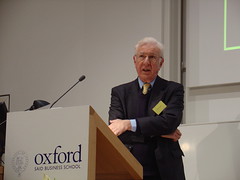
Richard Layard
Originally uploaded by Andy Miah
This blog has been rather quiet - or to be more honest - dead for some time now. My apologies for that. One of my New Year´s resolutions is the following: one post and one post only per week.

The new focus: things making us happier. That takes me back to the name of this blog. My favourite word in the Dutch language, kiplekker, basically means chicken licking good.

I finally made my way through economist Richard Layard´s (pic) classic Happiness: Lessons from a New Science (2005). Layard´s basic argument is that the obstacles we once had for using people´s feelings as a measure of societal success are more or less removed. Brain research today gives us enough evidence to measure happiness and well being. This provides us with an opportunity to move further from economic growth and behaviorism that have driven politics for ages now.

Layard stresses one of the things that we work with a lot at Demos Helsinki: that even if all the material things are well, we are more affluent than we have ever been, that does not result to happiness. In a way we as societies are failing the ultimate test: are we building societies where people do well? Every day greater numbers of people feel like they lack a sense of self, skills to deal with their feelings and a sense of relevance in relation to others. Layard puts special emphasis on issues such as helping the poor of the world, reducing unemployment, treating mental illnesses, finding new measuring criteria next to economic growth and supporting family life as ways to happier societies.

So the blog goal is now set for 2010: once a week a post over a phenomenon, project, advertisement, person, website, sports club that is enough reason to get excited about. There´s one more criteria.

The things covered need to answer YES to the following:
Does it create happiness?
and NO to the following:
Does it harm others?
And finally YES to the following (question taken from Charlie from Make Nubs):
Is it fresh?

More to follow.

Friday, October 09, 2009

Interesting Helsinki - Heli Mäenpää on photography and friends

Saturday, August 29, 2009

Immigration is a question of resources


We at Demos Helsinki (together with the centre liberal think tank e2) organised this week a future course for Finnish decision makers on immigration policy and the future of Finland. By focusing on the year 2030 we wanted to stress the fact that diversification will happen and it forces the society to rethink both cohesion and welfare. Detaching the participants from the current challenges, starting from 20 years from now and then counting backwards demonstrated well to them that change is possible as well as needed. Already in 2025 Finland is expected to have 500 000 pensioners and 300 000 immigrants more than currently.

We asked the twenty participants to narrow the outcomes into statements, which will be developed into a larger publication during the fall. Here are the outcomes:

It´s about resources.
Immigration cannot be solved purely as a question of attitudes and tolerance. It is fairer for all to talk about resources and needs. Immigration is already part of Finnish reality. Immigration will not save nor destroy Finnish welfare state but it offers a possibility for starting a rethinking process on welfare.

The work place needs to change.
Change is needed more in the work place and in professional communities than in the individual immigrant. Transformation training is needed in organisations faced with diversity. In order to open up the strong Finnish social networks we need financial support for extracurricular activities (sports, hobby clubs) around and within culturally diverse companies and public organisations. In order to speed up change, affirmative action can be used as a tool in recruitment for professions such as police officers and teachers (encounter professions).

We need a joint, hopeful future.
There is need for an inspirational concept of a Finnish future that is based on rights, responsibilities and goals of a better shared daily life. The best possible brand for Finland is created through happy people and communities. We need stricter equality politics in order to build a shared and fair future.


We need to learn Russia.
Understanding Russia and Russian are crucial for understanding immigration. Finland has already loads of unused competence on the issue, mutta purely mobilising that is not sufficient. There is a need to update the stuffy and narrow ideas of Russia into more exciting ones.

Politics of experimentation
We need courage to live with uncertainty. We need to openly acknowledge that we do not know what works. We need more research and more experimental politics. We need to support also unclear organisations.

Good Finland, happy families

We need to bring families to the core of diversity politics. Finland needs to strive to be the place for the happiest childhood on the planet without forcing families into uniformity. Schools need to be used as buildings and communities for parental volunteerism and non-governmental work such as hobbies, sports and clubs. Taking part in pre-school education only part time of the week needs to be possible in order to support various ways of combining work and parenting.

Tuesday, July 28, 2009

Are You Being Served?


waiter
Originally uploaded by ariadust
The encounters with America´s service culture from the last couple of days that do not stop baffling me.

1. Gas Station
As we pull out of the car wash at Shell, a Mexican man steps in front of the car. He takes his cloths and swipes the car windows clean. He does not speak a word of English. As he finishes, the driver opens the door and hands him a couple of bucks.
"Is this guy working for Shell", I ask from the back seat.
"No, no."
"So are you obliged to pay him, like can you drive just by?"
"You can but that would be rude."
"So Shell is fine with him being there?"
"I guess, he might be like a friend of the owner or just someone needing to make a living."

2. Taxi
"You know the flat rate, yes? 45 dollars to the airport, 5 dollars for tolls", the driver explains as we head towards JFK. "And of course the tips", he says with a grin. "Tips are important."
The man turns up to be Ukrainian and to put it mildly, social. He tells us about vodka drinking, holidays at the Krim, complains about New York drivers - whilst constantly jumping the line and causing near-death experiences for us all in the back seat. He just does not stop talking.
This turns up to be the worst taxi ride during our couple of days in New York. We take a deep breath as he unloads our bags.
We tip him 10 dollars. "You have to", I am told.

3. Clothing shop
A young man walks over to me as I go through the pile of pique shirts.
"Hi, how are you? Let me know if you need help in finding your size. If you wanna try on those shirts on your hand now, I can just go and set up the changing room for you. My name is Mark."
As he heads off to set things up, another salesperson walks up to me and starts:"Let me know if I can help you in any way, we have more sizes in the back."
"Thanks. Your colleague was actually helping me already."
I end up buying one of the shirts and head to the register. The chirpy sales girl calls me to her.
"Hi, how are you? Having a good day?"
"Yes, thanks, you."
"Great, great. Did you find everything OK? Was someone helping you today?"
"Uhm...Yes, I think his name was Mark."
She glances down to the staff list next to the register and puts in the code. "Great, thanks. Here´s your bag and have a good one!"
At the door a lively woman greets us farewell. "You guys have a great day now."
I am being told outside that Mark just got a commission point for my shirt.

4. Restaurant
A young African-American woman greets us and checks that our reservation is OK. "Welcome. My colleague will show you to your table. Have a good evening."
The white young man dressed in a skinny suit walks us over to our table and seats us - and leaves. Another man dressed in a light blue pique shirt comes over. "How are you all doing? Good. My name is Miguel and I will be your waiter tonight. Here are the menus. Would you want something to drink to start with?"
"Just ice water, thanks."
As Miguel sets off, another Latino man walks over and silently fills our water glasses. As he sets off, another Latino man comes with the forks and knives. In the course of a dinner two other Latino men pass by to fill glasses and clean finished plates. Midway through the dinner a white woman in her thirties dressed in a Hillary-like pantsuit stops by to check that everything is OK. The skinny white man walks around with a notepad, looks at our table and makes some notes as my dish is delayed.
I taste my dish. The duck meat is lukewarm. I feel embarrassed to bring up the subject to the restaurant staff but my American dinner companions encourage me. "You´re paying for it." The previous evening one of them asked to change the ordered dish as she was not fond of the taste. The waiters did this enthusiastically, without charging extra.
They holler Miguel over.
"Everything OK here?"
I go red and feel uncomfortable but cannot escape anymore.
"Well, uhm...sorry to bring this up but my dish feels kind of lukewarm, like it is not straight from the over hot."
"Oh, I am terribly sorry. Let me just take it back to the kitchen."
"Sorry to bring this up."
In the end of our dinner the restaurant fills up and the Latino men - including Miguel - run around like crazy. It takes ages for Miguel to bring our invoice. During all this time the woman and the man at the door look incredibly bored with nothing to do - right next to our table. The young man notices the delay and writes something on his notebook.
We leave a 15% tip.

Wednesday, July 08, 2009

This clip is insane

I don´t know whether to feel sorry for CNN´s Anderson Cooper for having to try and make sense out of Sarah Palin´s PR officer Meg Stapleton or for Ms Stapleton having to explain the actions of her erratic boss. But one thing is for sure: this 5 minutes 49 seconds only proves that no normal logic works for Sarah Palin as a politician.

Next move: we just sit and wait for Levi Johnston´s tell-it-all book on the Palin family.

Wednesday, June 24, 2009

The Doctor Will See You Now


Geert Wilders
Originally uploaded by dmatsui
Having met several Dutch friends over the last two days, there´s been one issue popping up in every chat: the success of anti-Islam populist Geert Wilders and his party PVV. The question is what explains his growing success and what is the needed response.

In the European Parliament elections Wilders´ PVV grew into the second biggest party winning certain key areas such as Rotterdam and The Hague. These are also the cities with some of the highest numbers of people of non-Western descent. His party has now 4 seats in the European Parliament, which is one more than the Greens, the Social Democrats or the two Liberal parties. He is serious business.

His biggest target are the Muslims in the Netherlands. He has has for instance suggested a 5-year ban on non-Western immigration. He has publicly confessed a hatred of Islam.
Wilders´ agenda is largely similar to many other populist parties. His party is basically built around him as the undisputed leader, he makes a clear distinction between himself and "The Hague elite" and says the country has drifted into an "anything goes" sort of cultural relativism. He calls for tough measures and wants the country to declare openly an Judao-Christian value basis.

In the discussions I have had, I have heard different analysis of his support. I find all of them intriguing as they call for different solutions. As one knows from medicine, one needs to identify the illness correctly to ease the pain. There´s no need for surgery, if the problems are psychosomatic.

Analysis 1: The people voting for Wilders are ignorant and only if they would understand that immigration is beneficial for the Netherlands, we would all be better.
Solution: Isolating Wilders from the other political parties and increasing contact between groups.

Analysis 2: Wilders´ support builds on disappointment on one´s fellow citizens. The people voting for him feel like they have been left behind not only by the government but also the people who are doing better.
Solution: The elite needs to sharpen up and use emotional strategies to build a sense of belonging stressing to themselves and to the disappointed people that we are a whole and that we have responsibility for each other.

Analysis 3: We are in a culture war. Wilders represents a different society model, which gains support from a large part of the society. Similarities can be found from the US on issues such as euthanasia, abortion and race.
Solution: Both sides need to sharpen up their argumentation. Wilders´ great challenge is creating an intellectual basis for his policy as the party matures.

I don´t want to take a stand on the matter apart from ruling out number one. I sense an undemocratic flavour in it and find it disturbingly arrogant. I am all for increasing contact but it cannot start from the notion that the other side is seen as a victim of false consciousness.

In some ways I find the emotional aspect quite appealing. A lot of people are feeling scared even when they cannot actually give the fear a name. And for a person in panic, the newcomer is an easy scapegoat. Large parts of the population feel a risk of losing all their life is based on. We as a society need to take these fears seriously. Fear needs to be tackled not only with rationality but with emotion.

This situation should be seen by all parties as a possibility to be clearer on what kind of future you are fighting for. If we really are in a culture war, it is time for everyone to get more clever, sharper and more active. The good thing is that at least until now this dissent on the current rule is channelling largely through elections.

Despite which explanation one follows, one thing remains. It is all about bringing politics back to politics.

Monday, June 22, 2009

Really?

The newspaper has been taking a bad beating lately. On Twitter I get daily tweets on this and that more or less informed thinker stating that in a couple of years the US will only have 2 newspapers left or that the medium as a totality is already beyond saving. It is time to pull the plug, they say.

I understand that argument to a certain extent. Newspapers as they are now are terminally ill. They have allowed themselves to turn into public broadcasters and forgotten that they have a role and responsibility in supporting, inspiring and building a community. They´ve turned into broadcasting media when people want largely the opposite. They have by and large raised themselves above the readers and cut down the return channel.

Building a community does not mean cutting down on journalistic standards. It also does not mean becoming more entertaining or shallow. It means having greater understanding on the people you are serving. Yes, I think journalism largely is a service job. This means newspapers need to take a fresh look on the competencies needed within their staff. Delivering the requested amount of characters on time is just not enough.

Unto Hämäläinen from Helsingin Sanomat has been lately an excellent but rare example of what being a good journalist today means. Whilst writing in-depth, well researched articles for the printed paper, he has hosted a popular yet analytical blog around elections which has gathered a constituency of commentators ranging from the Prime Minister to MPs or regular citizens. This has allowed the newspaper as well its community to gain a better understanding on the various sides of politics.

I would wish that newspapers would take use of the more emotional aspect of why we pay the annual fee. We buy a membership in a community and we wish to be recognised.

I would love them to emphasise that in the era of immediate TV and online coverage, the printed papers do not compete with being fastest but being the most complete and the most reliable. They are like that professor in our family who can explain a complicated subject in a coffee table. They can paint the big picture, show links and the people behind the actions in ways that most media is unable to.

But even more importantly, they have a role in setting the discussions at work, in the families or in the parliament. They introduce subjects to their community - often ones that the community is not expecting. A good newspaper surprises you daily when you find yourself reading something that you did not know that you were interested in.

I mean just from yesterday: ´diversity of Finnish forests´ would not have never emerged to my Google search bar.

Monday, June 08, 2009

Shaken, Yet Still Standing

Yesterday´s elections were quite exciting, I have to say. It is always fantastic and good for democracy when things get shaken. Here a few observations:

- True Finns: Most of Finnish media is making the wrong analysis on this political party. Putting the party leader Timo Soini and his folks in the same category with the Dutch islamophobe Geert Wilders is a misrepresentation of the truth. The policy and popularity of True Finns works much more on the anti-establishment card than on xenophobia. This is quite obvious when you listen to them in debates. The party has a natural attraction amongst poor pensioners or unemployed youth - people feeling abandoned by the illusion we call the welfare state. Taking these fears and this anger seriously is a difficult challenge for the rest of the parties.
And let´s face it: how low would the voting rate have been WITHOUT True Finns? The fact that people wish to express anti-establishment sentiments and disappointment by voting is something we should take joy from.

- SDP: That old poster in the picture tells it all. SDP´s slogan: We will make some noise on your behalf. A political party unable to provide a role for the citizen deserves a defeat. As someone wrote on Facebook today: the problems of this party-turned-institution are the same as the Lutheran Church´s. And it is not saved by recycling Blairite slogans from 1997. Defending the System goes down badly at a time when people are seeking for a sense of involvement and belonging. Yes We Can is not only a disguising slogan for old politics, it means that you actually involve people in making change happen. It is a new way of doing politics and calls for a new way of building trust and communities. If they have the courage, this is a great opportunity for Social Democrats: empowering the people in the margins to be change makers in their own lives.
And let´s face it: we have come far from the 1903 goal on the separation of church and state when the leading man of the Social Democrats is a priest who is not even a member of the party.

- Greens: Good tail wind, have to give them that. I am not really interested in the boxes provided by other parties for the Greens: garden party of the right or the new Communists? This discussion does not really solve anything and is purely an intellectual masturbation exercise of political hacks.
If I would be making strategies for the party, I would try to find ways to diversify the party´s image from the current one: an upper middle-class smart party posse setting themselves above the rest of the society. The Greens should listen carefully to the increasing comments on arrogance and inability to understand other view points. Softening of actions, image and policy might be worth considering.

- National Coalition (Kokoomus): Kokoomus is still the biggest party in Finland although they did not make their target of keeping four seats. The party ran a campaign relying highly on the youthful Minister of Finance and the Minister of Foreign Affairs (neither of whom were running). They ran a campaign focusing on good mood, simplifications and happy-happy-joy-joy - an exemplary campaign of the republic of entertainment.
But the party stumbled in the last weeks when some candidates pushed some content to the surface which did not fit the party line. Cartoon TV ads do not explain away candidates calling immigrants social bums or questioning climate change.
This is the destiny of all parties controlled by spin doctors: there comes a point when you need to realise that you just cannot control it all.

All and all, the results tell a good story. The parties which have invested in their local actions and on bringing new people in did well in these elections. The ones at a loss with their objectives were punished by the voters. This is what we call democracy.

Friday, June 05, 2009

It Doesn´t Take A School


Fist of Fury
Originally uploaded by Jam Adams
Today´s visit to Heureka children´s science centre reminded me that many character problems start occurring way before school. It does not take a school to create a bully.

I was playing with these gigantic soft building blocks with my 3-year-old nephew when this approximately 5-year-old kid turned up - with his Mom. He started ripping toys from my nephew, got intentionally on his way in the slide and spent most of his time just beating stuff up.

I gave him nasty looks so he understood to move away but he kept testing the limits. The mother was standing next to this kid, checking her mobile and flicking through the photos on the digital camera. The kid kept running around, jumping recklessly on the pillows and destroying the constructions built by others. The mother witnessed the situation but did not act upon it. The kid had a similar look in his eyes as the jerk sergeants during my military service. He knew he was feared - and was loving it.


I can´t see into this mother´s head. But I can´t accept her actions. Maybe she was just glad of her child not being the "weak" one being bullied. But without intervening she was teaching her son that this kind of action is OK with strangers. She was teaching her son that this is how you get things through.

The situation made me sick and I lured my nephew out of the room with the power of ice cream. The mother was upholding the "boys are boys"/"real men" attitude, which prevents boys from going to hobbies such as dancing, makes them scared of showing weakness or sadness and locks them up in tightly framed expectations where violence is the only allowed method of proving your masculinity.

Tuesday, June 02, 2009

Connecting The Dots


~ The American Dream
Originally uploaded by Mackeson
Last weekend I met my great aunt for the first time. There is a reason why: she left Finland in 1957 first to the United Kingdom and then continued to the United States. She was telling me how it is still difficult to connect the dots between the Finland then and Finland now. She left a country of muddy roads and arrived to one of Nokia, to put it bluntly.

I was struck by the Finland she was telling me about. She told about a school that did not accept her due to her religion. She left a country traumatised by war and where she was told several times that she did not belong. She left the country and her family for a better life, with no knowledge of English and no relations waiting in the other end.

The reasons for migration have not really changed in 50 years. But it seems to surprise some people here in the receiving nations that millions decide to leave all they have for a chance of a better life. People risk everything they love for some undefined dreams. For a promise with no money-back guarantee. It seems to surprise people even when the story can be found from each family.

It is surprising and - honestly - disappointing how we here, in a country that has transformed from a departure country to a receiving country, have continuing difficulties to comprehend that the people wanting to move to Finland share largely the reasons of those relatives of ours who left for Sweden, Germany, UK or the US. Paradoxically the other group - the ones who left - are portrayed as heroes when the the others - the ones arriving - are characterised as social bums. It is not only my great aunt who has difficulties connecting dots. Making this historical link might help understanding the transformation we are in as nations.

Something else has also stood the test of time: desire. Most people are not striving for something bizarre and condescending like tolerance and understanding. They are seeking for voting rights, good future for their children, a home, a job and some friends. Not tolerance but bread and freedom.

Oops, I think I just defined the American Dream.

Monday, May 25, 2009

StrangerFestival 2009 is looking for video artists and professionals to conduct video workshops!


StrangerFestival is an international festival for young videomakers & fans and is an initiative of the European Cultural Foundation. In collaboration with our partners we will organize video workshops in more than 15 countries for young people in summer 2009. Do you wanna come and help us out?


For the StrangerAcademy we are looking for video artists and professionals who can come up with a concept and conduct one of the 3-day video workshops or want to be a professional in the LAB assisting the advanced participants in realising their assignment.

An important part of StrangerFestival is the website, www.strangerfestival.com, which is a living archive of videos sent in to our competition.

From 14-17 October 2009 StrangerFestival will take place in Amsterdam in Studio K, consisting of the 3-day StrangerAcademy for creative young video makers (14-16 October), the StrangerExpert meeting for professionals in the field of media and youth (16 October) and the StrangerAward Ceremony and closing party (17 October). Young video makers and professionals from all over Europe and beyond will get together during these days and participate in the workshops and expert meetings offered during the event.

StrangerAcademy will be a place where more than a hundred and fifty young video makers between 15-25 years old from all over Europe can develop their video making skills.

The StrangerAcademy will be divided into two levels: beginners and advanced.
For beginners we will offer several 3-day workshops where the planning is set from beginning to end so the participants have a fixed schedule where they are guided step by step making sure they create new work, learn the basics of video making and get the opportunity to work closely with each other.

For the advanced participants the approach will be different. We will create a LAB, a creative space, where technical equipment, professionals in editing, filming, sound, concept building etc. are present to assist the participants in making their video. Certain renowned organisations will give these participants the assignment to make a video for the company which the participants need to finish within the three days.


If you are interested in conducting a workshop keep this in mind when writing your application:
• The budget for this year’s StrangerFestival is very limited.
• ECF will take care of all technical equipment and workshop space
• 3 facilitators per workshop, ECF is in a favour of workshops with a peer to peer education element
• The workshop should be easy to follow for people who do not speak English very well

• The workshop can be on any video genre (documentary, animation etc)
• Workshop focus should be on skills development and collaboration between participants
• Topics should relate to StrangerFestival competition categories: about me, creative/arts, change the world.

• Results should be: new content (videos between 1-5 minutes) per participant or per team


If you are interested in being one of the professionals in the LAB this is the sort of profile we are looking for:
• (Artistic) video education background

• Good working knowledge of cameras and editing programmes

• Good knowledge of English
• Good communication skills
• Ability to work under pressure

• Flexible and willing to improvise

• Capacity and commitment to work with youngsters on an equal basis

• Sensibility to respect various cultures and group processes


If you are a workshop organiser yourself or if you know people who might be interested in this call, please forward the message. If you wish to join in, you can ask for the application form from Giusy Chierchia at gchierchia (at) eurocult.org.

Monday, May 18, 2009

It´s Live!

Finally, after months of work, my company´s website is live. Thanks a lot to Sasha Huber and Kryptoniitti for the brilliant work in putting it together.

The idea for the site was to give a clear idea of my professional experience and what I wish to do in the future. It was a conscious move to make it bilingual as I want to keep on doing work both in and outside Finland and in Finnish as well as English.

Wednesday, May 13, 2009

10 Second Johnny

This guy on the video, Johnnydurham19, is coming in a couple of weeks to a video culture symposium at the University of Arts and Design. I will be moderating a session there - with Johnny and others - on why non-professionals make and watch videos. Should be fun. Thursday 28 May at the University of Arts and Design Helsinki.

Friday, May 08, 2009

Demos Helsinki

Finishing my first week at Demos Helsinki as a project manager and researcher. It´s been brilliant. It´s like a dream come true to be part of a team for three days per week. It lets you be really part of a thinking and working community and still leaves leg space for writing and other stuff.

Demos UK, Demos Helsinki´s sister/brother/associate in London, just turned 16 and celebrated this with a new video on their focus on power and with a new website.

Wednesday, May 06, 2009

The Other Iran

Iran: A nation of bloggers from Mr.Aaron on Vimeo.


This video is a skillful and important reminder on how we need to make the difference between a country and its leaders and remember diversity when we talk about a country. Something to keep in mind whether we talk about Russia, the US, Iran or Finland.

It also makes me think of a book I got from Reza Abedini on Iranian contemporary graphic design. Reza´s book shows how there is another layer of graphic reality next to the government-controlled images we see in the news every day. Videos like these are truly empowering. Thanks, Charlie.

Monday, May 04, 2009

That´s Not Me


Le Chauvinist
Originally uploaded by John.P
"I am not on my way home to beat my wife but to take care of my children."

A comment thrown into the air by philosopher Jukka Relander tonight made me think. I was attending a Green Party meeting as part of a journalistic assignment and managed to catch part of the debate led by Relander who chairs the Green Men. With the comment above Relander was referring to the problem-oriented discourse on men and on something very wise said by Amu Urhonen - one of the candidates to chair the Council of the Green Party for the next two years.

Urhonen assessed that many men do not recognise themselves in the descriptions of men in political debate. Some of the roles thrown easily around are the sleazy middle-aged man and the underprivileged, alcoholic construction worker beating his wife. If a man resembles one of the groups only in terms of looks, political language forces them into a claustrophobic corner where they end up having to defend themselves against perceptions of a chauvinist and sexist cave man without any evidence that they personally would be guilty of such disapprovable action. It´s like the old tricky question:"When did you stop beating your wife?"

Most of these categorisations are done unintentionally and thrown around without really careful thinking. Urhonen reminded the Green politicians of their responsibility in choosing their words and stereotypes carefully. She managed to formulate in 60 seconds one of the core problems of the equality debate - both for women and men. I mean how many women have been pushed to choose between Virgin Mary and Maria Magdalena.

Tuesday, April 28, 2009


What Did You Do Daddy? from John Belflower on Vimeo.

I have been looking for a brilliant video blog and now I found it. Charlie and others have put together a great blog gathering Nubs. For those who don´t know what nubs are (me an hour ago), here´s the Make Nubs description: Nubs are short videos that explain or bring an idea to life. Check the blog for more, great stuff. For instance the Obama music video from MC Yogi is brilliant.

Sunday, April 26, 2009

Gem in Kamppi


I love these moments. When you think you know your city to the last stoney and then you bump into something quite amazing. It kind of feels embarrassing to make this discovery only now but better late than never: I visited Amos Anderson´s Art Museum for the first time in my life today.

I went in due to the Riiko Sakkinen and Jani Leinonen exhibition. I was not expecting much but wanted to base my opinion - some people would say for a change - on real experience. Well, I was not blown away. The exhibition kind of demonstrates how difficult it is to shock with anything anymore. I felt I had seen this stuff before.

But taking the lift upstairs to the 5th floor made my day. Amos Anderson has made a deal with a set of corporate collections and in this manner able to bring into daylight wonderful works of artists like Magnus Enckell and Helene Schjerfbeck, which normally only decorate a company office or are locked in a safe. Of course most of the exhibition was kind of boring for anyone who has visited Ateneum but in the middle of it all were the subtle and delicate portraits of Helene Schjerfbeck and the strikingly colourfully radical Enckells of boys on a beach. Amos Anderson deserves recognition for making these works available for us all. If you ask me, Enckell and Schjerfbeck are some of the best art this little country has to offer.

A great invention for Amos Anderson is also reserving the red brick attic for contemporary art. Maiju Salmenkivi´s Pasila painting is such an explosion of colour that it made me return for a second glance. Tiina Heiska´s somehow photographic bedroom scene painting is simultaneously sad and sensual. Amos Anderson´s Art Museum shows that next to publicly funded art, this country needs also philantrophists with taste.

Thursday, April 23, 2009

One Less Device in the World


italk
Originally uploaded by amsterboy
I had a big interview to do today and was about to buy a new voice recorder. Kind of came to the conclusion that the old C-cassette machine was in need of pimping up. After seeing the prices of the Olympus machines, I decided to check whether Apple would have microphones to be used in iPhone or iPod. The nice guy in the store recommended that instead of buying a microphone and a recorder, I should just download the free iTalk software from App Store.

Tested it today and it works perfectly. Sound quality is good, it does not use a lot of battery and the files are easily transported to iTunes for further use. And what is most important, I did not need to buy more gadgets as Apple and its friends had solved the issue for me - free of charge.Thank you, Mr Jobs.

Wednesday, April 22, 2009

We Need A Project


photo
Originally uploaded by amsterboy
I saw this fridge magnet on a notice board at the University of Arts and Design today. It was apparently a response to a request to join a project. It made me think of some meetings and seminars that I have attended where a new project seems to be the goal of the work, not actually solving a problem in the organisation.

Quick translation:
"Coupling phrases ´higher education institution´ and ´design project´ causes such a bad disgust in me already that huh-huh (editorial note: Finnish expression for exhaustion). On one hand it may up to the fact that I am myself in such a shitty school but still it makes me doubt. It feels that all the time one designs the design of design but nothing concrete or useful is never achieved. But maybe I am in a shitty school and that one is a really nice project. That´s all from me. - Paavo"

However, looking at the issue from the positive side, it is a sign of healthy self-criticism that this quote is as a reminder in the coffee room.