Friday, January 30, 2009

Boiling It Together


Soup Ingredients
Originally uploaded by Anne Helmond
So, month 1 done as an entrepeneur. Some reflections are in order:
1. It feels so liberating to be in charge of your own schedule and work load. Everyne should at times try to define to oneself and others what you can do. It is good for your (professional) self esteem.
2. There is bureaucracy involved but you manage if you just get yourself into it. Good accountant helps. Taxation is not rocket science. Pricing is something I guess one learns only by doing.
3. Coming up with ideas and concepts is the best job ever. You also need people skills to make this work. But this kind of work is made for someone with a slight attention deficit because you have to stay alert and keep numerous balls in the air simultaneously.

So here is my Going Up and Going Down list from the first month:

GOING UP
- Lähivakuutus and Fennia: extremely good service doing exactly what an insurance company should do: take the worry away. Understanding that the salesperson should be the one knowing their product catalogue, not the customer.
- Cafes: I find writing in a cafe often more productive than at home. The buzz and soundbites from random discussions are inspiring.
- Verottaja: The Finnish tax authority has one of the clearest website around and superb customer service on the phone. Governmental excellence if you ask me. One of those things where regionalisation of phone service works - the ladies answering the phone outside the capital region are so relaxed and kind of motherly. "Don´t you worry, dear, it is all going to work out."
- Home food: Making pulla, macaroni casserole, meatloaf, meat balls with brown sauce and baking your own pizza is a splendid exercise after a long day in front of the computer.
- K-Market Kamppi: Sometimes size matters. When you have a big space in the centre, you can provide your customers with affordable organic products, fresh fruit and vegetables, great selection of beer and helpful meat&fish desk. Placing this market on top of the bus station and a metro stop is a wise choice.
- Demos Helsinki: cooking up a number of projects with them. People having this fresh and inspiring view on climate change and citizenship are hard to find.
- Blogs: Only now when I have more time for content, I realise really how great blogs there are out there. Some witty, some informative. Looking constantly for more but my current ones are there on the left hand side.
- Public transport: In Amsterdam I barely used public transport. But I must say that Helsinki has a punctual, well-planned and relatively affordable public transport system. HKL is the best argument against buying a car. And it is so much easier to read a book on a tram than on the bike.

GOING DOWN

- Nordea and OP-Pohjola: The beautiful idea of providing bank and insurance services from the same counter leads to the people at the counter not knowing the basics of the products they are selling and asking the customer to identify the products from their product catalogue. And hey, giving a pile of terms and conditions is not customer service - I could have printed them myself.
- Sonera: changing from Elisa to Sonera (for the iPhone) did not start too well. They for some bizarre reason "forgot" to process my application for two weeks and then I need to wait for my new phone for 3 weeks. What is the logic in individuals getting their phone directly in the store and business customers having to wait for weeks?

So all and all, we are strongly on the plus side. Next month should land a few big projects so we are all set to make this work.

Friday, January 23, 2009

I Want My TV


Today Frost/Nixon premieres in Finnish cinemas. Just yesterday the film was nominated for an Academy Award for best direction, best actor in a leading role and best picture. I have been waiting for this film with an eagerness I have seldom experienced. There are a number of reasons why.

Some years back I was visiting London for work and met up with a friend of mine, a British playwright of Indian descent. The British media had only one issue on that day and neither us or anyone else could avoid the topic: Celebrity Big Brother on Channel 4 showing how nonsense celebrity Jade Goody and a number of other contenders were bullying Indian actress Shilpa Shetty in a racist manner seldom seen on primetime television. The white English women were according to my interpretation intimidated by the successful and beautiful Indian superstar and decided to gang up on her revealing all their prejudices on the Indians.

A large portion of the British quality media took a unified stand: the fuss around the programme was exaggerated. However, during our drink on that London afternoon I got another look into the issue. I still remember her telling me:"I am born in this country and so are my children. My children have been glued to the television during Celebrity Big Brother as they see on screen remarks they hear daily in school. As Shetty, they are told to go back to their own country. What country is that for a 10-year-old child with both parents born in the UK and one of them having Indian parents?"

That personal take showed me a part of the media often forgotten in academic media analysis and journalistic critique. The way the media validates and presents everyday situations and in that way acknowledges that these things do happen. By the media covering them, they are also submitted to a list of subjects suitable for private discussions. This has been the power of telenovelas in South America covering HIV-AIDS or As The World Turns showing a gay kiss.

After our drink she rushed to the theatre to see the "IT" play of the moment: Frost/Nixon. I tried to get tickets to it without success on the last moment.

I ran into Frost again two years ago when visiting the Museum of Television and Radio in Los Angeles and watching clips of his most famous interviews - including the Nixon one. Using the same strategy as he got Nixon to talk, his soft, direct but polite style brought into the surface some of the deepest thoughts of Muhammad Ali on black supremacy or Robert Kennedy opening up in his ideals. As one can see also in this clip from an interview with Thatcher, his background research forces people to answer directly without having to take refuge in hostility towards the guest.

I love television. I really do. In the work of David Frost as well as in the fuss around Big Brother, television has the power to reveal truths of ourselves and our societies - in more and less idealistic manners. It can facilitate people opening up sensitive discussions using commenting of a television programme as the cover up.

I never understood the people who take pride from not watching TV. How would it sound like if I would state at a fancy dinner party that I categorically don´t read printed material as I just don´t have the time?

Wednesday, January 21, 2009

Change Dot Gov


MixedInk Demo from MixedInk on Vimeo. Thanks, MediaShift, for the link. This is just way too cool. This links well to a project plan we are putting together on citizenship. So the tools are all there, now we just need the content and the motivation and the commitment of government to take this seriously. Something else cool on coverage of the inauguration here, this time by Washington Post. I just love these gadgets.

Tuesday, January 20, 2009

This Was A Good Day


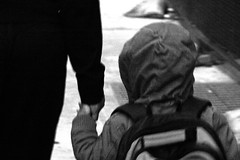
hold my hand
Originally uploaded by Phil Bardi
Against expectations, this post will not be about Obama. Well, not much at least.

Yes, watched the inauguration, was moved by Aretha Franklin but that´s that. I want to write about something more personal, smaller. Three years of age and approximately one-metre-high to be exact.

In last month´s Monocle the editorial staff had done a list of 50 promises for 2009 which would help you make your life better and for you to feel happier. The things on the list were actually quite excellent such as overhauling your magazine subscriptions, finding a sunny spot, changing your way to work and starting a recipe book. One of my favourites was starting to plan your dream house. I look at my neighbouhood in a fresh way now. The list is on our fridge door and already two things have been crossed as "done".

I chose 37 from the 50 things on the list but this is one to add: hang out with your little relatives regularly. Today - for the first time - I picked my nephew from day care and we took public transport to his home. It was just awesome.

This little guy in winter clothing looking like a Michelin Man was happy and energetic from playing football outside. He commented on people passing by and was quite excited by the tram and metro. My favourite moment was the three-year-old boy on the bright orange big metro seat chewing on the liquorice bar we picked from the kiosk together. He looked so happy and relaxed swinging his legs in the air.

All through the trip for me the little hand holding mine nearly brought tears to my eyes. Kids are way cool. And so is responsibility. The fact that my sister and brother-in-law trusted me enough to let look after their precious little guy home felt amazing. My godson squeezed my hand so tightly through his ridiculously thick mittens. This afternoon hour goes up there to my list of top experiences.

This day made me think of this comment a friend of mine made once: how would our society be different if the primary goal of the society would be a good childhood? What kind of obligations and duties it would give to us adults? And what kind of possibilities would it open for more adults to help parents make that dream happen? Was it Hillary Clinton ripping an African proverb: it takes a village.

Monday, January 19, 2009

Race To The Bottom


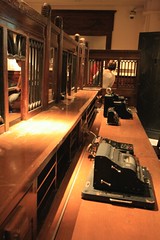
Behind the Bank Counter
Originally uploaded by YY
Another episode on my way towards becoming a real entrepeneur: the bank.

I don´t know how many articles I have read during the last years about the importance of good service in the fight over customers. How the ones who succeed are focused on the customer experience by making the encounter both smooth and clear. Quite often this has been tried through mergers and acquisitions. A phrase you hear often: "we offer all services from one counter."

But as my experience with Nordea today showed, this sometimes means that you get rather vague counselling on all the issues on that very counter. I felt sorry for the bank lady who had been assigned also to handle the insurance policies. When my questions started getting more detailed (as they do when you talk about your insurances or your pension), she was on thin ice. I was also asked numerous detailed questions without understanding their consequences. In the end we ended the interaction by her taking my mobile number and saying that a colleague of hers would call me. Not really how things should go. The experience was rather different than at Fennia where I was suggested to do certain things or set my income estimations on certain levels.

I do understand the need for lean and mean. But when you deal with issues such as health or the end of your days, you wish to have service making you feel confident and taking the fear away. Nordea still has a lot to do to get their insurance customers smile as the people on their ads.

Friday, January 16, 2009

Cool with a Conscience

It is rather refreshing to be proven wrong at times. I had seen Tyler Brûlé´s Monocle advertised for months on shop windows of every respectable news store. I kept bumping into his interviews in everything from Kauppalehti to Fantastic Man where he was branded as the definition of cool. I read his Fast Lane columns regularly from Financial Times, which I usually found kind of light on content. I mean two consecutive columns on the perfect men´s bag for a weekend trip maybe explains what I mean.

I always found Wallpaper extremely snobbish and pretentious so the expectations were not high when I purchased both Monocle and Intelligent Life yesterday from Stockmann. Intelligent life unfortunately proved me right - I glanced the magazine through and found very little worth reading. It somehow reminded me of Finnish Gloria women´s magazine´s failed attempt to make a men´s lifestyle publication relying on the holy union of cigars and sports cars.

Monocle, however, I found myself reading from cover to cover. Of course it is filled with luxury product ads but you kind of know that already when you pay 12 euros for a magazine. And then again, luxury product ads never weakened the content of Vanity Fair. But I was fascinated by Monocle mainly because:

- it promotes good ideas and people behind them (like Italy´s minister of public administration suggesting an Erasmus programme for civil servants in order for them to think outside the box or a coffee shop owner in Portland showing his customers where the coffee beans come from and bringing producers over to the US to see the other end of the service chain)
- it addresses sustainability as the thing to do, not a phenomenon we need to react to
- its graphic design is amazingly fresh and playful
- it uses a lot of illustrations
- it is strongly global with a broad correspondents´ network and not a Western publication with "voices from the rest of the world"
- it shows me a lot of Japan, a society that I find superinteresting
- it talks about ethics, local produce, making things well
- it dares to feature technological breakthroughs that will actually make our life better
- it features well-made, beautiful products that I actually would like to buy

I am hooked. Some might say that this post should have been written like 18 months ago but that is exactly the Wallpaper attitude I detest. Well done, Mr Brûlé.

Monday, January 12, 2009

Government Buddies

In today´s Helsingin Sanomat the Minister of Culture makes public his plans for reforming the funding for the arts. If Stefan Wallin gets his way, the Central Committee of the Arts would develop into a strong and largely independent body much like the Academy of Finland.

I would fully support a change where like in science, the arts funding decisions would be taken by experts of the field with a greater arm´s length from the government. This sounds more like how things were done in the Netherlands. I would also take the reform to the same level as in the Netherlands where the evaluations of arts institutions are made public so that people and the media can scrutinise and understand why dance group X gets a certain amount and why theatre Z loses half of its funding. Making government more transparent is something that I feel quite passionate about.

As a somewhat veteran of the civil society, I would encourage Mr Wallin to take a careful look also on the ways NGO funding decisions are taken. As much as I support government funding for the civil society, I am slightly troubled by the relationships emerging when civil servants or politically appointed bodies make decisions on NGO funding. I fear that the dependency on decisions by the Ministry of Education creates a civil society less willing to attack the government fiercely and a civil society serving the government rather than acting as a healthy counter force. It is only natural that a NGO leader concerned about the budget for next year feels inclined to buddy up with the Minister or the top civil servant.

In this sense I do understand bodies like Amnesty or Greenpeace which guarantee their independence by refusing government funding however this is not the solution for all civil society. I do support civil society funding as one of government´s core responsibilities. But it troubles me that it does not take years of research to identify a relationship between decreased peace NGO funding and a centre-right government, increased environmental NGO funding and the Greens in the government or the Swedish People´s Party in the government and increased funding for organisations taking care of the largely Swedish-speaking archipelago.

I would encourage Mr Wallin to look into creating an independent body deciding on funding for the civil society and making public their criteria and evaluations. This would make government more transparent, decrease risks of corruption, feed political debate and in the end support an emergence of a more active civil society.

Friday, January 09, 2009

Not On Automatic


Gear Shift Knob
Originally uploaded by Еmre
Yesterday I read a big piece from the Finnish financial magazine Optio on the concept of downshifting, a notion of slowing down apparently raising interest and popularity amongst professionals in their 20s and 30s. Less work and more life kind of sums up the idea.

I am looking at things slightly differently. Starting my own business and working for myself does not automatically mean that I would start working less, more likely is the opposite. As regular working hours are gone, it is easy to extend the working day from both ends. But at least now, after a humble experience of three days, being in control of my own schedule feels quite empowering.

I meet a lot of people who tend to act like their life would be on automatic gear and constantly accelerating. Ending a regular job and taking the entrepeneurial risks on my shoulders means for me that I go back to the traditional gear shift. I drive my own vehicle and I am therefore responsible for its road safety and maintenance. I started this yesterday with a visit to the insurance company.

Even when I will be most likely working more and longer days, on times like these it feels good to be closer to the ones you love and being able to plan personal matters into the middle of my day and not only after 17h00. Having a one-day-old nephew and having 3-year-old nephew with the need of daycare every now and then, it feels good that I can put my work-vehicle on gear 1 (or even lower) at times and take time for going to the park.

Tuesday, December 30, 2008

Art of Language


Stephen Fry
Originally uploaded by TGKW
There are some things that I absolutely love in the English. One of them is the existence of people like Stephen Fry. People who remain authentic, peculiar and unconventional and still loved by the nation. Fry is one of the leading forces in the British public eye when it comes to cherishing the English language. I highly recommend his autobiography Moab Is My Washpot, which functions as a verbal aerobics class without falling into the common trap of trying to be pretentious. The book is an extraordinary caption of the peculiarities of English public schools.

My admiration for the gentle giant Fry re-emerged yesterday evening when watching Stephen Fry in America, a wonderful BBC series where the actor/writer/presenter travels through 50 American states with a black English taxi. The journey takes him from mansions of East Coast and hippy groups of the deserts to Thanksgiving celebrations in Deep South. The programme is entertaining while respecting the people who take time to show him their daily life.

His approach is something I truly love, not laughing at the common man but really making the effort to understand what drives people. So less Borat-meets-Michael-Moore and more Sir-David-Frost-meets-Oscar-Wilde. He makes fun of phenomena, not of the people and really lives up to his promise: understanding the American soul. He finds new stories of America and with his trip writes a new narrative of the great nation with a Can Do attitude.

My next Fry project will be the podcasts of him reading short stories of, indeed, Oscar Wilde.

Thursday, December 18, 2008

Right Move

In two days the van will head back to Finland. The boxes and bags are packed and tomorrow is my farewell party from work. Today I carried two bags of stuff home from the office. This evening when packing the last boxes, I was once again quite surprised by amount and sort of stuff I have collected in the last four years - seriously, 20 sorts of tea...

This video link from the one I am heading to is once again a proof that this is the right move now. Not that I would have doubted it for a second. Even the tough Nordic winter is bearable when you are surrounded by the ones you love and who love you right back. Christmas is a good time to return.

Sunday, December 14, 2008

Coolest Damn Video Festival on the Planet


Strangers testing
Originally uploaded by amsterboy
I love my job. I just really really love my job. It is maybe weird to make that statement 5 days before leaving it but this weekend it once again became very apparent: this work is amazing as you get to work with top notch people. This weekend also made concrete all those books about collaborative creativity I have read lately: together we make better ideas.

We started StrangerFestival around two years ago on a couple of PowerPoint slides. Along the way came the visuals, the partner organisations, first videos uploaded on the site, first marketing material, more partners, more videos, an international festival and loads more. It is already a great project which has given loads of people their first time on a plane, their first video-making experience and their first international friendship.

This weekend we had a meeting first with our European partners and continued right away with the first meeting of TheStrangers, a group of young video makers acting as our expert group. Both of these meetings made it clear: this project belongs now to more people. It is not just our project. It is a bloody fab feeling when you start hearing more and more people using the word ´we´.

I am happy I get to continue in the project also next year, although in another role. Having these meetings in the beginning of the year would have made sense but then again TheStrangers group was really possible only after the first entries. It is fantastic that we can now learn from 2008 and make things better in 2009.

The people and issues we work with are amazing. Just a testing session on the website generated already a list of small things that would help make joining easier. You get to see some of them in the coming months. We came up with ideas for great workshops, created new categories, wrote down lists of possible jury members, brainstormed on prizes and even made some videos. TheStrangers showed us in the team and to each other already several videos which we had not seen before but which were winning material. It has now been proved that having young video makers owning the project with the team brings in great content. It is therefore clear now that in 2009 StrangerFestival will be even more special, even more fun and even more meaningful. I cannot wait.

Here are some of their findings:
Beautiful childhood memory from Slovakia
Role of video making in one´s life
How making a video important to you always does not need to be about you

Wednesday, December 10, 2008

Building Blocks

Very often in this blog I have made critical remarks on the employer I am about to leave behind, many of those remarks deserved. However, it is essential to also give praise when it is deserved. Today's Princess Margriet Award for cultural diversity was one of these occasions.

I was highly impressed by Stuart Hall, a British thinker I remember reading during my studies. Hall is one of the leading thinkers in the world when it comes to cultural diversity and very much deserved the award handed to him today. His short address to the crowd was very moving on the relationship of many immigrants to their place of origin as a place that does not offer comfort.

The programme stated that his speech would be commented by the Dutch Minister for European Affairs, Frans Timmermans. He very much impressed me with his clarity, his sophistication and his urge to build societies where the majority feels that newcomers do not threaten their belonging. Timmermans quoted well the old notion that if you build a society focusing on the fear of the barbarian, you end up creating a barbarian society without the barbarians. Valuable warning for the European project. It happens too often that ministers use these kinds of occasions for just arrogantly stating the importance of their own presence.

The event also proved that we can create and we need settings where sophisticated art and insightful thinking actually complement each other and where both are needed for making the argument. Thai dancer Pichet Klunchun and French choreographer Jerome Bel's dance performance Pichet Klunchun & Myself on understanding the essense of different traditions of dance and their relationship to their countries of origin was needed to cristallise Hall's speech on the importance of listening.

Moving, straight to the point and warm. Well done, European Cultural Foundation.

Monday, December 08, 2008

Moving Boxes, Moving On


moving boxes
Originally uploaded by movingcompanies
On Saturday it finally started feeling real. I was cycling home from Westerpark with 10 folded cardboard moving boxes. In less than two weeks they all should be filled. My Dad and brother will be arriving in two weekends from now, we pile them all into the van and head back to Travemunde for a 26-hour ferry trip to Helsinki. Home for Christmas.

I am glad that the move takes this form. Schiphol airport for me is a place that means short trips abroad. I know how it functions and it does not link to anything permanent. The car ride and the ferry make it concrete: time to move on, time for a change and most sadly, time to leave.

It is not yet clear what my days will be filled with from January onwards. I have sent papers for a company to the authorities and made some contacts but that is where we are. I have decided to allow myself to take some time to figure out what is the next step, what I want to do and what gives me the kicks. It is also essential to reserve time for the primary reason for packing these boxes: building a joint home and being closer to me family and friends.

With the risk of sounding to obamaesque, change feels good. Four years in one organisation is a long time. Having now the possibility to work for myself and focus on content generates a lot of excitement. After I made this decision to jump and start something new, I have not regretted it for a moment. I feel it is made for the right reason: not for the sake of leaving something but for the sake of wanting something.

Monday, December 01, 2008

Safe in the Hands of Visa


Visa
Originally uploaded by DeclanTM
Last Friday my phone rang unexpectedly:

"This is XX from Nordea Bank. I am calling about your Visa card. I wanted to check a payment made yesterday. Did you make a purchase of 700 dollars in a department store in the United States?"

My heart started beating faster:"No..." I had flown from Amsterdam to Helsinki on the previous evening so making payments in the US would qualify me to play Superman in the next film.

"Sir, it seems that someone has gained access to your credit card information. We would recommend that we close the card immediately and we send you a new one. We apologise for the inconvenience."

I must say I was amazed. I have read numerous articles about credit card frauds but never thought it would hit on me. It occurred that two payments had already been done on my card.

But more than that, I was highly impressed by VISA. The friendly woman from Nordea explained to me that they have algorithms that monitor purchase patterns and the system had alerted that this payment was not in line with others. And what made the experience even more pleasant was that the woman from the bank was extremely friendly, assured me several times that I will only pay for the purchases I have made and wanted to make it work quickly that I would receive my new card. As I checked now online, my card has been blocked from Friday on.

These things happen, we don´t live in a risk-free society. But the more important fact here is that this experience makes me an even more committed Visa customer and stops my hesitation on changing into a MasterCard (promoted heavily from all directions). This is the competitive edge of today. Job well done.

Thursday, November 27, 2008

Tradition of Elite


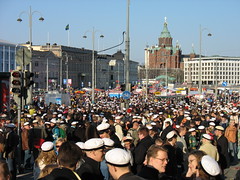
Vappu eve
Originally uploaded by Brent_Thorkelson
“What students today, the nation tomorrow.” The old promise of the student community was mentioned several times yesterday evening as the Student Union of the University of Helsinki HYY celebrated its 140th birthday. Fancy party indeed with 350 people in evening dresses and frocks.

This organization has been fundamental for our small nation in the North. It was the students of this very union who sang the national anthem for the first time when Finland was still under the Russian rule. It was also this very student union, which acted as the key stage in the cultural revolution of the late 1960s. 20 years ago HYY was one of the founders of Pakolaisapu, a legal counseling organization for refugees. This role taken by students is in no way unique for Finland – in the US students played a fundamental role in shaping the civil rights or anti-Viet Nam agenda.

It has been fours year since I attended these annual celebrations. This community has been crucial in shaping who I am now and how I carry myself to the future. It is not “just” some volunteering, it is a school of citizenship. I feel very strongly about its well being, at the same time recognizing that decisions are now made by people significantly younger than I am. And rightly so.

These parties provide us a peak into the mindset of their time. Selection of speakers and the songs being sung tell about the priorities and concerns.

This hope of acting as a beacon is of course an issue that the union needs to think of as part of its strategy in keeping students active in it: how much is the student union up to its time and promise of leadership? How does it keep itself fresh and alert? How is the student union showing the way of tomorrow for its nation? Which traditions are worth preserving and which are ones we have been doing for too long just out of a habit?

Relating to this challenge, I found myself thinking of the following yesterday evening: Singing is a great student tradition. But why students would sing in year 2008 mostly about boozing and even more troubling:”More land for Finland, more Finland on Earth, Let´s March to Carelia, Carelia!”

Wednesday, November 19, 2008

Echoes From The Diversity Chamber


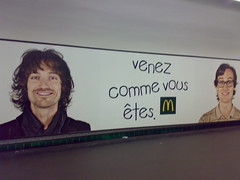
Venez comme vous etes
Originally uploaded by amsterboy
It is obvious to everyone that the face of Europe is changing. We are entering an (in my opinion healthier) era, which builds on difference as an opportunity and as a creative potential for Europe. There are more people and countries who are moving away from the “difference does not matter, let´s just get along” rhetoric and wanting to find practical strategies for negotiating the house rules of our cities, countries and Europe. More and more of us are understanding that we can never agree on values and that it is next to impossible to change one´s values. However, what we can do is agree on the ways we live and work together in a way that builds on aspirations rather than on backgrounds.

It is no wonder that the European Union is busy with the subject. With all its languages and growing migration, Europe is going through a serious shakeup. A continent that built up the nation state is now struggling with it. Therefore the year 2008 has been announced to be the European Year of Intercultural Dialogue and a new slogan has been launched: united in diversity. It is difficult to find a politician who would not mention the magic words in an opening speech: intercultural dialogue. Having spent the last two days in a conference in Paris on the subject, this has also been empirically proven on local, national and EU level.

But there is a great risk in this rising interest. The more the phrase ‘intercultural dialogue’ is used without definitions or concrete proposals, the more it faces the risk of turning into a hollow phrase. When intercultural dialogue becomes the issue rather than a practical tool for mediation, the more it detaches from our daily lives. Intercultural dialogue is not something we experience, we experience interactions with other people and we deal with concrete differences of opinion. The last year has taught me that European politicians need serious training on storytelling and on touching also our emotional side next to the pragmatic one.

I cannot change someone’s values by banging them on the head with mine. If I express no sincere interest towards his or her positions and beliefs and do not recognize the difference, we just end up having a pretentious and shallow conversation. We need to focus less on compromise and more on comprehension. We need to dare to go on the level of goals and aspirations and stop with an obsession for instance on national/shared values. The core issue is what we do when we live together, not what we believe in. By being more explicit and detailed, we can also be tough on the ones that break the rules - regardless whether they are native or immigrant.

(This photo from the streets of Paris works well for this theme. Massive McDonalds rebranding campaign on all billboards in Paris saying: Come as you are.)

Friday, November 14, 2008

Ch-Ch-Change

There´s been a lot of talk about change during the last few weeks. We are seeing a new face of American leadership. As a friend of mine coined it perfectly yesterday:"It is not only Barack Obama. It is the view of seeing an African-American family walking on the stage with the American flag in the background."I could not agree with her more. I think a diverse set of leaders with diverse styles and aspirations opens possibilities for more people and is in the end better for us all.

On my flight to Helsinki last Wednesday I was reading the Newsweek special commemorative issue on Obama´s election. It made me shiver and moved me nearly to tears (no, it was not the KLM Pinot Grigio). On these moments I confess having jealousy towards the Americans: the boldness of top notch journalists to show emotion and excitement, to allow themselves to give a politician the chance to make that change.

I am engaging myself into big changes in my life. The first steps have been taken and I cannot tell you how good it feels. It means re-evaluating what you can, what you want and what makes you happy. Shaking up your personal dollhouse is bloody scary but it is something one ought to do every few years. And when you throw all the stuff on the table and prioritise them again with a fresh look, it leads to surprising result. More to follow.

Friday, November 07, 2008

This Is Who I Am


Saira Khan
Originally uploaded by amsterboy
Having spent a tremendous amount of time in discussions on diversity in the last few years, I cannot tell you how refreshing it is to hear at times also something different than the standard "let´s all just get along" rhetoric. Yesterday´s Diversity Show conference by the Dutch public broadcasters and the European Broadcasting Union was a fresh and bold attempt to get beyond the discussion about problems and cultures. Diversity Show looked at multiculturalism in a way that inspires people and offers us in culture and media fields much more solutions: how diversity on screen and in the workforce allows us to do our work better, find new subjects and make more interesting content.

I was most impressed by the approach, which the presenter Saira Khan and many others had chosen. They defined themselves on stage before the audience had a chance to make their assumptions. They made the statement I would love to hear more often: this is who I am, I am not asking for any special treatment and I have no problem talking about my background - but allow me to do it on my terms. Saira Khan coined the issue well referring to her experience in The Apprentice TV show:"When the rules are the same, you get surprising results."

Personally and professionally the conference was a great inspiration for me. It gave me more confidence that we are doing things right in StrangerFestival: we allow the young video makers to choose what they talk about and what matters to them. We are all experts in our own lives and equality allows us to co-exist and share and feel part of something bigger. This does not mean shying away from differences, it means recognition of everyone´s right to define themselves. Diversity for us in StrangerFestival means that we strive for getting as different voices as possible from a diverse youth population, i.e. giving opportunities for more people and getting better content. In this manner we take a deliberate stand away from projects where minorities are invited to explain how different they are.

Way too often diversity is tackled on the level of an individual and not on the level of the system. Diversity needs to come in to the game in the recruitment phase and when negotiating the shared rules, not only in individual job interviews. As the speaker from IBM said in the Diversity Show:"If I would ever feel that I am promoted because of my cultural background and not my performance, I would leave. But the fact that I know the number of women and minorities in executive positions at IBM, means that someone is keeping score."

And as the last praise for yesterday, the great thing the Dutch public broadcasters had done was making a conference on diversity fun, visually incredible and good entertainment. I have often wondered why people who are able to do great programmes, are not able to translate their skills into making great events. Diversity Show built on competences from television in terms of length and formats of speeches, use of visuals and interaction amongst people. As EBU´s Head of Television Björn Erichsen put it yesterday: Diversity Show has set a new standard for European media conferences.

Tuesday, November 04, 2008

Just A Few Hours

"Our lives on this planet are too short, the work to be done is too great. But we can perhaps remember, that those who live with us are our brothers, that they share with us the same short moment of life that they seek as do we, nothing but the chance to live out their lives in purpose and in happiness, surely this bond of common fate, this bond of common roles can begin to teach us something, that we can begin to work a little harder, to become in our hearts brothers and countrymen once again."
- Senator, Presidential Candidate Robert F. Kennedy at the City Club of Cleveland
Cleveland, Ohio (5 April 1968)

Sunday, November 02, 2008

My Name Is Moscow


DSC07351
Originally uploaded by amsterboy
A smell of urine hits you as you take the steps down to the underpass. The tunnel is swamped with people selling electronics, kitsch souvenirs, pastries and alcohol. As we make our way through the gates down to the metro, the numbers from the presentation earlier during the day hit me: 9 million passengers in public tranport every day. This is Moscow.

And this is only the people who choose for public transport. In the information pack from the British Council they instruct us to head to the airport four hours before departure. It seems absurd but already on the way into the city upon arrival it starts making sense. Two hours moving on snail speed for something like 20 kilometres.

During a presentation by a young architectural office we see fancy designs for gated communities and ski slopes on the rooftops of shopping centres. One of them looks a lot like Rem Koolhaas´ star architecture in China. The smooth PowerPoint presentation makes me think of the demand by lecturer Roy van Dalm: a future plan of a city needs to be authentic, it needs to link to the city´s DNA.

We cannot all become Bilbao or Amsterdam. It is not the right answer for the struggles of Moscow to copy an internationally famous architectural plan when the city is barely coping with its amount of traffic and the thousands of homeless people. Copying others results only into being a second-rate version. An answer to Moscow´s challenging is not starting from scratch, it is seeing how people can start imagining a new sense of being together building on the history of the city. In other words, how Moscow can become a better Moscow. In order to build a community, you need to give citizens the possibility to continue and enhance their individual experience of Moscow.

I would not trust governments to come up with this new imagination. I have seen two many cities proclaiming themselves as the creative capital. But I do feel that you need artistic and activist interventions to stimulate seeing common things in a quirky manner. You need positive engagement and a bit of silliness even in a form of a apartment block bingo or guerilla gardening. This does not mean wasting a lot of money on star architects, it means change in the IKEA style: giving people affordable access to imagination stimulates them to start experimenting with new looks and feelings. Moscow needs the attitude of guerilla gardener Richard Reynolds: I can do this too. I can change Moscow.