On Saturday it finally started feeling real. I was cycling home from Westerpark with 10 folded cardboard moving boxes. In less than two weeks they all should be filled. My Dad and brother will be arriving in two weekends from now, we pile them all into the van and head back to Travemunde for a 26-hour ferry trip to Helsinki. Home for Christmas.
I am glad that the move takes this form. Schiphol airport for me is a place that means short trips abroad. I know how it functions and it does not link to anything permanent. The car ride and the ferry make it concrete: time to move on, time for a change and most sadly, time to leave.
It is not yet clear what my days will be filled with from January onwards. I have sent papers for a company to the authorities and made some contacts but that is where we are. I have decided to allow myself to take some time to figure out what is the next step, what I want to do and what gives me the kicks. It is also essential to reserve time for the primary reason for packing these boxes: building a joint home and being closer to me family and friends.
With the risk of sounding to obamaesque, change feels good. Four years in one organisation is a long time. Having now the possibility to work for myself and focus on content generates a lot of excitement. After I made this decision to jump and start something new, I have not regretted it for a moment. I feel it is made for the right reason: not for the sake of leaving something but for the sake of wanting something.
Monday, December 08, 2008



Monday, December 01, 2008
Safe in the Hands of Visa
Last Friday my phone rang unexpectedly:
"This is XX from Nordea Bank. I am calling about your Visa card. I wanted to check a payment made yesterday. Did you make a purchase of 700 dollars in a department store in the United States?"
My heart started beating faster:"No..." I had flown from Amsterdam to Helsinki on the previous evening so making payments in the US would qualify me to play Superman in the next film.
"Sir, it seems that someone has gained access to your credit card information. We would recommend that we close the card immediately and we send you a new one. We apologise for the inconvenience."
I must say I was amazed. I have read numerous articles about credit card frauds but never thought it would hit on me. It occurred that two payments had already been done on my card.
But more than that, I was highly impressed by VISA. The friendly woman from Nordea explained to me that they have algorithms that monitor purchase patterns and the system had alerted that this payment was not in line with others. And what made the experience even more pleasant was that the woman from the bank was extremely friendly, assured me several times that I will only pay for the purchases I have made and wanted to make it work quickly that I would receive my new card. As I checked now online, my card has been blocked from Friday on.
These things happen, we don´t live in a risk-free society. But the more important fact here is that this experience makes me an even more committed Visa customer and stops my hesitation on changing into a MasterCard (promoted heavily from all directions). This is the competitive edge of today. Job well done.

"This is XX from Nordea Bank. I am calling about your Visa card. I wanted to check a payment made yesterday. Did you make a purchase of 700 dollars in a department store in the United States?"
My heart started beating faster:"No..." I had flown from Amsterdam to Helsinki on the previous evening so making payments in the US would qualify me to play Superman in the next film.
"Sir, it seems that someone has gained access to your credit card information. We would recommend that we close the card immediately and we send you a new one. We apologise for the inconvenience."
I must say I was amazed. I have read numerous articles about credit card frauds but never thought it would hit on me. It occurred that two payments had already been done on my card.
But more than that, I was highly impressed by VISA. The friendly woman from Nordea explained to me that they have algorithms that monitor purchase patterns and the system had alerted that this payment was not in line with others. And what made the experience even more pleasant was that the woman from the bank was extremely friendly, assured me several times that I will only pay for the purchases I have made and wanted to make it work quickly that I would receive my new card. As I checked now online, my card has been blocked from Friday on.
These things happen, we don´t live in a risk-free society. But the more important fact here is that this experience makes me an even more committed Visa customer and stops my hesitation on changing into a MasterCard (promoted heavily from all directions). This is the competitive edge of today. Job well done.
Thursday, November 27, 2008
Tradition of Elite
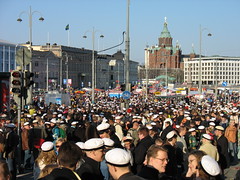
“What students today, the nation tomorrow.” The old promise of the student community was mentioned several times yesterday evening as the Student Union of the University of Helsinki HYY celebrated its 140th birthday. Fancy party indeed with 350 people in evening dresses and frocks.
This organization has been fundamental for our small nation in the North. It was the students of this very union who sang the national anthem for the first time when Finland was still under the Russian rule. It was also this very student union, which acted as the key stage in the cultural revolution of the late 1960s. 20 years ago HYY was one of the founders of Pakolaisapu, a legal counseling organization for refugees. This role taken by students is in no way unique for Finland – in the US students played a fundamental role in shaping the civil rights or anti-Viet Nam agenda.
It has been fours year since I attended these annual celebrations. This community has been crucial in shaping who I am now and how I carry myself to the future. It is not “just” some volunteering, it is a school of citizenship. I feel very strongly about its well being, at the same time recognizing that decisions are now made by people significantly younger than I am. And rightly so.
These parties provide us a peak into the mindset of their time. Selection of speakers and the songs being sung tell about the priorities and concerns.
This hope of acting as a beacon is of course an issue that the union needs to think of as part of its strategy in keeping students active in it: how much is the student union up to its time and promise of leadership? How does it keep itself fresh and alert? How is the student union showing the way of tomorrow for its nation? Which traditions are worth preserving and which are ones we have been doing for too long just out of a habit?
Relating to this challenge, I found myself thinking of the following yesterday evening: Singing is a great student tradition. But why students would sing in year 2008 mostly about boozing and even more troubling:”More land for Finland, more Finland on Earth, Let´s March to Carelia, Carelia!”
This organization has been fundamental for our small nation in the North. It was the students of this very union who sang the national anthem for the first time when Finland was still under the Russian rule. It was also this very student union, which acted as the key stage in the cultural revolution of the late 1960s. 20 years ago HYY was one of the founders of Pakolaisapu, a legal counseling organization for refugees. This role taken by students is in no way unique for Finland – in the US students played a fundamental role in shaping the civil rights or anti-Viet Nam agenda.
It has been fours year since I attended these annual celebrations. This community has been crucial in shaping who I am now and how I carry myself to the future. It is not “just” some volunteering, it is a school of citizenship. I feel very strongly about its well being, at the same time recognizing that decisions are now made by people significantly younger than I am. And rightly so.
These parties provide us a peak into the mindset of their time. Selection of speakers and the songs being sung tell about the priorities and concerns.
This hope of acting as a beacon is of course an issue that the union needs to think of as part of its strategy in keeping students active in it: how much is the student union up to its time and promise of leadership? How does it keep itself fresh and alert? How is the student union showing the way of tomorrow for its nation? Which traditions are worth preserving and which are ones we have been doing for too long just out of a habit?
Relating to this challenge, I found myself thinking of the following yesterday evening: Singing is a great student tradition. But why students would sing in year 2008 mostly about boozing and even more troubling:”More land for Finland, more Finland on Earth, Let´s March to Carelia, Carelia!”
Wednesday, November 19, 2008
Echoes From The Diversity Chamber
It is obvious to everyone that the face of Europe is changing. We are entering an (in my opinion healthier) era, which builds on difference as an opportunity and as a creative potential for Europe. There are more people and countries who are moving away from the “difference does not matter, let´s just get along” rhetoric and wanting to find practical strategies for negotiating the house rules of our cities, countries and Europe. More and more of us are understanding that we can never agree on values and that it is next to impossible to change one´s values. However, what we can do is agree on the ways we live and work together in a way that builds on aspirations rather than on backgrounds.
It is no wonder that the European Union is busy with the subject. With all its languages and growing migration, Europe is going through a serious shakeup. A continent that built up the nation state is now struggling with it. Therefore the year 2008 has been announced to be the European Year of Intercultural Dialogue and a new slogan has been launched: united in diversity. It is difficult to find a politician who would not mention the magic words in an opening speech: intercultural dialogue. Having spent the last two days in a conference in Paris on the subject, this has also been empirically proven on local, national and EU level.
But there is a great risk in this rising interest. The more the phrase ‘intercultural dialogue’ is used without definitions or concrete proposals, the more it faces the risk of turning into a hollow phrase. When intercultural dialogue becomes the issue rather than a practical tool for mediation, the more it detaches from our daily lives. Intercultural dialogue is not something we experience, we experience interactions with other people and we deal with concrete differences of opinion. The last year has taught me that European politicians need serious training on storytelling and on touching also our emotional side next to the pragmatic one.
I cannot change someone’s values by banging them on the head with mine. If I express no sincere interest towards his or her positions and beliefs and do not recognize the difference, we just end up having a pretentious and shallow conversation. We need to focus less on compromise and more on comprehension. We need to dare to go on the level of goals and aspirations and stop with an obsession for instance on national/shared values. The core issue is what we do when we live together, not what we believe in. By being more explicit and detailed, we can also be tough on the ones that break the rules - regardless whether they are native or immigrant.
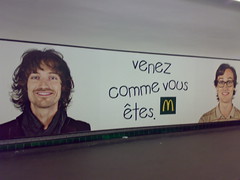
(This photo from the streets of Paris works well for this theme. Massive McDonalds rebranding campaign on all billboards in Paris saying: Come as you are.)
It is no wonder that the European Union is busy with the subject. With all its languages and growing migration, Europe is going through a serious shakeup. A continent that built up the nation state is now struggling with it. Therefore the year 2008 has been announced to be the European Year of Intercultural Dialogue and a new slogan has been launched: united in diversity. It is difficult to find a politician who would not mention the magic words in an opening speech: intercultural dialogue. Having spent the last two days in a conference in Paris on the subject, this has also been empirically proven on local, national and EU level.
But there is a great risk in this rising interest. The more the phrase ‘intercultural dialogue’ is used without definitions or concrete proposals, the more it faces the risk of turning into a hollow phrase. When intercultural dialogue becomes the issue rather than a practical tool for mediation, the more it detaches from our daily lives. Intercultural dialogue is not something we experience, we experience interactions with other people and we deal with concrete differences of opinion. The last year has taught me that European politicians need serious training on storytelling and on touching also our emotional side next to the pragmatic one.
I cannot change someone’s values by banging them on the head with mine. If I express no sincere interest towards his or her positions and beliefs and do not recognize the difference, we just end up having a pretentious and shallow conversation. We need to focus less on compromise and more on comprehension. We need to dare to go on the level of goals and aspirations and stop with an obsession for instance on national/shared values. The core issue is what we do when we live together, not what we believe in. By being more explicit and detailed, we can also be tough on the ones that break the rules - regardless whether they are native or immigrant.
(This photo from the streets of Paris works well for this theme. Massive McDonalds rebranding campaign on all billboards in Paris saying: Come as you are.)
Friday, November 14, 2008
Ch-Ch-Change
There´s been a lot of talk about change during the last few weeks. We are seeing a new face of American leadership. As a friend of mine coined it perfectly yesterday:"It is not only Barack Obama. It is the view of seeing an African-American family walking on the stage with the American flag in the background."I could not agree with her more. I think a diverse set of leaders with diverse styles and aspirations opens possibilities for more people and is in the end better for us all.
On my flight to Helsinki last Wednesday I was reading the Newsweek special commemorative issue on Obama´s election. It made me shiver and moved me nearly to tears (no, it was not the KLM Pinot Grigio). On these moments I confess having jealousy towards the Americans: the boldness of top notch journalists to show emotion and excitement, to allow themselves to give a politician the chance to make that change.
I am engaging myself into big changes in my life. The first steps have been taken and I cannot tell you how good it feels. It means re-evaluating what you can, what you want and what makes you happy. Shaking up your personal dollhouse is bloody scary but it is something one ought to do every few years. And when you throw all the stuff on the table and prioritise them again with a fresh look, it leads to surprising result. More to follow.
Friday, November 07, 2008
This Is Who I Am
Having spent a tremendous amount of time in discussions on diversity in the last few years, I cannot tell you how refreshing it is to hear at times also something different than the standard "let´s all just get along" rhetoric. Yesterday´s Diversity Show conference by the Dutch public broadcasters and the European Broadcasting Union was a fresh and bold attempt to get beyond the discussion about problems and cultures. Diversity Show looked at multiculturalism in a way that inspires people and offers us in culture and media fields much more solutions: how diversity on screen and in the workforce allows us to do our work better, find new subjects and make more interesting content.
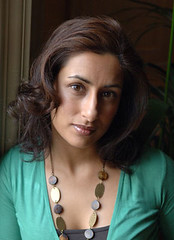
I was most impressed by the approach, which the presenter Saira Khan and many others had chosen. They defined themselves on stage before the audience had a chance to make their assumptions. They made the statement I would love to hear more often: this is who I am, I am not asking for any special treatment and I have no problem talking about my background - but allow me to do it on my terms. Saira Khan coined the issue well referring to her experience in The Apprentice TV show:"When the rules are the same, you get surprising results."
Personally and professionally the conference was a great inspiration for me. It gave me more confidence that we are doing things right in StrangerFestival: we allow the young video makers to choose what they talk about and what matters to them. We are all experts in our own lives and equality allows us to co-exist and share and feel part of something bigger. This does not mean shying away from differences, it means recognition of everyone´s right to define themselves. Diversity for us in StrangerFestival means that we strive for getting as different voices as possible from a diverse youth population, i.e. giving opportunities for more people and getting better content. In this manner we take a deliberate stand away from projects where minorities are invited to explain how different they are.
Way too often diversity is tackled on the level of an individual and not on the level of the system. Diversity needs to come in to the game in the recruitment phase and when negotiating the shared rules, not only in individual job interviews. As the speaker from IBM said in the Diversity Show:"If I would ever feel that I am promoted because of my cultural background and not my performance, I would leave. But the fact that I know the number of women and minorities in executive positions at IBM, means that someone is keeping score."
And as the last praise for yesterday, the great thing the Dutch public broadcasters had done was making a conference on diversity fun, visually incredible and good entertainment. I have often wondered why people who are able to do great programmes, are not able to translate their skills into making great events. Diversity Show built on competences from television in terms of length and formats of speeches, use of visuals and interaction amongst people. As EBU´s Head of Television Björn Erichsen put it yesterday: Diversity Show has set a new standard for European media conferences.
I was most impressed by the approach, which the presenter Saira Khan and many others had chosen. They defined themselves on stage before the audience had a chance to make their assumptions. They made the statement I would love to hear more often: this is who I am, I am not asking for any special treatment and I have no problem talking about my background - but allow me to do it on my terms. Saira Khan coined the issue well referring to her experience in The Apprentice TV show:"When the rules are the same, you get surprising results."
Personally and professionally the conference was a great inspiration for me. It gave me more confidence that we are doing things right in StrangerFestival: we allow the young video makers to choose what they talk about and what matters to them. We are all experts in our own lives and equality allows us to co-exist and share and feel part of something bigger. This does not mean shying away from differences, it means recognition of everyone´s right to define themselves. Diversity for us in StrangerFestival means that we strive for getting as different voices as possible from a diverse youth population, i.e. giving opportunities for more people and getting better content. In this manner we take a deliberate stand away from projects where minorities are invited to explain how different they are.
Way too often diversity is tackled on the level of an individual and not on the level of the system. Diversity needs to come in to the game in the recruitment phase and when negotiating the shared rules, not only in individual job interviews. As the speaker from IBM said in the Diversity Show:"If I would ever feel that I am promoted because of my cultural background and not my performance, I would leave. But the fact that I know the number of women and minorities in executive positions at IBM, means that someone is keeping score."
And as the last praise for yesterday, the great thing the Dutch public broadcasters had done was making a conference on diversity fun, visually incredible and good entertainment. I have often wondered why people who are able to do great programmes, are not able to translate their skills into making great events. Diversity Show built on competences from television in terms of length and formats of speeches, use of visuals and interaction amongst people. As EBU´s Head of Television Björn Erichsen put it yesterday: Diversity Show has set a new standard for European media conferences.
Tuesday, November 04, 2008
Just A Few Hours
"Our lives on this planet are too short, the work to be done is too great. But we can perhaps remember, that those who live with us are our brothers, that they share with us the same short moment of life that they seek as do we, nothing but the chance to live out their lives in purpose and in happiness, surely this bond of common fate, this bond of common roles can begin to teach us something, that we can begin to work a little harder, to become in our hearts brothers and countrymen once again."
- Senator, Presidential Candidate Robert F. Kennedy at the City Club of Cleveland
Cleveland, Ohio (5 April 1968)
Sunday, November 02, 2008
My Name Is Moscow
A smell of urine hits you as you take the steps down to the underpass. The tunnel is swamped with people selling electronics, kitsch souvenirs, pastries and alcohol. As we make our way through the gates down to the metro, the numbers from the presentation earlier during the day hit me: 9 million passengers in public tranport every day. This is Moscow.
And this is only the people who choose for public transport. In the information pack from the British Council they instruct us to head to the airport four hours before departure. It seems absurd but already on the way into the city upon arrival it starts making sense. Two hours moving on snail speed for something like 20 kilometres.
During a presentation by a young architectural office we see fancy designs for gated communities and ski slopes on the rooftops of shopping centres. One of them looks a lot like Rem Koolhaas´ star architecture in China. The smooth PowerPoint presentation makes me think of the demand by lecturer Roy van Dalm: a future plan of a city needs to be authentic, it needs to link to the city´s DNA.
We cannot all become Bilbao or Amsterdam. It is not the right answer for the struggles of Moscow to copy an internationally famous architectural plan when the city is barely coping with its amount of traffic and the thousands of homeless people. Copying others results only into being a second-rate version. An answer to Moscow´s challenging is not starting from scratch, it is seeing how people can start imagining a new sense of being together building on the history of the city. In other words, how Moscow can become a better Moscow. In order to build a community, you need to give citizens the possibility to continue and enhance their individual experience of Moscow.
I would not trust governments to come up with this new imagination. I have seen two many cities proclaiming themselves as the creative capital. But I do feel that you need artistic and activist interventions to stimulate seeing common things in a quirky manner. You need positive engagement and a bit of silliness even in a form of a apartment block bingo or guerilla gardening. This does not mean wasting a lot of money on star architects, it means change in the IKEA style: giving people affordable access to imagination stimulates them to start experimenting with new looks and feelings. Moscow needs the attitude of guerilla gardener Richard Reynolds: I can do this too. I can change Moscow.
And this is only the people who choose for public transport. In the information pack from the British Council they instruct us to head to the airport four hours before departure. It seems absurd but already on the way into the city upon arrival it starts making sense. Two hours moving on snail speed for something like 20 kilometres.
During a presentation by a young architectural office we see fancy designs for gated communities and ski slopes on the rooftops of shopping centres. One of them looks a lot like Rem Koolhaas´ star architecture in China. The smooth PowerPoint presentation makes me think of the demand by lecturer Roy van Dalm: a future plan of a city needs to be authentic, it needs to link to the city´s DNA.
We cannot all become Bilbao or Amsterdam. It is not the right answer for the struggles of Moscow to copy an internationally famous architectural plan when the city is barely coping with its amount of traffic and the thousands of homeless people. Copying others results only into being a second-rate version. An answer to Moscow´s challenging is not starting from scratch, it is seeing how people can start imagining a new sense of being together building on the history of the city. In other words, how Moscow can become a better Moscow. In order to build a community, you need to give citizens the possibility to continue and enhance their individual experience of Moscow.
I would not trust governments to come up with this new imagination. I have seen two many cities proclaiming themselves as the creative capital. But I do feel that you need artistic and activist interventions to stimulate seeing common things in a quirky manner. You need positive engagement and a bit of silliness even in a form of a apartment block bingo or guerilla gardening. This does not mean wasting a lot of money on star architects, it means change in the IKEA style: giving people affordable access to imagination stimulates them to start experimenting with new looks and feelings. Moscow needs the attitude of guerilla gardener Richard Reynolds: I can do this too. I can change Moscow.
Monday, October 27, 2008
Few Steps Away From The Left
So the local elections are done in Finland. It was fantastic to see many of my friends getting through. They all deserve it. Congratulations to Elina, Laura K, Mari, Laura R, Ville and Nanna. Helsinki seems to be in good hands.
The centre-right party National Coalition (Kokoomus) is the winner of the elections being for the first time in Finland´s history the biggest party on the municipal level nation-wide. They even managed to pass the Social Democrats in Vantaa, a traditionally strongly leftish city next to Helsinki. Kokoomus is growing its alliance amongst Finns, which I hope means moving even more strongly towards liberalism also socially.
The Greens beat the Social Democrats with clear numbers in Helsinki and became only for the second time in history the second biggest party of the capital. I hope this means more investments in services, in public transport and urban planning. Traffic policy is the big issue where Kokoomus and the Greens will most likely be bolstering their muscles against each other in the course of the next four years.
Nationally the biggest winner of the elections is the populist True Finns growing their seat number nationally with 336 seats. They have clearly marked their place as a serious contestant for the votes of the working class and the unemployed with a xenophobic message. This truly worries me even if one could seek for some consolation from the fact that the rise of the populist right is a pan-European phenomenon. I understand the fear of insecurity that the True Finns tap into but in times like these we really see what kind of a wonderful safety net the EU and the euro are for us. The responsibility of the other parties is not to ignore the True Finns but to take them on their message and reveal the weakness of their rhetoric. It is however yet difficult to make any prognosis what their support will result to apart from offensive language.
The Social Democrats came down in the elections with rocket speed. Their populism did not work in this economic situation with factories being closed down across the country. I feel most Finns understand that it is time to save, not to demand more for free. Only in Helsinki they lost nearly 12.000 votes mostly going to the Greens and True Finns. The fall especially in Helsinki was harder than anyone expected. It only continues the long list of evidence on the crisis of European Left. Chairperson Urpilainen´s strategy of claiming her party to be part of the centre can be questioned - at least the voters were not energised by it. Taking the position of the conservative and stubborn defender of the Nordic welfare state (which they claim to be their creation) is not a very aspirational campaign message.
In other parts of the country the results also show difficulties for the Centre Party, traditionally the biggest party on local level and also in the last parliament elections. The success of Kokoomus is mostly due to the problems of the Centre Party. The position of Prime Minister Vanhanen as the party leader is significantly weakened for instance by the poor results in Lapland - Centre Party lost there 8 % of their votes from 2004 meaning over 6 000 votes. It is interesting to see how the price of being in government is only paid in these elections by the Centre Party.
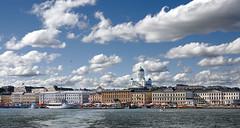
The centre-right party National Coalition (Kokoomus) is the winner of the elections being for the first time in Finland´s history the biggest party on the municipal level nation-wide. They even managed to pass the Social Democrats in Vantaa, a traditionally strongly leftish city next to Helsinki. Kokoomus is growing its alliance amongst Finns, which I hope means moving even more strongly towards liberalism also socially.
The Greens beat the Social Democrats with clear numbers in Helsinki and became only for the second time in history the second biggest party of the capital. I hope this means more investments in services, in public transport and urban planning. Traffic policy is the big issue where Kokoomus and the Greens will most likely be bolstering their muscles against each other in the course of the next four years.
Nationally the biggest winner of the elections is the populist True Finns growing their seat number nationally with 336 seats. They have clearly marked their place as a serious contestant for the votes of the working class and the unemployed with a xenophobic message. This truly worries me even if one could seek for some consolation from the fact that the rise of the populist right is a pan-European phenomenon. I understand the fear of insecurity that the True Finns tap into but in times like these we really see what kind of a wonderful safety net the EU and the euro are for us. The responsibility of the other parties is not to ignore the True Finns but to take them on their message and reveal the weakness of their rhetoric. It is however yet difficult to make any prognosis what their support will result to apart from offensive language.
The Social Democrats came down in the elections with rocket speed. Their populism did not work in this economic situation with factories being closed down across the country. I feel most Finns understand that it is time to save, not to demand more for free. Only in Helsinki they lost nearly 12.000 votes mostly going to the Greens and True Finns. The fall especially in Helsinki was harder than anyone expected. It only continues the long list of evidence on the crisis of European Left. Chairperson Urpilainen´s strategy of claiming her party to be part of the centre can be questioned - at least the voters were not energised by it. Taking the position of the conservative and stubborn defender of the Nordic welfare state (which they claim to be their creation) is not a very aspirational campaign message.
In other parts of the country the results also show difficulties for the Centre Party, traditionally the biggest party on local level and also in the last parliament elections. The success of Kokoomus is mostly due to the problems of the Centre Party. The position of Prime Minister Vanhanen as the party leader is significantly weakened for instance by the poor results in Lapland - Centre Party lost there 8 % of their votes from 2004 meaning over 6 000 votes. It is interesting to see how the price of being in government is only paid in these elections by the Centre Party.
Friday, October 24, 2008
Out of Touch
Had a free day today and decided to watch the latest YLE debate for local elections in Finland. For me, having spent last weeks following American elections, the Finnish experience is somewhat disappointing. It is unbelievable how the chairpersons of Finnish political parties tend to forget that the voters in the elections are not the local governments but the people. The Chairs only talk about institutions, infrastructure and government. What people want and what people should do seems to be forgotten both by the politicians as well as the journalists hosting the debate. The great thing YLE, however, have done is bringing the Party Secretaries into the studio to help the Chairs in details.
The weakest from the debaters based on my judgement were the leader of the Greens Tarja Cronberg, leader of the Centre Party Matti Vanhanen and leader of the Social Democrats Jutta Urpilainen. Minister of Labour Cronberg spoke twice in the first hour and is not able to push forward the Green agenda on services and quality of life. She tries to balance urban life and rural areas but gets somewhat confused with all the aspects. She becomes a voice of the government rather than representing the Greens in local politics although she improves her performance towards the end. Prime Minister Vanhanen's problems are somewhat alike. As Prime Minister he seems to act like he would be somewhat above the others and ends up coming across as smug and arrogant and not willing to take any criticism. Opposition leader Urpilainen however falls into the trap of populism. She is not able to answer questions on how Social Democrats would fund their "more, more, more" agenda. Urpilainen also gets unfortunately agitated when pushed into the corner with tough questions.
The winners of the debate are the populist True Finns and the centre liberal National Coalition. They get their ideological message across (True Finns about defenfing the small man and National Coalition on balancing costs and income). Leader of the National Coalition, Minister of Finance Jyrki Katainen manages to stay calm and push through the message that the current government has invested in municipalities. Leader of the centre-right Swedish People's Party, Minister of Culture Stefan Wallin manages also to be clear and talk about caring and climate change.
But the key problem is not between people, it is in the nature of the debate. The most absurd moment was the discussion over a recent poll where 62 % of respondents think that politicians can be bought in urban planning decisions. The reaction of the Party Secretary Jarmo Korhonen:"No Finnish politician can be bought. I know." That's the way Finnish dialogue works.
Overall the discussion stays in concepts only familiar to politicians and very seldom looks into the position of the individual in the changes. Dear leaders, no one uses words such as structure and resource in normal language. It enforces the idea that in order to take part in politics, you need to learn a new language.
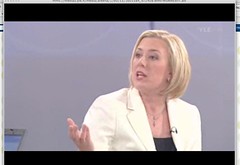
The weakest from the debaters based on my judgement were the leader of the Greens Tarja Cronberg, leader of the Centre Party Matti Vanhanen and leader of the Social Democrats Jutta Urpilainen. Minister of Labour Cronberg spoke twice in the first hour and is not able to push forward the Green agenda on services and quality of life. She tries to balance urban life and rural areas but gets somewhat confused with all the aspects. She becomes a voice of the government rather than representing the Greens in local politics although she improves her performance towards the end. Prime Minister Vanhanen's problems are somewhat alike. As Prime Minister he seems to act like he would be somewhat above the others and ends up coming across as smug and arrogant and not willing to take any criticism. Opposition leader Urpilainen however falls into the trap of populism. She is not able to answer questions on how Social Democrats would fund their "more, more, more" agenda. Urpilainen also gets unfortunately agitated when pushed into the corner with tough questions.
The winners of the debate are the populist True Finns and the centre liberal National Coalition. They get their ideological message across (True Finns about defenfing the small man and National Coalition on balancing costs and income). Leader of the National Coalition, Minister of Finance Jyrki Katainen manages to stay calm and push through the message that the current government has invested in municipalities. Leader of the centre-right Swedish People's Party, Minister of Culture Stefan Wallin manages also to be clear and talk about caring and climate change.
But the key problem is not between people, it is in the nature of the debate. The most absurd moment was the discussion over a recent poll where 62 % of respondents think that politicians can be bought in urban planning decisions. The reaction of the Party Secretary Jarmo Korhonen:"No Finnish politician can be bought. I know." That's the way Finnish dialogue works.
Overall the discussion stays in concepts only familiar to politicians and very seldom looks into the position of the individual in the changes. Dear leaders, no one uses words such as structure and resource in normal language. It enforces the idea that in order to take part in politics, you need to learn a new language.
Tuesday, October 21, 2008
This Is What This Election Is About
Colin Powell endorsed Barack Obama last Sunday, which was a major blow for the Republicans. Out of the entire interview, this reasoning touches me. This is why they should vote Obama.
Added later the same day: And what I was trying to point out, the phenomenal New York Times columnist Maureen Dowd puts down in the way that only she can. Thanks for the tip, Mr Minnesota.
Monday, October 20, 2008
Printed Element of Surprise
A friend of mine, a great Swedish journalist Arne Ruth, described well a while back the rare quality - some could say unique selling point - that newspapers and magazines possess. According to Arne, the web very seldom leads us to information that we did not know that we were interested in. This is very evident on Google where we seldom bump into stuff that triggers us if we were not specifically looking for it. According to Arne, that is the key selling point of the newspaper. I must say I agree with Arne to a large extent. I am still desperate for a way to cope with the insane amount of content that would still contain an element of unpredictability.
A clear example of this wonderful quality of newspapers was the Guardian of last Friday, which I picked up on my way to a lunch on my free day. While eating my sandwich, I glanced through the news section. Before I got halfway, I threw the newspaper into my gym bag. I bumped into it again on my lazy Sunday and found myself getting completely excited by a big article on the Qur´an. Madeleine Bunting´s and Ziauddin Sardar´s debate on interpretation of the holy book actually taught me new things. Sardar´s radical position of trying to read the Qur´an in a straight forward way, without the historical load really fascinated me.
"For me the Qur´an is a living, dynamic book", Sardar wrote. "This is not just a definition of a believer. It is also a statement about belief...So, with new determination, I say that we Muslims have to teach ourselves to read and think about the Qur´an without the weight of tradition and classical commentaries. Muslim scholars and experts should not exist as gatekeepers, permanently excluding us from using our knowledge and insight to make sense of the Qur´an for ourselves."
Through what kind of Google search would I ever bump into this?
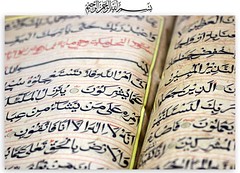
A clear example of this wonderful quality of newspapers was the Guardian of last Friday, which I picked up on my way to a lunch on my free day. While eating my sandwich, I glanced through the news section. Before I got halfway, I threw the newspaper into my gym bag. I bumped into it again on my lazy Sunday and found myself getting completely excited by a big article on the Qur´an. Madeleine Bunting´s and Ziauddin Sardar´s debate on interpretation of the holy book actually taught me new things. Sardar´s radical position of trying to read the Qur´an in a straight forward way, without the historical load really fascinated me.
"For me the Qur´an is a living, dynamic book", Sardar wrote. "This is not just a definition of a believer. It is also a statement about belief...So, with new determination, I say that we Muslims have to teach ourselves to read and think about the Qur´an without the weight of tradition and classical commentaries. Muslim scholars and experts should not exist as gatekeepers, permanently excluding us from using our knowledge and insight to make sense of the Qur´an for ourselves."
Through what kind of Google search would I ever bump into this?
Sunday, October 19, 2008
Sunday
This is very close to being the perfect Sunday song. The amazing Duffy with Jools Holland. There is just nothing that beats a BIG orchestration. The encouragement to love again, to be bold and hopeful even if it seems very difficult is one amazing message. The stubbornness and daring for the pursuit of happiness. That sometimes it means that you make some drastic moves in your life, which may hurt in the beginning in order to gain the well-being that in the end counts. These moves may be about relationships like in the case of the song or about the other main components in our lives such as housing, work and so forth.
I hope this is not only Sunday talking inside me.
Tuesday, October 14, 2008
Monday, October 13, 2008
Old Boys' Club Challenged
Finnish politics just does not stop amusing me. Senior foreign policy experts including some former foreign ministers are currently criticising the current minister Alexander Stubb for too much openness. The situation is so bloody Finnish that it gives me a headache.
The professors and retired politicians are annoyed that Stubb is opening up the diplomatic circle by allowing the daily Helsingin Sanomat to publish assesments of Finnish ambassadors on the status of world politics. Stubb asked these reports following the Georgian conflict and then decided to allow the main daily to publish some of them anonymously.
I read the article based on the reports. There is nothing shocking. The diplomats are divided between more skeptic and more optimistic ones when it comes to Russian relations with the European Union. Some express doubts on the future of the United Nations as a conflict mediator. Some use a bit livelier language such as:
"Finland needs to decrease its dependency on Russian energy. This should be done gradually and quietly, not in a demonstrating manner by fearmongering on the Russian threat. But it needs to be done. The US Marines have a saying:''If you grab them by the balls, their hearts and minds will follow'. i presume the Russian know the proverb too."
So let's get this straight. The Minister paid by us asked civil servants paid by us to assess global politics and then the minister decided to share these reports with us without sharing the names of the ambassadors. Former foreign minister Paasio wonders whether this leads to people thinking twice before telling things to Finnish diplomats. Some of the other commentators have been wondering what it does to our international reputation when diplomats drift away from the country's policy. Come on. Anonymous and differing reports from different corners of the world lead at least in my thinking to greater respect towards the men and women in our diplomatic service. What is better service to the people than allowing us to understand what are the cross currents guiding our foreign policy? I cannot help thinking that it works for some people's benefit to keep up the image that foreign policy is super secretive and not meant for the Joe on the street to understand.

The professors and retired politicians are annoyed that Stubb is opening up the diplomatic circle by allowing the daily Helsingin Sanomat to publish assesments of Finnish ambassadors on the status of world politics. Stubb asked these reports following the Georgian conflict and then decided to allow the main daily to publish some of them anonymously.
I read the article based on the reports. There is nothing shocking. The diplomats are divided between more skeptic and more optimistic ones when it comes to Russian relations with the European Union. Some express doubts on the future of the United Nations as a conflict mediator. Some use a bit livelier language such as:
"Finland needs to decrease its dependency on Russian energy. This should be done gradually and quietly, not in a demonstrating manner by fearmongering on the Russian threat. But it needs to be done. The US Marines have a saying:''If you grab them by the balls, their hearts and minds will follow'. i presume the Russian know the proverb too."
So let's get this straight. The Minister paid by us asked civil servants paid by us to assess global politics and then the minister decided to share these reports with us without sharing the names of the ambassadors. Former foreign minister Paasio wonders whether this leads to people thinking twice before telling things to Finnish diplomats. Some of the other commentators have been wondering what it does to our international reputation when diplomats drift away from the country's policy. Come on. Anonymous and differing reports from different corners of the world lead at least in my thinking to greater respect towards the men and women in our diplomatic service. What is better service to the people than allowing us to understand what are the cross currents guiding our foreign policy? I cannot help thinking that it works for some people's benefit to keep up the image that foreign policy is super secretive and not meant for the Joe on the street to understand.
Thursday, October 09, 2008
Going all ARTE
Just found this video from YouTube by googling StrangerFestival where they interviewed both me and the maker of one of my favourite videos from the competition. Should have worked on my German a bit more in school.
Wednesday, October 08, 2008
The Troubles
"What name did they use in your family, Madam President?"
An innocent question in a discussion between Finnish secondary school students and President Halonen earlier this year on the Finnish civil war led to an unsurprising reaction from the President. She hesitated for a moment, clearly felt uncomfortable to answer and finally said:"red rebellion". Halonen´s reaction to events long before she was born showed how deep the civil war is still especially in the generation of my parents. How it is still, in 2008, more or less leading the list of things people don´t want to talk about.
The small article in Helsingin Sanomat earlier this year describing this moment popped into my mind tonight when listening to Kjell Westö talking about his book Missä kuljimme kerran - one of the most widely read Finnish novels of the last 10 years. The book describing the generation born around 1900 has now been translated into Dutch and Westö was visiting the Finnish Embassy for that occasion. He shared with an audience a comment he heard, which describes to a large extent still the attitude of Finns to the tragic events of 1918 where according to some estimates 37.000 people lost their lives:"We have not discussed that for 100 years and we are definitely not going to start now."
Westö´s book is an important book for me. It helped me understand what my grandparents have gone through, what was the world my parents were born into and why the Finnish identity is the way it is. It also helped me start a discussion with my older relatives on the time before I was born. Westö said tonight beautifully that with his books he attempts to help the audience to remember that there were people on these streets before. He also reminded the audience that even when language played a big issue in the civil war, there were Swedish-speaking and Finnish-speaking people on both sides. The histories of people are more complicated than we often allow ourselves to realise.
I always thought that the tragic incidents of 1918 as well as 1939-1945 are issues that I can talk about with an open and critical mind. I mean I had no part in them. This was until 2004 when in a New York subway an American lady in her 60s asked me and my friends in the middle of a casual conversation:"I just wanted to check. During The War, which side were you on? On our side or the other side?" That uncomfortable feeling of shame, that sudden sweat and the blushing caught us all by surprise. We stuttered and it took us a lot of time to deliver an answer. Maybe Westö was right today when he said that it takes 6 generations before a war turns into another historical event.
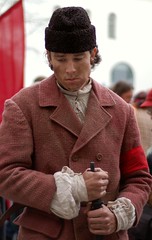
An innocent question in a discussion between Finnish secondary school students and President Halonen earlier this year on the Finnish civil war led to an unsurprising reaction from the President. She hesitated for a moment, clearly felt uncomfortable to answer and finally said:"red rebellion". Halonen´s reaction to events long before she was born showed how deep the civil war is still especially in the generation of my parents. How it is still, in 2008, more or less leading the list of things people don´t want to talk about.
The small article in Helsingin Sanomat earlier this year describing this moment popped into my mind tonight when listening to Kjell Westö talking about his book Missä kuljimme kerran - one of the most widely read Finnish novels of the last 10 years. The book describing the generation born around 1900 has now been translated into Dutch and Westö was visiting the Finnish Embassy for that occasion. He shared with an audience a comment he heard, which describes to a large extent still the attitude of Finns to the tragic events of 1918 where according to some estimates 37.000 people lost their lives:"We have not discussed that for 100 years and we are definitely not going to start now."
Westö´s book is an important book for me. It helped me understand what my grandparents have gone through, what was the world my parents were born into and why the Finnish identity is the way it is. It also helped me start a discussion with my older relatives on the time before I was born. Westö said tonight beautifully that with his books he attempts to help the audience to remember that there were people on these streets before. He also reminded the audience that even when language played a big issue in the civil war, there were Swedish-speaking and Finnish-speaking people on both sides. The histories of people are more complicated than we often allow ourselves to realise.
I always thought that the tragic incidents of 1918 as well as 1939-1945 are issues that I can talk about with an open and critical mind. I mean I had no part in them. This was until 2004 when in a New York subway an American lady in her 60s asked me and my friends in the middle of a casual conversation:"I just wanted to check. During The War, which side were you on? On our side or the other side?" That uncomfortable feeling of shame, that sudden sweat and the blushing caught us all by surprise. We stuttered and it took us a lot of time to deliver an answer. Maybe Westö was right today when he said that it takes 6 generations before a war turns into another historical event.
Tuesday, October 07, 2008
We The Republic
Demos report called Video Republic was just launched at the British Film Institute. The report is fab and written by superb people. Highly recommend refreshing your insight on young people and video. The report makes fascinating recommendations on the way we need to engage with the video republic of the young, what kind of media literacy skills young people need and how we need a serious readjustment of the copyrights system. The project used the StrangerFestival and especially workshops in Romania, Turkey, Finland and the UK as their case studies. I am very proud that it was linked to our initiative.
And all this with just a click - for free. And we even got into The Guardian.
And all this with just a click - for free. And we even got into The Guardian.
Monday, October 06, 2008
Logistics of Aspiration
London always leaves a bit confused. Even when I have visited this town at least a dozen times by now, its promise remains very lucrative. In a way to me London has some of that attraction that in the case of Los Angeles James Frey describes in his book Bright Shiny Morning: that promise of anything being possible, the promise of starting over, the promise of making it. I find myself being very attracted to this city where one can already question whether the default person exists in terms of age, ethnicity or style.
And then there is the London that you only see when you spend time with people who live here. It is those wonderful cafes, those phenomenal people in those lunch parties, its that ambition you catch when you talk to people about their future. Its drinking that last gin tonic at that upstairs bar too late in the evening and biting into that home-made pakora at that cosy kitchen table. Its those discussions ranging from religion in public life to the differences between X Box and Playstation.
And as a journalist this still is the heaven for me in terms of reading. Walking to that newsstand and with only a few pounds accessing the best writing of today. I always come back with lists of books to buy and clippings of superb articles.
And then, yes, then there is the transport. Its that Jubilee Line stopping between stations for 25 minutes, the Circle Line terminating two stations too early, that bus taking ages in crossing the Thames, sweating through those stinking and boiling hot transfer tunnels and that smell of urine from your fellow passenger. Living in Amsterdam I guess makes you into a spoiled brat but spending 90 minutes underground in reaching your destination is not really something that I would see myself doing every morning. It gives you time to read books though.
Now time for bed, tomorrow we are releasing some good thinking.

And then there is the London that you only see when you spend time with people who live here. It is those wonderful cafes, those phenomenal people in those lunch parties, its that ambition you catch when you talk to people about their future. Its drinking that last gin tonic at that upstairs bar too late in the evening and biting into that home-made pakora at that cosy kitchen table. Its those discussions ranging from religion in public life to the differences between X Box and Playstation.
And as a journalist this still is the heaven for me in terms of reading. Walking to that newsstand and with only a few pounds accessing the best writing of today. I always come back with lists of books to buy and clippings of superb articles.
And then, yes, then there is the transport. Its that Jubilee Line stopping between stations for 25 minutes, the Circle Line terminating two stations too early, that bus taking ages in crossing the Thames, sweating through those stinking and boiling hot transfer tunnels and that smell of urine from your fellow passenger. Living in Amsterdam I guess makes you into a spoiled brat but spending 90 minutes underground in reaching your destination is not really something that I would see myself doing every morning. It gives you time to read books though.
Now time for bed, tomorrow we are releasing some good thinking.
Wednesday, October 01, 2008
The Video Republic
On Monday we launch together with Demos a report on youth and video which has been carried out associated to StrangerFestival. From Monday 6 October the report is available for downloading at www.demos.co.uk. I highly recommend reading it. But here as a taster, a video building up the excitement. The report is funded by Helsingin Sanomat Foundation.
Subscribe to:
Posts (Atom)


 Posts
Posts


