Friday, February 27, 2009
Spreading Meanings, Not Viruses
I have developed a completely new way of using the Web. At the hectic office I used the Internet mostly like fast food, like media snacks (munched easily with increasing frequency and maximum speed – like chips – a description from Miller in Wired) between emails and phone calls. Now I take daily an hour or two to go through a dozen or so blogs, mark interesting stuff on Delicious and develop a more systematic way of finding content. Finding content that matters takes time and diligence.
The best thing I have discovered is Henry Jenkins´ blog. MIT´s Media Professor Jenkins focuses on what people are doing with media rather than on what the media is doing to people. His approach is critical but enthusiastic and he does not shy away from using very current examples for making his case.
His 8-part essay If It Doesn't Spread, It's Dead is something I would recommend for everyone working with brands and media culture. Jenkins sees consumers as empowered and intelligent species using media for their own purposes and goes beyond the discussion on virals. He talks about the spreadability of media – that citizens spread and reform content rather than passively carry a virus. That spreading media is an essential part of reputation management online. Just think of your own Facebook usage – what you link and post tells your “friends” a lot about who you are.
A statement by Jenkins that is highly useful for instance for my work with StrangerFestival: loss of producers´ control over meaning is a precondition for circulation. Spreadable media memes have to available for remixing before transferring so that people can use them for their own purposes to recreate meaning. As John Fiske puts it: this is where mass culture turns into popular culture. From a producer´s point of view creating media content that “sticks” on people would be wonderful but today´s successful content is one that spreads, shapes and puzzles. Which is actually quite liberating and empowering if you really think about it.

Thursday, February 26, 2009
Greener Across The Border
Before the last elections I did an article for Suomen Kuvalehti on the Dutch Innovation Platform as it was assembled following a Finnish example. Most of the interviewees then criticized the Innovation Platform for its broad agenda and the big publicity around its launch. Whereas in Finland the Science and Technology Council is not known by most people and is largely seen as a coordination body, in the Netherlands the government did a huge publicity stunt around its launch – i.e. it was doomed to fail in its delivery. As Joeri van den Steenhoven said in my interview for Suomen Kuvalehti then:”In Finland compromise means that people discuss, vote on the propositions and everyone lives with the result. In the Netherlands compromise means that we discuss and discuss, we split into numerous subcommittees and make an overall strategy so broad that everyone can keep on doing what they were already doing.” As someone on the coffee break rightly said in the Forum Virium seminar:”The problem with the Innovation Platform is that it has no money so it really cannot initiate much.”
I am all for international comparisons and learning from others. I also hope the Innovation Platform has learned from its start. I am also all for investment in innovation and R&D. But without a full picture of the international case, we end up making the wrong conclusions of it and therefore carry out our changes in false consciousness. But then again, I guess we have come full circle now in the Dutch-Finnish relations: some years ago van den Steenhoven´s and Nauta´s Kennisland was an active lobby in the Netherlands for learning from the Finnish model following Manuel Castells´ and Pekka Himanen´s work. Now we are presented in Helsinki the work of the Innovation Platform only to be followed by statements praising the leadership position of the Netherlands in investing in innovation. How did it go: what goes around, comes around.
Monday, February 23, 2009
Grand Night in Hollywood
They said in advance that the Oscars would be different - more serious - this year. It turned out to be not just another marketing gimmick, the awards evening was about talent and dedication. I like where they are going. The idea of having five previous winners handing out the actors´ awards emphasises what the Oscars are about: peer recognition.
The laughter was unforced but yet not missing. My favourite moment, both in terms of introduction and acceptance speech, was Best Original Screenplay presented by Steve Martin and Tina Fey and won by Dustin Lance Black for Milk. Also the way the nominees were presented was incredibly clever and showing the skill of a writer. Black´s speech for his first ever screenplay was the most moving moment of the evening.
All and all, the nominations went to the right hands and movies. Milk and Slumdog Millionaire are some of those rare films on important subjects that need the Academy Awards boost.
Wednesday, February 18, 2009
Newsflash
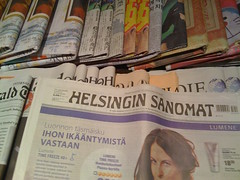
However, one seems to stumble at times. In yesterday´s Helsingin Sanomat journalist Riitta Vainio wrote a 3/4-page article with the title:
"Family culture amongst immigrants changes often painfully - Immigrant man seeks often for a good wife from the country of origin." Vainio´s article was published in the domestic news section but closer inspection shows that there is actually very little news or factual information in the article. The article´s references to its rather generalising statements are vague to say the least. Here are some examples:
"According to some local policemen a big portion of home alerts comes from immigrant families."
"In some families penalties to children are still accepted although they are known to be illegal."
"The portion of single parents amongst Somalis may be partly due to polygamy but there is no research."
"Child protection cases occur also in immigrant families."
There are only two quotes from experts in the article. Most of the article works on generalisations such as "the Russian-speaking", "the Somalians", "many" and "some". The article ends with the other expert quote being:
"Researcher Minna Säävälä from Väestöliitto emphasises that for a large majority of immigrants family is a resource, not the source of problems."
If I may, quite bizarre and somewhat sloppy journalism from a paper usually living up to high journalistic standards.
Monday, February 16, 2009
Right to Exclude
Archer´s paper addresses a point I discussed last week in my meeting with designer Reza Abedini and graphic design agency Lava in Amsterdam: the sense of entitlement. Anti-immigration sentiments are a logical result from feeling like you are losing something you are entitled to. Proverbs like "to be born a Finn is like winning in the lottery" or "Favour Finnish" characterise what I mean. A notion that just being born to a certain citizenship means automatically a right to a certain standard of living is in great contradiction with global solidarity and openness to immigration.
As easy as it would be to judge all this as selfish, some of it has also more sincere and primal feelings behind it - especially in countries such as Ireland and Finland. In both of these countries the national identity is built on being an underdog and on relative poverty. When incredible affluence hit both nations during the last 20 years, people felt that their time had come, the hardships had paid off and that they would be able to leave their children a better place than the one they inherited. In countries like Finland, the post-war generation has gone through an incredibly rapid rise to the middle class.
When immigration is presented mostly as an economic and security challenge, it risks this dream of leaving a good world for one´s children as it brings more people to the kitchen table. And more importantly, these would be people who have not gone through the national experience from rags to riches.
Of course most immigrants come from conditions far worse than Finland during the last decade. Many immigrants, especially refugees, have gone through things no human being should experience - such as torture, starvation and persecution. But this is easily cast aside when one carries concern over one´s immediate family. This is not always loaded with racism or xenophobia but with parental instinct. I would dare to state that the more we can create trust so that people - immigrants and non-immigrants - feel comfortable expressing these fears and worries, the more interaction natives have with immigrants in professional settings and the more the media portrays immigrants who have made a significant contribution to the society, the more there are chances to answer and ease the fears and work towards an inclusive society.
Climate Change in a Nutshell
Wake Up, Freak Out - then Get a Grip from Leo Murray on Vimeo.
Quite fresh and factual explanation on what climate change is about and why we need to act now. The cockroaches and rats coming out of the burning globe is a gloomy sight.
Oh and by the way, I have forgotten to link this: an article of mine was published in a book of the Finnish National Gallery around intercultural dialogue. Download the book here, my article is on pages 12-18. (download the book from the right hand side, Perspectives etc..)
Friday, February 13, 2009
Some Men Are More Equal Than Others
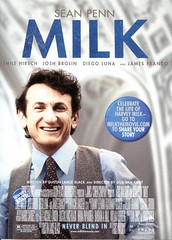
Gus van Sant´s film is a great act in showing the struggle Milk and his peers went through, how far we as societies have come from those days (homosexuality is largely decriminalised) and, sadly, how far we still are from living up to those words (Proposition 8 passed in California just a few months back). And in the Obama era, it is good to remember that he was not the first one coining a phrase like:"You gotta give them hope."
The Academy Awards take place in a week or so and I have now seen three of the Best Picture nominees: Milk, Frost/Nixon and Slumdog Millionaire. Even before seeing Benjamin Button and The Reader, I dare to state the wish that these three films would win the main prizes. As much as The Reader looks into guilt and human responsibility, I feel the other three films are ones that need more the boost of the win: Milk is a powerful caption of the human sacrifices on the road towards true equality and one of the people who have paved way for all minorities. Slumdog Millionaire captures the aspiration, diversity, celebration and inequality called India and is also one of the rare films that do not need a white man telling a story of Asia or Africa (read: The Last King of Scotland etc.). And finally, Frost/Nixon shakes us awake of the corrupting influence of power and shows what is really the power of journalism.
I would dare to make the following wishes:
Best Picture: Milk
Best Actor in a Leading Role: Frank Langella or Sean Penn
Best Director: Danny Boyle (Slumdog Millionaire)
Best Actress in a leading or supporting role are tricky as I have seen none of the films and actor in a supporting role is hard to judge before seeing Philip Seymour Hoffman and Michael Shannon.
Wednesday, February 11, 2009
March 28 2009, 20:30
I organised yesterday a seminar for Laundry Helsinki and WWF Finland on Green Office, a great concept for public and private institutions to reduce their carbon footprint at the office. Over 100 big Finnish organisations have already joined ranging from McDonald´s to Finnish Tax Authority and more keep coming.
One of the issues promoted yesterday was the importance of action following the declaration. Jos-Willem van Oorschot from the architectural office Venhoeven CS gave an inspiring talk on the possibilities for self-supporting cities and energy-producing buildings. One of the actions we all could do is the Earth Hour in the end of March. Watch the video and see what you can do.
I am convinced, also by yesterday´s talks that sustainability is not something some of us do as a hobby or a cool gadget - it is the only sensible way of living. Combating climate change is not an opinion, it is the only rescue plan left. We need to find ways to imagine our lives improving also through other things than material goods and consumption and find a low-carbon and no-oil solution for living together. As Jos´ speech and many others showed yesterday: we can if we want to. This is where creativity needs to be directed now.
Monday, February 09, 2009

The driver stops his black taxi on a parking lot on Shankill Road. Clear and crisp air flows in from the half-open window. Victor has been driving a taxi in Belfast for 32 years. “31,5 years too long”, he grins.
The entire end of the nearby house is covered by a massive, bright painting. The mural depicts a Protestant paramilitary fighter who was killed before reaching his 30th birthday. As we drive forward, the paintings continue. One celebrates Oliver Cromwell with a gruesome text:”We will not rest before the Catholic Church is crushed.”
This is my first visit to Ireland but these images on the walls are familiar to me through news coverage and popular culture. However, for some reason I had always assumed that these murals were old, from the time before the Good Friday Agreement and ceasefire. Victor sets me straight: most of them are painted in the last 10 years and more keep coming. Same continues on the Catholic side where the British flag is nowhere to be seen and the signs carry out the street names also in Irish.
But the murals were something I saw coming. I knew people have partisan sentiments and that they feel an urge to share them. But the thing that struck me was the so called “peace wall”, a high concrete construction splitting the Catholic and Protestant areas, with additional barbed wire to make the point clear. The backyards near the wall are protected with heavy metal frames to keep out the bricks and stones thrown from the other side. Images from the Israeli-Palestinian conflict pop into my head.
Victor tells us that the hostilities have mostly calmed down and that most of the city is a shared space where people live in peace next to each other. But still, if a Catholic girl meets a Protestant boy from the divided areas, they have no possibilities of living next to their families. A Catholic family would not consider moving into Shakill Road and apparently a house here in these divided areas is still a bit of a risky investment.
There is no plan to tear the peace wall down. Victor tells us that the wall gives people a sense of safety. This is also European Union, this is also in 2009.
On the evening before the tour we meet a friend of mine, a Belfast-based architect, for dinner whose stories validate that Victor is not fooling the poor tourist. The architect tells us that driving around the divided areas makes him so depressed that just some weeks earlier he had to drive over to the sea at Doneghal to get rid of the sense of anxiety. Similar stories occur. A Dublin-born friend tells us that he has never been to Belfast and would feel anxious going over. A Belfast-based Englishwoman tells us over a cup of tea that heading to Dublin for work makes her always much more relaxed. According to her, the tension can be sensed when living in Belfast. We also realise afterwards that Victor was very clear not to disclose his religious background.
Our restaurant on the first evening is called Made in Belfast, a trendy hangout focused on organic and local produce. It is obvious that humour is one way of dealing with the division in the city. The restaurant features a bright-red British poster from the Second World War stating in capital letters an advice that could function as a slogan for Belfast: KEEP CALM AND CARRY ON.
Tuesday, February 03, 2009
Project North
And hey, the movie is distributed free of charge. Download it here.
Monday, February 02, 2009
That´s Me
I am currently involved in a project where this kind of material would definitely be very handy. With a group of people we are putting together a cultural statement around national identity and self image. More details on that later.
When you talk about a self image of a nation, the last weeks have been interesting in this country. Helsingin Sanomat published a big story yesterday stating that Nokia has threatened to leave the country if legislation is not changed in a way that allows employers to look into the basic information (sender, recipient, form of attachment, time etc.) of an email if they suspect leakage of company secrets. Nokia and the government deny these accusations but it sure is interesting how the constitutional committee of the Parliament sees no problem with a legislative change that according to a great majority of legal experts they consulted is in full contradiction with constitutional rights to privacy of correspondence and freedom of speech. Not to take any stand on the validity of these accusation by Helsingin Sanomat but this is once again an example how the idea of civil rights and liberties is not really high on the Finnish political agenda.
This kind of discussion never really catches fire in Finland. This country has a tremendous amount of CCTV cameras and quite extensive rights to security guards but most Finns still think that this is all good and you have no reason for worry if you have not done anything wrong. It all stems from the idea that we are good and honest people and so are all the people holding these extensive powers. Following the same line is the idea that Finland is corruption-free. I have often wondered why there´s no more discussion about the way power ends in the same hands when a person can be at the same time in the city council, in the parliament and in the cabinet. The arguments I have heard are not very convincing:
1. this allows information to go smoothly through the system
2. people have the right to vote whom they want
Journalist Jarmo Aaltonen of Helsingin Sanomat follows the Finnish mentality disturbingly well in his article about politicians sitting in company boards:
"Of course different obligations influence people, some more, some less. This, however, does not make them automatically corrupt criminals. This is just the price one pays for democracy and open society. The alternative would be prohibiting all human interaction."
Seriously, this was published in the biggest daily of the country.
Friday, January 30, 2009
Boiling It Together
1. It feels so liberating to be in charge of your own schedule and work load. Everyne should at times try to define to oneself and others what you can do. It is good for your (professional) self esteem.
2. There is bureaucracy involved but you manage if you just get yourself into it. Good accountant helps. Taxation is not rocket science. Pricing is something I guess one learns only by doing.
3. Coming up with ideas and concepts is the best job ever. You also need people skills to make this work. But this kind of work is made for someone with a slight attention deficit because you have to stay alert and keep numerous balls in the air simultaneously.
So here is my Going Up and Going Down list from the first month:
GOING UP
- Lähivakuutus and Fennia: extremely good service doing exactly what an insurance company should do: take the worry away. Understanding that the salesperson should be the one knowing their product catalogue, not the customer.
- Cafes: I find writing in a cafe often more productive than at home. The buzz and soundbites from random discussions are inspiring.
- Verottaja: The Finnish tax authority has one of the clearest website around and superb customer service on the phone. Governmental excellence if you ask me. One of those things where regionalisation of phone service works - the ladies answering the phone outside the capital region are so relaxed and kind of motherly. "Don´t you worry, dear, it is all going to work out."
- Home food: Making pulla, macaroni casserole, meatloaf, meat balls with brown sauce and baking your own pizza is a splendid exercise after a long day in front of the computer.
- K-Market Kamppi: Sometimes size matters. When you have a big space in the centre, you can provide your customers with affordable organic products, fresh fruit and vegetables, great selection of beer and helpful meat&fish desk. Placing this market on top of the bus station and a metro stop is a wise choice.
- Demos Helsinki: cooking up a number of projects with them. People having this fresh and inspiring view on climate change and citizenship are hard to find.
- Blogs: Only now when I have more time for content, I realise really how great blogs there are out there. Some witty, some informative. Looking constantly for more but my current ones are there on the left hand side.
- Public transport: In Amsterdam I barely used public transport. But I must say that Helsinki has a punctual, well-planned and relatively affordable public transport system. HKL is the best argument against buying a car. And it is so much easier to read a book on a tram than on the bike.
GOING DOWN
- Nordea and OP-Pohjola: The beautiful idea of providing bank and insurance services from the same counter leads to the people at the counter not knowing the basics of the products they are selling and asking the customer to identify the products from their product catalogue. And hey, giving a pile of terms and conditions is not customer service - I could have printed them myself.
- Sonera: changing from Elisa to Sonera (for the iPhone) did not start too well. They for some bizarre reason "forgot" to process my application for two weeks and then I need to wait for my new phone for 3 weeks. What is the logic in individuals getting their phone directly in the store and business customers having to wait for weeks?
So all and all, we are strongly on the plus side. Next month should land a few big projects so we are all set to make this work.
Friday, January 23, 2009
I Want My TV
Today Frost/Nixon premieres in Finnish cinemas. Just yesterday the film was nominated for an Academy Award for best direction, best actor in a leading role and best picture. I have been waiting for this film with an eagerness I have seldom experienced. There are a number of reasons why.
Some years back I was visiting London for work and met up with a friend of mine, a British playwright of Indian descent. The British media had only one issue on that day and neither us or anyone else could avoid the topic: Celebrity Big Brother on Channel 4 showing how nonsense celebrity Jade Goody and a number of other contenders were bullying Indian actress Shilpa Shetty in a racist manner seldom seen on primetime television. The white English women were according to my interpretation intimidated by the successful and beautiful Indian superstar and decided to gang up on her revealing all their prejudices on the Indians.
A large portion of the British quality media took a unified stand: the fuss around the programme was exaggerated. However, during our drink on that London afternoon I got another look into the issue. I still remember her telling me:"I am born in this country and so are my children. My children have been glued to the television during Celebrity Big Brother as they see on screen remarks they hear daily in school. As Shetty, they are told to go back to their own country. What country is that for a 10-year-old child with both parents born in the UK and one of them having Indian parents?"
That personal take showed me a part of the media often forgotten in academic media analysis and journalistic critique. The way the media validates and presents everyday situations and in that way acknowledges that these things do happen. By the media covering them, they are also submitted to a list of subjects suitable for private discussions. This has been the power of telenovelas in South America covering HIV-AIDS or As The World Turns showing a gay kiss.
After our drink she rushed to the theatre to see the "IT" play of the moment: Frost/Nixon. I tried to get tickets to it without success on the last moment.
I ran into Frost again two years ago when visiting the Museum of Television and Radio in Los Angeles and watching clips of his most famous interviews - including the Nixon one. Using the same strategy as he got Nixon to talk, his soft, direct but polite style brought into the surface some of the deepest thoughts of Muhammad Ali on black supremacy or Robert Kennedy opening up in his ideals. As one can see also in this clip from an interview with Thatcher, his background research forces people to answer directly without having to take refuge in hostility towards the guest.
I love television. I really do. In the work of David Frost as well as in the fuss around Big Brother, television has the power to reveal truths of ourselves and our societies - in more and less idealistic manners. It can facilitate people opening up sensitive discussions using commenting of a television programme as the cover up.
I never understood the people who take pride from not watching TV. How would it sound like if I would state at a fancy dinner party that I categorically don´t read printed material as I just don´t have the time?
Wednesday, January 21, 2009
Change Dot Gov
MixedInk Demo from MixedInk on Vimeo. Thanks, MediaShift, for the link. This is just way too cool. This links well to a project plan we are putting together on citizenship. So the tools are all there, now we just need the content and the motivation and the commitment of government to take this seriously. Something else cool on coverage of the inauguration here, this time by Washington Post. I just love these gadgets.
Tuesday, January 20, 2009
This Was A Good Day
Yes, watched the inauguration, was moved by Aretha Franklin but that´s that. I want to write about something more personal, smaller. Three years of age and approximately one-metre-high to be exact.
In last month´s Monocle the editorial staff had done a list of 50 promises for 2009 which would help you make your life better and for you to feel happier. The things on the list were actually quite excellent such as overhauling your magazine subscriptions, finding a sunny spot, changing your way to work and starting a recipe book. One of my favourites was starting to plan your dream house. I look at my neighbouhood in a fresh way now. The list is on our fridge door and already two things have been crossed as "done".
I chose 37 from the 50 things on the list but this is one to add: hang out with your little relatives regularly. Today - for the first time - I picked my nephew from day care and we took public transport to his home. It was just awesome.
This little guy in winter clothing looking like a Michelin Man was happy and energetic from playing football outside. He commented on people passing by and was quite excited by the tram and metro. My favourite moment was the three-year-old boy on the bright orange big metro seat chewing on the liquorice bar we picked from the kiosk together. He looked so happy and relaxed swinging his legs in the air.
All through the trip for me the little hand holding mine nearly brought tears to my eyes. Kids are way cool. And so is responsibility. The fact that my sister and brother-in-law trusted me enough to let look after their precious little guy home felt amazing. My godson squeezed my hand so tightly through his ridiculously thick mittens. This afternoon hour goes up there to my list of top experiences.
This day made me think of this comment a friend of mine made once: how would our society be different if the primary goal of the society would be a good childhood? What kind of obligations and duties it would give to us adults? And what kind of possibilities would it open for more adults to help parents make that dream happen? Was it Hillary Clinton ripping an African proverb: it takes a village.
Monday, January 19, 2009
Race To The Bottom
I don´t know how many articles I have read during the last years about the importance of good service in the fight over customers. How the ones who succeed are focused on the customer experience by making the encounter both smooth and clear. Quite often this has been tried through mergers and acquisitions. A phrase you hear often: "we offer all services from one counter."
But as my experience with Nordea today showed, this sometimes means that you get rather vague counselling on all the issues on that very counter. I felt sorry for the bank lady who had been assigned also to handle the insurance policies. When my questions started getting more detailed (as they do when you talk about your insurances or your pension), she was on thin ice. I was also asked numerous detailed questions without understanding their consequences. In the end we ended the interaction by her taking my mobile number and saying that a colleague of hers would call me. Not really how things should go. The experience was rather different than at Fennia where I was suggested to do certain things or set my income estimations on certain levels.
I do understand the need for lean and mean. But when you deal with issues such as health or the end of your days, you wish to have service making you feel confident and taking the fear away. Nordea still has a lot to do to get their insurance customers smile as the people on their ads.
Friday, January 16, 2009
Cool with a Conscience
I always found Wallpaper extremely snobbish and pretentious so the expectations were not high when I purchased both Monocle and Intelligent Life yesterday from Stockmann. Intelligent life unfortunately proved me right - I glanced the magazine through and found very little worth reading. It somehow reminded me of Finnish Gloria women´s magazine´s failed attempt to make a men´s lifestyle publication relying on the holy union of cigars and sports cars.
Monocle, however, I found myself reading from cover to cover. Of course it is filled with luxury product ads but you kind of know that already when you pay 12 euros for a magazine. And then again, luxury product ads never weakened the content of Vanity Fair. But I was fascinated by Monocle mainly because:
- it promotes good ideas and people behind them (like Italy´s minister of public administration suggesting an Erasmus programme for civil servants in order for them to think outside the box or a coffee shop owner in Portland showing his customers where the coffee beans come from and bringing producers over to the US to see the other end of the service chain)
- it addresses sustainability as the thing to do, not a phenomenon we need to react to
- its graphic design is amazingly fresh and playful
- it uses a lot of illustrations
- it is strongly global with a broad correspondents´ network and not a Western publication with "voices from the rest of the world"
- it shows me a lot of Japan, a society that I find superinteresting
- it talks about ethics, local produce, making things well
- it dares to feature technological breakthroughs that will actually make our life better
- it features well-made, beautiful products that I actually would like to buy
I am hooked. Some might say that this post should have been written like 18 months ago but that is exactly the Wallpaper attitude I detest. Well done, Mr Brûlé.
Monday, January 12, 2009
Government Buddies
I would fully support a change where like in science, the arts funding decisions would be taken by experts of the field with a greater arm´s length from the government. This sounds more like how things were done in the Netherlands. I would also take the reform to the same level as in the Netherlands where the evaluations of arts institutions are made public so that people and the media can scrutinise and understand why dance group X gets a certain amount and why theatre Z loses half of its funding. Making government more transparent is something that I feel quite passionate about.
As a somewhat veteran of the civil society, I would encourage Mr Wallin to take a careful look also on the ways NGO funding decisions are taken. As much as I support government funding for the civil society, I am slightly troubled by the relationships emerging when civil servants or politically appointed bodies make decisions on NGO funding. I fear that the dependency on decisions by the Ministry of Education creates a civil society less willing to attack the government fiercely and a civil society serving the government rather than acting as a healthy counter force. It is only natural that a NGO leader concerned about the budget for next year feels inclined to buddy up with the Minister or the top civil servant.
In this sense I do understand bodies like Amnesty or Greenpeace which guarantee their independence by refusing government funding however this is not the solution for all civil society. I do support civil society funding as one of government´s core responsibilities. But it troubles me that it does not take years of research to identify a relationship between decreased peace NGO funding and a centre-right government, increased environmental NGO funding and the Greens in the government or the Swedish People´s Party in the government and increased funding for organisations taking care of the largely Swedish-speaking archipelago.
I would encourage Mr Wallin to look into creating an independent body deciding on funding for the civil society and making public their criteria and evaluations. This would make government more transparent, decrease risks of corruption, feed political debate and in the end support an emergence of a more active civil society.
Friday, January 09, 2009
Not On Automatic
I am looking at things slightly differently. Starting my own business and working for myself does not automatically mean that I would start working less, more likely is the opposite. As regular working hours are gone, it is easy to extend the working day from both ends. But at least now, after a humble experience of three days, being in control of my own schedule feels quite empowering.
I meet a lot of people who tend to act like their life would be on automatic gear and constantly accelerating. Ending a regular job and taking the entrepeneurial risks on my shoulders means for me that I go back to the traditional gear shift. I drive my own vehicle and I am therefore responsible for its road safety and maintenance. I started this yesterday with a visit to the insurance company.
Even when I will be most likely working more and longer days, on times like these it feels good to be closer to the ones you love and being able to plan personal matters into the middle of my day and not only after 17h00. Having a one-day-old nephew and having 3-year-old nephew with the need of daycare every now and then, it feels good that I can put my work-vehicle on gear 1 (or even lower) at times and take time for going to the park.
Tuesday, December 30, 2008
Art of Language
My admiration for the gentle giant Fry re-emerged yesterday evening when watching Stephen Fry in America, a wonderful BBC series where the actor/writer/presenter travels through 50 American states with a black English taxi. The journey takes him from mansions of East Coast and hippy groups of the deserts to Thanksgiving celebrations in Deep South. The programme is entertaining while respecting the people who take time to show him their daily life.
His approach is something I truly love, not laughing at the common man but really making the effort to understand what drives people. So less Borat-meets-Michael-Moore and more Sir-David-Frost-meets-Oscar-Wilde. He makes fun of phenomena, not of the people and really lives up to his promise: understanding the American soul. He finds new stories of America and with his trip writes a new narrative of the great nation with a Can Do attitude.
My next Fry project will be the podcasts of him reading short stories of, indeed, Oscar Wilde.