Friday, September 17, 2010

Boys Aren´t Alright


"There´s too few roles available for boys. They are very early divided into winners and losers."

This assessment by a social worker specialised in marginalised boys made me think. Young men in this country are surely not doing too well. Even when there are more and more dads who play an equal role in bringing up the kids, too many boys still grow up in a climate where showing emotions is a sign of weakness and expressing violence strengthens your position in the group. Boys don´t cry. Be a man. It´s no wonder that according to research, well-being does not have a gender but ill-being does.


This became evident on a recent visit to an amazing NGO called Icehearts in Vantaa, Finland. Icehearts specialises in boys about to be taken into custody, having a difficult situation at home or not doing too well socially. They also include young people with an immigrant background. They often start with boys who have zero trust towards adults (for a reason) and are used to solving things through violence. By helping in school, teaching trust and group skills and playing sports, Icehearts mentors 6–18-year-old boys to get a grip on their lives, to plan their future and to continue their education. The men working at Icehearts show an incredible amount of dedication: they commit to working with a group of boys all the way from the age of six to maturity.

What they deal with is the same thing one can witness in the award-winning Finnish documentary Miesten vuoro by Joonas Berghäll and Mika Hotakainen. The documentary captures intimate discussions between Finnish men in the sauna. In the incredible scenes the men open up about their misfortunes, mistakes and let the tears run. Without victimising or ridiculing its subjects, Miesten vuoro shows that a large part of Finnish men have nonexistent tools and channels to deal with emotions. These tough guys demonstrate how the need to talk about feelings, love and family is there. The stuff has obviously been bottled up for years so when the floods break, there´s no stopping. No one makes it out from the cinema with dry eyes. At least every Finnish man recognises a father, husband, uncle or grandfather.

Without proper interventions we will keep on growing generations of men without any skills to deal with themselves. Exactly due to these nearly nonexistent emotional skills things are dealt through alcohol and violence.

Too often we use well-meaning tools for trying to change people into something else rather than coaching them to be better versions of themselves. Icehearts shows us one way. They clearly state that starting from skills and adapting the activities based on the group is the way forward. As one of the coaches put it: it´s not about ice hockey, it´s about the boys.

There is something to learn also from the small Finnish municipality called Kyyjärvi where they successfully formed a cooperative from people who had been unemployed for years. The key to success was that it started from interviews where the men and women were allowed to tell what they can do. Allowing people to keep their pride while going through difficult times helps you to win them on your side.

Friday, April 16, 2010

Progress and women´s magazines


I gave a talk today at the Diaconia University of Applied Sciences to an auditorium filled with media students. The subject of the entire day was the responsibility of lifestyle media for what they present.

My talk (unfortunately in Finnish) is below. I focused on how a progressive lifestyle journalist should position himself or herself. I claim, that it is very easy to get stuck to the old rant on how journalists should be independent and not promote any specific idea. I claimed that the justification for being progressive for instance on sustainability can be found from the Ethical Code of Conduct for Journalists where it states that journalists have a responsibility to tell people what is happening in the world. And as climate change is the big issue of our time, you do your job poorly if you don´t build ethical and environmental norms into your work. Already journalists have made a commitment for human rights, this is the other big ethical test.

In the presentation I suggested that when dealing with sustainability, lifestyle media should build on what they do best: enthusiasm and encouragement for action. They should promote excellent and ethical choices with the same enthusiasm they promote a new eyeliner. Making things appealing works far better than the message about giving something up.

The third main point I raised was on how change in lifestyles happens. This I would claim is the ultimate test for women´s magazines. Most lifestyle media still deals with change by showing one person one morning transforming their life completely. This is understandable cos it´s easy to build a story around it. But if you actually look into research on how change happens, people who do big transformations always relate to other people. By showing this link and giving the readers tips on how to win support and get people along, lifestyle media could be one of the most powerful instigators of action for the better.

Tuesday, April 13, 2010

How Are You Doing?

As part of a project we are doing at Demos Helsinki, I have spent time reviewing and reading various future reports on the competencies and skills the Finnish society and Finnish companies need. One of the big issues seems to be the need for better people skills. Companies and experts see that customers are more and more demanding year by year. Simultaneously companies need to make sure that the best people really want to work for them. This means that understanding people is broken into better HR, better customer understanding and better self understanding.

One of the ways to support better self understanding are the annual evaluation talks that managers are required to give to the staff. I have taken part in two of them in the last two weeks. In one of them I was the one interviewing, in the other I was being interviewed.

These talks usually get quite a bad rap. Most of my friends are able to tell horrid stories of a boss who really does not listen or continuously interrupts the staff member. I have also taken part in a talk where the boss starts the discussion by saying:"Well, we have two hours reserved for this but I don´t think we need all of that." In another case the boss had left most of my critical comments on her performance out of the report. Experiences like these or not letting the employee talk send a clear signal of inequality.

I do understand that experiences like these make a lot of people frustrated. However, I would encourage both the boss and the employee to take this experience seriously. This builds from the amazing two positive experiences this week.

At Demos Helsinki we do not have a clear hierarchy, which means that we have divided the responsibility to give the evaluation talks amongst the staff. This means everyone gives and everyone gets a talk. Especially in an organisational culture like ours a structured question list really helped making the discussion useful for both parties. When you are asked to evaluate your own competencies and get feedback on them and your performance, you are also given a chance to recognise how you could develop yourself. Somewhat formal questions on your development ideas for the organisation are actually somewhat challenging.

At least I noticed that my own view on my work and my colleague´s view differed quite a lot. I was quite surprised by the things mentioned as my strengths and as areas that need improvement. Discussing them through and searching examples that prove the point makes one realise how others see you. The talk made me like my place of work more. When a person you value tells you what you are good at is incredibly empowering - and useful. I left both of the talks smiling, feeling like I learned something.

The views in the reports I have gone through paint a picture of a working life where the need to develop and renew oneself is continuous and never-ending. If this estimate is correct, the need to know oneself becomes crucial. But we too often think that all this needs to be done alone.

Monday, April 05, 2010

Budget Luxury Is Possible

In the last 10 years I have stayed in some really crappy hotels. What has become clear is that price does not guarantee a thing.

Most people want a good bed, peace and quiet and a decent breakfast. Internet connection would also be nice. However, more often than every now and then I have fought with a crappy air-conditioning system, tried to find something fresh from the breakfast buffet of sweaty cheese, stale croissants and weird mayonnaise salads. And even in some fancy hotels the only thing they have to offer is a 10 euros per hour slow Internet, which works only with a cable. Hotels too often only end up increasing the traveller´s stress. I also cannot stand the idea that hotels are just copy-pasted to dozens of locations without any link to the local setting. I don´t want to stay "anywhere in the world".

But the good news are: there is hope. Easter in Amsterdam showed that great can be affordable. The new Citizen M budget boutique hotel chain provides the essential: great bed, natural light in all rooms, free WLAN, beautiful settings, good breakfast - and excellent service. The rooms are small - I mean under 20 sqm2 - but everything works. The breakfast comes in a paper bag but has freshly pressed orange juice and a fluffy but crispy croissant. It seemed Citizen M has got it right: invest in quality in the things that really matter - staff, interior design, produce, bed.

The design furniture lobby was one where you did not feel like you were working in a hotel lobby. You were not constantly surrounded by people with supersize bags and tour groups waiting for their bus. The staff at Amsterdam City was relaxed and hospitable. I and many others ended up working in the lobby for the entire day. The canteen had a selection of personal British and Dutch snacks and dishes - not the normal boring Pringles cans. The staff was helpful but not intrusive. They seemed to switch smoothly between the canteen and reception. None of the regular "you can go and ask my colleague".

The most amazing thing was that when I tweeted on the hotel, the staff responded in 10 minutes asking if they could give me any more information. We exchanged some messages back and forth and within a day I got great information on their take on sustainability and service. They told me that "from the development of our hotels, the efficient building system is combined with a dedicated offsite factory allowing the construction of the rooms with higher quality, less environmental impact at the construction site, less waste produced spite of reducing the total construction time from 2 years (market average) to around 10 months." This answer came from Diego working at the Amsterdam hotel, not from someone somewhere in the "service center". It seemed clear to me that the staff is proud of their concept - and the enthusiasm is addictive. You can find out more here.

And all this for, get this: 90 euros for a 2-person room.

By now they are only in Amsterdam. But according to the website, "hotels are planned across Europe – in all major cities – such as: London, Barcelona, Glasgow, Berlin, Stockholm, Brussels, Milan, Copenhagen, Moscow, Paris, Istanbul, Warsaw, Budapest to name a few." I wish the best for them. My first visit to Citizen M made me a loyal regular. I love promoting companies like Citizen M and Virgin, which have realised how to make the entire service chain work. They are also proving to the consumer that the whole extra premium for better experience is often just disguised greed.

Thursday, March 25, 2010

Reclaim The Public


Originally uploaded by Sameli
I have spent approximately 1-2 days lately working at the National Library. This place is amazing. It is incredibly quiet, as central as things can get, equipped with an astonishing collection of material and a café downstairs. The great thing is that you cannot take your bag in so you have to think what you need.

As I am writing this, I sit at an old wooden table with a beautiful view to the Senate Square. I ended up here by accident a couple of weeks ago. I had 1,5 hours between meetings and had forgotten my wallet home. There was no point walking to the office or taking the metro home. So I decided to give this place a try.

In the last weeks I have learned to use microfilms to look at newspapers from the 1970s or read articles on cultural policy from the 60s. The most surprising things is that this beautiful place is very very empty. As I for a long time, most people never think about it as a public place. They somehow think it belongs to the university or should only be used by researchers.

Let´s reclaim places like these. Let´s start at the library and work our way to the City Hall. We have somehow forgotten what public means. We too often end up looking at these places through the eyes of the primary user.

I mean what café in Helsinki has all Finnish newspapers from the 19th century onwards, all books published in Finland, every doctoral thesis from the University of Helsinki, all cultural magazines in handy collections and such silence. I wonder if the library people themselves even now what kind of a gem they possess. This place is perhaps the best evidence to how we get more by sharing.

Come over.

Wednesday, March 17, 2010

Kuusi ratkaisua monimuotoisuuteen

Olin tänään kommentoimassa Tutkijoiden ja kansanedustajien seuran seminaarissa ajankohtaista maahanmuuttokeskustelua. Esitin kuusi hyvää mallia sille, miten monimuotoisuuden tuomiin haasteisiin voidaan vastata.

---

Arvoisat kuulijat,

Asuin itse viimeiset neljä vuotta Amsterdamissa. Alankomaita juhlitaan usein monimuotoisuuden mallimaana. Maan toiseksi suurin kaupunki Rotterdam on Euroopan toinen suurkaupunki, jossa yli puolet väestöstä on kotoisin Euroopan ulkopuolelta. Kaupungilla on marokkolaistaustainen pormestari.

Nyt kuitenkin tämä valtio, jonka kansainvälinen maine perustuu vapauteen ja suvaitsevaisuuteen, on ajautumassa tilanteeseen, jossa islamia avoimesti halveksuva Vapauspuolue on nousemassa tulevissa vaaleissa maan suurimmaksi puolueeksi. Puolueen kasvu viestittää etenkin maahanmuuttajataustaiselle nuorisolle, että heidän arvojaan ei hyväksytä. Kehitys uhkaa sekä maan brändiä että sen kansantaloutta. Hollanti on aina tienannut rahansa sillä, että se on tullut kaikkien kanssa toimeen. Syrjiminen on huonoa bisnestä.

Kun Vapauspuolue ja Lijst Pim Fortuyn kasvoivat, Alankomaissa liberaali eliitti eli valtaosa maan johdosta uskoi, että kyseessä on muotihurmio, joka menee ohi. Näitä puolueita äänestäneiden mielipiteisiin suhtauduttiin halveksuvasti, jopa alentuvasti. Keskustelussa puhuttiin vääristä asenteista, syytettiin sosiaalista syrjäytymistä ja väheksyttiin kasvavaa suosiota vaaleissa.

Kuulostaako tutulta? Vaikka meillä ns. maahanmuuttokriittiset puolueet ovat kaukana Pim Fortuynin tai Geert Wildersin tyylistä, väitän, että olemme tekemässä aivan samoja virheitä. Valtapuolueiden tapa käsitellä kritiikkiä on laittaa maahanmuuttajat uhrin asemaan ja vahvasti irtisanoutua verkon keskustelusta. Eroa "pahoihin ihmisiin" yritetään kasvattaa puoluejohtajien allekirjoittamilla kannanotoilla. Keskusteluyhteys on pitkälti katkaistu. Samalla on sumennettu ero poliittisen mielipide-eron ja väkivaltaan kiihottamisen välillä.

Nämä eivät ole sama asia. Niihin myös vastataan eri tavoin. Keskusteluun maahanmuuttopolitiikasta on vastattava paremmilla argumenteilla ja kovemmilla faktoilla. On vaadittava vastapuolelta perusteluja ja iskettävä omat pöytään. On vaadittava samaan pöytään tulemista. Kansanryhmää vastaan kiihottamiseen tai raiskausuhkailuihin taas vastataan syyteharkinnalla ja vahvalla irtiotolla.

Kansantaloudellisesti ja huoltosuhteen näkökulmasta on selvää, että Suomi tarvitsee maahanmuuttajia. Kevan arvioiden mukaan kunta-alan työntekijöistä 75 prosenttia jää eläkkeelle vuoteen 2030 mennessä. Tämän lisäksi rajoja ei myöskään voi sulkea. Suomen monimuotoistuminen on siis fakta.

Suomessa kytee kuitenkin vahvana rasismi, joka saa tällä hetkellä esimerkiksi suuren osan somalinuorista harkitsemaan muuttoa muualle. Se, mitä Suomi yhteiskuntana tarvitsee, on elämäntyylin muutos. On opittava elämään yhtenä yhteiskuntana. Kuten ilmastonmuutoksenkin kohdalla, pelkkä asenteista ja arvoista puhuminen sekä tietotason lisääminen ei riitä.

Mitä siis voitaisiin tehdä? Otetaan oppia ilmastonmuutostyöstä tai Suomen onnistuneimmasta elämänmuutosprojektista eli Pohjois-Karjala-projektista, jolla sydän- ja verisuonitautien aiheuttama kuolleisuus saatiin putoamaan 30 vuodessa 85 prosentilla. Minulla olisi kuusi ratkaisuehdotusta.

1. Etsitään oikeat portinvartijat. Ketkä ovat paikalla kohtaamistilanteissa? Ketkä voivat vauhdittaa muutosta. Oikeat portinvartijat eivät näkemykseni mukaan ole kekkosmaisia jyrähtelijöitä, vaan luokanopettajia, kirjaston tätejä ja setiä, yritysten HR-päälliköitä, uimahallin valvojia ja lähihoitajia. Meidän kannattaisi kasvattaa yhdessä näiden ammattilaisten kanssa ylpeyttä siitä, että he voivat olla muuttamassa yhteiskuntaa ja kehittää tehokkaita keinoja ongelmanratkaisuun. Meillä on Demoksessa hyviä kokemuksia energiansäästötyössä siitä, että rautakaupan myyjät tietävät parhaiten, miten maalämpöpumppu saadaan kaupaksi.

2. Luodaan kokeiluja. Esimerkiksi Helsingillä olisi suunnaton mahdollisuus käyttää Jätkäsaaren ja Kalasataman rakentamista pioneeriprojekteina uudesta, suomalaisesta monikulttuurisesta asuinympäristöstä. Näytetään, että monimuotoinen asuinympäristö voi olla onnellinen asuinympäristö. Malleja voidaan hakea esimerkiksi Hollannista tai Kanadasta. On uskallettava investoida onnellisuuteen.

3. Otetaan oppia tulevaisuusorientoituneista yrityksistä. Meillä on yrityksiä, kuten KONE, jossa vahva yrityskulttuuri tarjoaa oikeat toimintatavat, Koneella ihmisten työsuorituksia mitataan myös sillä, miten heidän toimintansa vastaa yrityksen toiminnallisiin arvoihin. Miksei samaan pystytä julkisella sektorilla - siellä, missä ei ole paineita liikevoiton tuottamisesta? Miksei joku ministeriö tai kunta voisi olla koelaboratorio, jossa kehitettäisiin suomalaisen julkisen sektorin pelisäännöt? Aloitetaan vaikkapa opetusministeriöstä, jolle kuuluvat koulut, kulttuuri, liikunta ja nuoriso.

4. Uskalletaan puhua jämäkästi ja tinkimättä perusoikeuksista. Kouluissa käytämme huomattavasti vähemmän aikaa ihmisoikeuksista puhumiseen kuin sotahistoriaan. YK:n ihmisoikeuksien julistus on yksi merkittävimpiä globaalin yhteisön aikaansaannoksia. Uskalletaan olla ylpeitä siitä ja lasten oikeuksien julistuksesta. Koulussa se tarjoaa hyvän pohjan opettaa, millaiset toimintatavat ovat oikeita ja mitkä vääriä. Se antaa hyvää nojaa väärään ja uhkaavaan käytökseen puuttumiselle. Kalifornialaisissa ja kanadalaisissa kouluissa jokaisella opettajalla on kyvyt puuttua vihapuheeseen.

5. Tehdään oikein toimimisesta helpompaa. Sille on syynsä, miksi monikulttuuristen yhteiskuntien kahviloissa on useammin lappuja, joissa lukee "ota tästä" tai "palautathan astiat". Sanotaan selkeämmin etenkin julkisten palveluiden kohdalla, miksi jotkut palvelut ovat olemassa ja mitä hyvää ne tuottavat. Kirjaston yhteiskunnallinen hyöty on luoda keskeisille paikoille ei-kaupallisia rauhallisia tiloja ja osoittaa, että yhdessä omistamalla saamme enemmän. Nyt oletamme, että kaikki oppivat tämän kotona.

Ja viimeiseksi 6. Uskalletaan ajatella monimuotoistumista myös liiketoimintamahdollisuutena. Amsterdamissa ICA-vaateketju on ymmärtänyt, että myös muslimien juhlien aikaan tarvitaan juhlavaatteita. Hollantilainen HEMA-sekatavaraketju oppi virheiden kautta, että tiettyjä sukkahousuja ei voi mainostaa ihonvärisinä. Tarpeisiin vastaaminen voi tuottaa myös taloudellista hyvinvointia. Monien erityisryhmien palvelujen ympärille voitaisiin synnyttää esimerkiksi yhteiskunnallista yritystoimintaa. Esimerkkinä voidaan mainita vaikka kansainvälisten asiantuntijoiden tarvitsemat uudelleensijoittumispalvelut.

Kaikessa tässä ei ole kyse siis pelkästään asenteisiin vaikuttamisesta. Teot ratkaisevat. Tehokkaassa monimuotoisuustyössä on lähdettävä siitä, että tarjotaan kaikille tämän yhteiskunnan jäsenille mahdollisuus olla hyödyllinen, arvokas ja taitojaan jakava yksilö. Se on se aikamme suurin haaste - niin valtaväestölle kuin maahanmuuttajillekin.

Sunday, February 21, 2010

Food Freedom


Last week the City Council of Helsinki discussed over three hours over a weekly vegetarian school lunch. Next to the absurd health concerns ("our kids will starve!"), one of the key arguments against the plan was limiting freedom of choice. For many the idea that there would not be meat available every day felt like a bigger restriction than the current selection between 2-3 meals. They actually managed to make it seem like a school lunch cafeteria would work like an a la carte restaurant driven by the kids´ wishes. Luckily, the City Council was wise enough to pass the proposal.

The debate in the city council is another example of how our idea of food has drifted far from a connection to seasons and nature in total. Access to 2 eur/kg pork and tomatoes even in the midst of winter are presented nearly as human rights - despite their ethical or ecological problems. The need to get everything whenever we want dominates over quality concerns. We´re willing to feed and eat whatever the shop serves. The shop blames the consumer, the consumer and the farmer blame the shop.

Government´s role is completely forgotten as a body that has the authority to set standards and direct production with taxation and incentives. But even greater than this, governments could have a greater role in directing consumption by demanding that there would be more information on the produce sold. Sustainable and quality choices need to be made affordable and attractive. This can be addressed also as a democratic issue. If we are sold stuff that harms the planet and harms us with its additives, we should have the right to know this. There is a difference between ignorant and informed freedom.

During my 3-day visit to Zurich this week I discussed food policy with numerous people I met.
Many of the people I met were enthusiastic members of a food coop called Tor 14. They picked their vegetable bag and other groceries on Wednesdays and Saturdays from a cellar in central Zurich. Supermarkets were for them places to complement what they have at home, not all-you-could-eat selections for the meal you just there and then desire. Their cooking was driven by their pantry and the exciting vegetable selection of the week, not by the supermarket´s 20 000 items. In a way it´s the cooking style of my grandparents.

Going back to the vegetarian day debate, one could say that the system sounds too strict and limits your freedom. But the experience of the coop members told a different story. Through Tor14 they had learned to use numerous root vegetables found from their bags. Apparently phone calls are common after the Wednesday visit to the store:"Hey, do you have this green thing with yellow spots? What is it? Do you have ideas what to do with it?"

They had also understood how to plan meals for the week. Their organic and local ingredients had stories. They sometimes met the farmers. The people running the coop were eager and willing to share recipes. The montly membership gives security to the people running the coop and keeps the prices low.

Food coops should be encouraged by the government. They make one appreciate the ingredients, they reduce waste, they help people in getting to know diverse ingredients and they make cooking exciting. As non-profit collectives, they also lower the price of good products. I don´t know about you but I am tired of the soggy zucchini, bouncy Dutch bell pepper and the plastic-wrapped parsnip of my local Alepa.

Monday, February 08, 2010

No More Don´t Ask, Don´t Tell


My biggest awakening of this year has been on the political aspects of food. I blogged earlier about Pollan and Safran Foer as some of the people kicking the discussion food going. Having now finished Safran Foer´s Eating Animals, it is becoming more and more obvious that we need to treat food more as a political issue. We´ve kind of let ourselves be swept away by nutritionists and health advocates.

Never have we Finns spent such a small part of our income on the things we eat. What we eat is making the planet and ourselves sick. We push stuff down our throats without a faintest clue of what it contains. Food comes increasingly from the Alepa shelf, not from the field. We´re like that awful Clinton policy on gays in the military: we pretend that there are no problems by not asking any questions. When something goes wrong, we say it is an individual mistake.

EU governments and the EU itself spend an insane amount of money on subsidising and promoting food. Just last year the Finnish government spent 257 000 euros on promoting diverse eating of pork (result here). Let me say that again: 257 000 euros on diverse ways of cooking pork. Honestly.

We have elections in 2011. I want the next government to take food seriously. I want better consumer policy, better ingredients and food produced closer to where I live. I want agriculture policy that takes climate change seriously. As a consumer and citizen I want to know where my food comes from, how its been grown and how ethical it is. And yes, I am willing to pay a bit more for the things on my plate.

I want better and more sustainable food. I want exciting food policy. I want beets of different sizes, big and dirty parsnips, uneven carrots and local bread in my grocery store. I want less of those soggy mozzarella-tomato paninis and more root vegetable delis. I want more publicity to proud farmers like Janne Länsipuro who gets excited over a pumpkin and a burdock. I want to take my nephew to a farm for a weekend to see how flour is made and where herbs come from.

But we also need actions by local and national government. Schools and lunch cafeterias are great places to teach people what good food tastes like. These are also excellent places to create sustainable ways of cooking for instance by diversifying the vegetarian meals.

People need incentives to make right choices. Food if anything can be a political issue that is truly participatory. Good food is a fun issue.

Tuesday, January 26, 2010

Six Green Hours


Six hours on the train. That does not sound very tempting when put like that.

But having done 4 out of the 6 hours I need when taking a train today from Helsinki to Oulu, I could not be more excited. First of all, when you start your working day at 06.30, you get easily three hours of work before the email tsunami reaches you. It also somehow feels more appropriate to put your phone on silent when on the train than at the office. You can always use poor network as an excuse for not answering. The logic works for calls and emails. And when needed, the 3G network through the iPhone works OK to send emails or open GoogleDocs. The train is the perfect office away from the office.

The best thing of all is just the joy of travelling. On a winter day like this, Finland just looks absolutely stunning. The experience of changing location is concrete and happens without a single hassle. At least I give myself the luxury of buying just the yoghurts and snacks that I want for the trip. I feel confident enough to ask the woman across the aisle to watch my laptop when I go get a cup of coffee from the cafeteria. And I can catch on music. I look around me and seems like others are using the same opportunity. People on trains seem more relaxed than on planes.

Some ideas for VR for improvement:
- Yes, the cinnamon rolls could be fresh.
- Yes, the trolley cafe service could be on all trains.

And for the government:
- Yes, this could be an hour or two faster.
- Yes, it would be great to also travel South from Helsinki by train.
- Yes, this should actually be cheaper than flying.

It´s now 10.50. I just passed Kokkola. I have written 10 pages of text good enough for publishing. Yes, there´s the occasional yawn.

All and all, I am so glad I did not fly.

Sunday, January 17, 2010

Food Politics

I just got a delayed Christmas present in the form of books. I have been fascinated by the politicization of food for some time now and therefore this present really hit the ball straight out of the park.

It´s clear that more and more people are starting to advocate for healthier and more sustainable ways of eating. Brilliant. What seems to work is what we do at Demos as well: giving people tools and tips how to act rather than beating them on the head with information and guilt.

I was actually quite surprised last week to see that TV host Ellen DeGeneres - a stay-at-home mom favourite - had author Jonathan Safran Foer in her show talking about his new book, Eating Animals. In his book Safran Foer explains his journey from a father of a new-born baby wanting to know what to feed his child to an advocate of a vegetarian diet.

If you have followed the debate - in the form of documentaries, celebrity chefs and books - there is nothing new in Safran Foer´s book. But what makes it briliant is that a celebrated bestseller novelist - you might even say a household name - decided to make a big move towards more conscious eating. In the TV interview Safran Foer was simultaneously funny, witty and still critical and factual. I think we get further with that strategy than with the Michael Moore approach.

The other book in the gift bag was journalist-writer Michael Pollan´s pamphlet-like publication Food Rules, An Eater´s Manual. It builds on his bestseller In Defense of Food but makes an excellent move toward simplifying his message. Pollan´s book is concise and something you could have in your bag when you head to do the groceries. The book has 64 tips. Here are some of my favourites:

Rule 3: Avoid food products containing ingredients that no ordinary human would keep in the pantry.
Rule 6: Avoid food products that contain more than 5 ingredients.
Rule 12: Shop the peripheries of the supermarket and stay out of the middle.
Rule 21: It´s not food if it´s called by the same name in every language.
Rule 22: Eat mostly plants, especially leaves.
Rule 47: Eat when you are hungry, not when you are bored.
Rule 59: Try not to eat alone.

I recommend you buy the book. It´s funny, useful and to the point. The most important contribution by Pollan to the public debate on food is: it´s not that complicated to eat healthy. Common sense gets you far.

Sunday, January 10, 2010

Journalism is a service job


THE INTERVIEW
Originally uploaded by Akbar Simonse
In today´s Helsingin Sanomat a veteran public radio journalist Olli Ihamäki from YLE gives a wonderful but all too rare description of what a good journalist actually should do. He criticizes the current trend in radio where the audience is left to listen to a discussion between the host and a guest and where the role of the journalist is to fill the gaps between music.

Ihamäki reminds that the journalist should always be on the side of the listener. Quote from the article:
"Ihamäki´s ideal would be that the reporter would not come to the studio at all but would spend the day at swimming halls, in trams and in office buildings interviewing people."

How different would our newspapers and radio stations be if more journalists would follow this logic? It would bring a different kind of randomness to the broadcast but also challenge the journalists to use their medium to the full. As Ihamäki points out, the trend seems to be that journalists are more often leaving the description of things to experts rather than relying on their own professional skills.

Having mobile journalists or journalists assigned to different parts of town would be a great move towards citizen journalism whilst still maintaining journalistic standards. It would challenge journalists to open up the logic and processes of their work to the audience much more. Journalists would become trusted members of their respective communities, which most likely would bring across very different stories than we hear now. This is what the best regional papers still rely on - building stories out of the activities of people. Spending time with people usually has that influence that you become interested in people.

Monday, December 28, 2009

Pursuit of Happiness


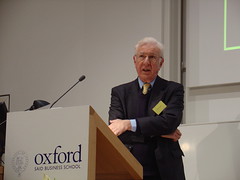
Richard Layard
Originally uploaded by Andy Miah
This blog has been rather quiet - or to be more honest - dead for some time now. My apologies for that. One of my New Year´s resolutions is the following: one post and one post only per week.

The new focus: things making us happier. That takes me back to the name of this blog. My favourite word in the Dutch language, kiplekker, basically means chicken licking good.

I finally made my way through economist Richard Layard´s (pic) classic Happiness: Lessons from a New Science (2005). Layard´s basic argument is that the obstacles we once had for using people´s feelings as a measure of societal success are more or less removed. Brain research today gives us enough evidence to measure happiness and well being. This provides us with an opportunity to move further from economic growth and behaviorism that have driven politics for ages now.

Layard stresses one of the things that we work with a lot at Demos Helsinki: that even if all the material things are well, we are more affluent than we have ever been, that does not result to happiness. In a way we as societies are failing the ultimate test: are we building societies where people do well? Every day greater numbers of people feel like they lack a sense of self, skills to deal with their feelings and a sense of relevance in relation to others. Layard puts special emphasis on issues such as helping the poor of the world, reducing unemployment, treating mental illnesses, finding new measuring criteria next to economic growth and supporting family life as ways to happier societies.

So the blog goal is now set for 2010: once a week a post over a phenomenon, project, advertisement, person, website, sports club that is enough reason to get excited about. There´s one more criteria.

The things covered need to answer YES to the following:
Does it create happiness?
and NO to the following:
Does it harm others?
And finally YES to the following (question taken from Charlie from Make Nubs):
Is it fresh?

More to follow.

Saturday, August 29, 2009

Immigration is a question of resources


We at Demos Helsinki (together with the centre liberal think tank e2) organised this week a future course for Finnish decision makers on immigration policy and the future of Finland. By focusing on the year 2030 we wanted to stress the fact that diversification will happen and it forces the society to rethink both cohesion and welfare. Detaching the participants from the current challenges, starting from 20 years from now and then counting backwards demonstrated well to them that change is possible as well as needed. Already in 2025 Finland is expected to have 500 000 pensioners and 300 000 immigrants more than currently.

We asked the twenty participants to narrow the outcomes into statements, which will be developed into a larger publication during the fall. Here are the outcomes:

It´s about resources.
Immigration cannot be solved purely as a question of attitudes and tolerance. It is fairer for all to talk about resources and needs. Immigration is already part of Finnish reality. Immigration will not save nor destroy Finnish welfare state but it offers a possibility for starting a rethinking process on welfare.

The work place needs to change.
Change is needed more in the work place and in professional communities than in the individual immigrant. Transformation training is needed in organisations faced with diversity. In order to open up the strong Finnish social networks we need financial support for extracurricular activities (sports, hobby clubs) around and within culturally diverse companies and public organisations. In order to speed up change, affirmative action can be used as a tool in recruitment for professions such as police officers and teachers (encounter professions).

We need a joint, hopeful future.
There is need for an inspirational concept of a Finnish future that is based on rights, responsibilities and goals of a better shared daily life. The best possible brand for Finland is created through happy people and communities. We need stricter equality politics in order to build a shared and fair future.


We need to learn Russia.
Understanding Russia and Russian are crucial for understanding immigration. Finland has already loads of unused competence on the issue, mutta purely mobilising that is not sufficient. There is a need to update the stuffy and narrow ideas of Russia into more exciting ones.

Politics of experimentation
We need courage to live with uncertainty. We need to openly acknowledge that we do not know what works. We need more research and more experimental politics. We need to support also unclear organisations.

Good Finland, happy families

We need to bring families to the core of diversity politics. Finland needs to strive to be the place for the happiest childhood on the planet without forcing families into uniformity. Schools need to be used as buildings and communities for parental volunteerism and non-governmental work such as hobbies, sports and clubs. Taking part in pre-school education only part time of the week needs to be possible in order to support various ways of combining work and parenting.

Tuesday, July 28, 2009

Are You Being Served?


waiter
Originally uploaded by ariadust
The encounters with America´s service culture from the last couple of days that do not stop baffling me.

1. Gas Station
As we pull out of the car wash at Shell, a Mexican man steps in front of the car. He takes his cloths and swipes the car windows clean. He does not speak a word of English. As he finishes, the driver opens the door and hands him a couple of bucks.
"Is this guy working for Shell", I ask from the back seat.
"No, no."
"So are you obliged to pay him, like can you drive just by?"
"You can but that would be rude."
"So Shell is fine with him being there?"
"I guess, he might be like a friend of the owner or just someone needing to make a living."

2. Taxi
"You know the flat rate, yes? 45 dollars to the airport, 5 dollars for tolls", the driver explains as we head towards JFK. "And of course the tips", he says with a grin. "Tips are important."
The man turns up to be Ukrainian and to put it mildly, social. He tells us about vodka drinking, holidays at the Krim, complains about New York drivers - whilst constantly jumping the line and causing near-death experiences for us all in the back seat. He just does not stop talking.
This turns up to be the worst taxi ride during our couple of days in New York. We take a deep breath as he unloads our bags.
We tip him 10 dollars. "You have to", I am told.

3. Clothing shop
A young man walks over to me as I go through the pile of pique shirts.
"Hi, how are you? Let me know if you need help in finding your size. If you wanna try on those shirts on your hand now, I can just go and set up the changing room for you. My name is Mark."
As he heads off to set things up, another salesperson walks up to me and starts:"Let me know if I can help you in any way, we have more sizes in the back."
"Thanks. Your colleague was actually helping me already."
I end up buying one of the shirts and head to the register. The chirpy sales girl calls me to her.
"Hi, how are you? Having a good day?"
"Yes, thanks, you."
"Great, great. Did you find everything OK? Was someone helping you today?"
"Uhm...Yes, I think his name was Mark."
She glances down to the staff list next to the register and puts in the code. "Great, thanks. Here´s your bag and have a good one!"
At the door a lively woman greets us farewell. "You guys have a great day now."
I am being told outside that Mark just got a commission point for my shirt.

4. Restaurant
A young African-American woman greets us and checks that our reservation is OK. "Welcome. My colleague will show you to your table. Have a good evening."
The white young man dressed in a skinny suit walks us over to our table and seats us - and leaves. Another man dressed in a light blue pique shirt comes over. "How are you all doing? Good. My name is Miguel and I will be your waiter tonight. Here are the menus. Would you want something to drink to start with?"
"Just ice water, thanks."
As Miguel sets off, another Latino man walks over and silently fills our water glasses. As he sets off, another Latino man comes with the forks and knives. In the course of a dinner two other Latino men pass by to fill glasses and clean finished plates. Midway through the dinner a white woman in her thirties dressed in a Hillary-like pantsuit stops by to check that everything is OK. The skinny white man walks around with a notepad, looks at our table and makes some notes as my dish is delayed.
I taste my dish. The duck meat is lukewarm. I feel embarrassed to bring up the subject to the restaurant staff but my American dinner companions encourage me. "You´re paying for it." The previous evening one of them asked to change the ordered dish as she was not fond of the taste. The waiters did this enthusiastically, without charging extra.
They holler Miguel over.
"Everything OK here?"
I go red and feel uncomfortable but cannot escape anymore.
"Well, uhm...sorry to bring this up but my dish feels kind of lukewarm, like it is not straight from the over hot."
"Oh, I am terribly sorry. Let me just take it back to the kitchen."
"Sorry to bring this up."
In the end of our dinner the restaurant fills up and the Latino men - including Miguel - run around like crazy. It takes ages for Miguel to bring our invoice. During all this time the woman and the man at the door look incredibly bored with nothing to do - right next to our table. The young man notices the delay and writes something on his notebook.
We leave a 15% tip.

Wednesday, July 08, 2009

This clip is insane

I don´t know whether to feel sorry for CNN´s Anderson Cooper for having to try and make sense out of Sarah Palin´s PR officer Meg Stapleton or for Ms Stapleton having to explain the actions of her erratic boss. But one thing is for sure: this 5 minutes 49 seconds only proves that no normal logic works for Sarah Palin as a politician.

Next move: we just sit and wait for Levi Johnston´s tell-it-all book on the Palin family.

Wednesday, June 24, 2009

The Doctor Will See You Now


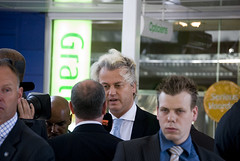
Geert Wilders
Originally uploaded by dmatsui
Having met several Dutch friends over the last two days, there´s been one issue popping up in every chat: the success of anti-Islam populist Geert Wilders and his party PVV. The question is what explains his growing success and what is the needed response.

In the European Parliament elections Wilders´ PVV grew into the second biggest party winning certain key areas such as Rotterdam and The Hague. These are also the cities with some of the highest numbers of people of non-Western descent. His party has now 4 seats in the European Parliament, which is one more than the Greens, the Social Democrats or the two Liberal parties. He is serious business.

His biggest target are the Muslims in the Netherlands. He has has for instance suggested a 5-year ban on non-Western immigration. He has publicly confessed a hatred of Islam.
Wilders´ agenda is largely similar to many other populist parties. His party is basically built around him as the undisputed leader, he makes a clear distinction between himself and "The Hague elite" and says the country has drifted into an "anything goes" sort of cultural relativism. He calls for tough measures and wants the country to declare openly an Judao-Christian value basis.

In the discussions I have had, I have heard different analysis of his support. I find all of them intriguing as they call for different solutions. As one knows from medicine, one needs to identify the illness correctly to ease the pain. There´s no need for surgery, if the problems are psychosomatic.

Analysis 1: The people voting for Wilders are ignorant and only if they would understand that immigration is beneficial for the Netherlands, we would all be better.
Solution: Isolating Wilders from the other political parties and increasing contact between groups.

Analysis 2: Wilders´ support builds on disappointment on one´s fellow citizens. The people voting for him feel like they have been left behind not only by the government but also the people who are doing better.
Solution: The elite needs to sharpen up and use emotional strategies to build a sense of belonging stressing to themselves and to the disappointed people that we are a whole and that we have responsibility for each other.

Analysis 3: We are in a culture war. Wilders represents a different society model, which gains support from a large part of the society. Similarities can be found from the US on issues such as euthanasia, abortion and race.
Solution: Both sides need to sharpen up their argumentation. Wilders´ great challenge is creating an intellectual basis for his policy as the party matures.

I don´t want to take a stand on the matter apart from ruling out number one. I sense an undemocratic flavour in it and find it disturbingly arrogant. I am all for increasing contact but it cannot start from the notion that the other side is seen as a victim of false consciousness.

In some ways I find the emotional aspect quite appealing. A lot of people are feeling scared even when they cannot actually give the fear a name. And for a person in panic, the newcomer is an easy scapegoat. Large parts of the population feel a risk of losing all their life is based on. We as a society need to take these fears seriously. Fear needs to be tackled not only with rationality but with emotion.

This situation should be seen by all parties as a possibility to be clearer on what kind of future you are fighting for. If we really are in a culture war, it is time for everyone to get more clever, sharper and more active. The good thing is that at least until now this dissent on the current rule is channelling largely through elections.

Despite which explanation one follows, one thing remains. It is all about bringing politics back to politics.

Monday, June 22, 2009

Really?

The newspaper has been taking a bad beating lately. On Twitter I get daily tweets on this and that more or less informed thinker stating that in a couple of years the US will only have 2 newspapers left or that the medium as a totality is already beyond saving. It is time to pull the plug, they say.

I understand that argument to a certain extent. Newspapers as they are now are terminally ill. They have allowed themselves to turn into public broadcasters and forgotten that they have a role and responsibility in supporting, inspiring and building a community. They´ve turned into broadcasting media when people want largely the opposite. They have by and large raised themselves above the readers and cut down the return channel.

Building a community does not mean cutting down on journalistic standards. It also does not mean becoming more entertaining or shallow. It means having greater understanding on the people you are serving. Yes, I think journalism largely is a service job. This means newspapers need to take a fresh look on the competencies needed within their staff. Delivering the requested amount of characters on time is just not enough.

Unto Hämäläinen from Helsingin Sanomat has been lately an excellent but rare example of what being a good journalist today means. Whilst writing in-depth, well researched articles for the printed paper, he has hosted a popular yet analytical blog around elections which has gathered a constituency of commentators ranging from the Prime Minister to MPs or regular citizens. This has allowed the newspaper as well its community to gain a better understanding on the various sides of politics.

I would wish that newspapers would take use of the more emotional aspect of why we pay the annual fee. We buy a membership in a community and we wish to be recognised.

I would love them to emphasise that in the era of immediate TV and online coverage, the printed papers do not compete with being fastest but being the most complete and the most reliable. They are like that professor in our family who can explain a complicated subject in a coffee table. They can paint the big picture, show links and the people behind the actions in ways that most media is unable to.

But even more importantly, they have a role in setting the discussions at work, in the families or in the parliament. They introduce subjects to their community - often ones that the community is not expecting. A good newspaper surprises you daily when you find yourself reading something that you did not know that you were interested in.

I mean just from yesterday: ´diversity of Finnish forests´ would not have never emerged to my Google search bar.

Monday, June 08, 2009

Shaken, Yet Still Standing

Yesterday´s elections were quite exciting, I have to say. It is always fantastic and good for democracy when things get shaken. Here a few observations:

- True Finns: Most of Finnish media is making the wrong analysis on this political party. Putting the party leader Timo Soini and his folks in the same category with the Dutch islamophobe Geert Wilders is a misrepresentation of the truth. The policy and popularity of True Finns works much more on the anti-establishment card than on xenophobia. This is quite obvious when you listen to them in debates. The party has a natural attraction amongst poor pensioners or unemployed youth - people feeling abandoned by the illusion we call the welfare state. Taking these fears and this anger seriously is a difficult challenge for the rest of the parties.
And let´s face it: how low would the voting rate have been WITHOUT True Finns? The fact that people wish to express anti-establishment sentiments and disappointment by voting is something we should take joy from.

- SDP: That old poster in the picture tells it all. SDP´s slogan: We will make some noise on your behalf. A political party unable to provide a role for the citizen deserves a defeat. As someone wrote on Facebook today: the problems of this party-turned-institution are the same as the Lutheran Church´s. And it is not saved by recycling Blairite slogans from 1997. Defending the System goes down badly at a time when people are seeking for a sense of involvement and belonging. Yes We Can is not only a disguising slogan for old politics, it means that you actually involve people in making change happen. It is a new way of doing politics and calls for a new way of building trust and communities. If they have the courage, this is a great opportunity for Social Democrats: empowering the people in the margins to be change makers in their own lives.
And let´s face it: we have come far from the 1903 goal on the separation of church and state when the leading man of the Social Democrats is a priest who is not even a member of the party.

- Greens: Good tail wind, have to give them that. I am not really interested in the boxes provided by other parties for the Greens: garden party of the right or the new Communists? This discussion does not really solve anything and is purely an intellectual masturbation exercise of political hacks.
If I would be making strategies for the party, I would try to find ways to diversify the party´s image from the current one: an upper middle-class smart party posse setting themselves above the rest of the society. The Greens should listen carefully to the increasing comments on arrogance and inability to understand other view points. Softening of actions, image and policy might be worth considering.

- National Coalition (Kokoomus): Kokoomus is still the biggest party in Finland although they did not make their target of keeping four seats. The party ran a campaign relying highly on the youthful Minister of Finance and the Minister of Foreign Affairs (neither of whom were running). They ran a campaign focusing on good mood, simplifications and happy-happy-joy-joy - an exemplary campaign of the republic of entertainment.
But the party stumbled in the last weeks when some candidates pushed some content to the surface which did not fit the party line. Cartoon TV ads do not explain away candidates calling immigrants social bums or questioning climate change.
This is the destiny of all parties controlled by spin doctors: there comes a point when you need to realise that you just cannot control it all.

All and all, the results tell a good story. The parties which have invested in their local actions and on bringing new people in did well in these elections. The ones at a loss with their objectives were punished by the voters. This is what we call democracy.