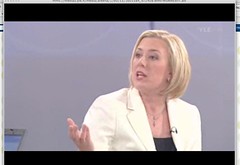
Had a free day today and decided to watch the latest YLE debate for local elections in Finland. For me, having spent last weeks following American elections, the Finnish experience is somewhat disappointing. It is unbelievable how the chairpersons of Finnish political parties tend to forget that the voters in the elections are not the local governments but the people. The Chairs only talk about institutions, infrastructure and government. What people want and what people should do seems to be forgotten both by the politicians as well as the journalists hosting the debate. The great thing YLE, however, have done is bringing the Party Secretaries into the studio to help the Chairs in details.
The weakest from the debaters based on my judgement were the leader of the Greens Tarja Cronberg, leader of the Centre Party Matti Vanhanen and leader of the Social Democrats Jutta Urpilainen. Minister of Labour Cronberg spoke twice in the first hour and is not able to push forward the Green agenda on services and quality of life. She tries to balance urban life and rural areas but gets somewhat confused with all the aspects. She becomes a voice of the government rather than representing the Greens in local politics although she improves her performance towards the end. Prime Minister Vanhanen's problems are somewhat alike. As Prime Minister he seems to act like he would be somewhat above the others and ends up coming across as smug and arrogant and not willing to take any criticism. Opposition leader Urpilainen however falls into the trap of populism. She is not able to answer questions on how Social Democrats would fund their "more, more, more" agenda. Urpilainen also gets unfortunately agitated when pushed into the corner with tough questions.
The winners of the debate are the populist True Finns and the centre liberal National Coalition. They get their ideological message across (True Finns about defenfing the small man and National Coalition on balancing costs and income). Leader of the National Coalition, Minister of Finance Jyrki Katainen manages to stay calm and push through the message that the current government has invested in municipalities. Leader of the centre-right Swedish People's Party, Minister of Culture Stefan Wallin manages also to be clear and talk about caring and climate change.
But the key problem is not between people, it is in the nature of the debate. The most absurd moment was the discussion over a recent poll where 62 % of respondents think that politicians can be bought in urban planning decisions. The reaction of the Party Secretary Jarmo Korhonen:"No Finnish politician can be bought. I know." That's the way Finnish dialogue works.
Overall the discussion stays in concepts only familiar to politicians and very seldom looks into the position of the individual in the changes. Dear leaders, no one uses words such as structure and resource in normal language. It enforces the idea that in order to take part in politics, you need to learn a new language.
Friday, October 24, 2008


Tuesday, October 21, 2008
This Is What This Election Is About
Colin Powell endorsed Barack Obama last Sunday, which was a major blow for the Republicans. Out of the entire interview, this reasoning touches me. This is why they should vote Obama.
Added later the same day: And what I was trying to point out, the phenomenal New York Times columnist Maureen Dowd puts down in the way that only she can. Thanks for the tip, Mr Minnesota.
Monday, October 20, 2008
Printed Element of Surprise
A friend of mine, a great Swedish journalist Arne Ruth, described well a while back the rare quality - some could say unique selling point - that newspapers and magazines possess. According to Arne, the web very seldom leads us to information that we did not know that we were interested in. This is very evident on Google where we seldom bump into stuff that triggers us if we were not specifically looking for it. According to Arne, that is the key selling point of the newspaper. I must say I agree with Arne to a large extent. I am still desperate for a way to cope with the insane amount of content that would still contain an element of unpredictability.
A clear example of this wonderful quality of newspapers was the Guardian of last Friday, which I picked up on my way to a lunch on my free day. While eating my sandwich, I glanced through the news section. Before I got halfway, I threw the newspaper into my gym bag. I bumped into it again on my lazy Sunday and found myself getting completely excited by a big article on the Qur´an. Madeleine Bunting´s and Ziauddin Sardar´s debate on interpretation of the holy book actually taught me new things. Sardar´s radical position of trying to read the Qur´an in a straight forward way, without the historical load really fascinated me.
"For me the Qur´an is a living, dynamic book", Sardar wrote. "This is not just a definition of a believer. It is also a statement about belief...So, with new determination, I say that we Muslims have to teach ourselves to read and think about the Qur´an without the weight of tradition and classical commentaries. Muslim scholars and experts should not exist as gatekeepers, permanently excluding us from using our knowledge and insight to make sense of the Qur´an for ourselves."
Through what kind of Google search would I ever bump into this?
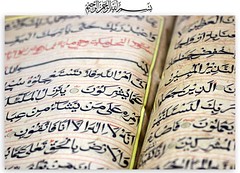
A clear example of this wonderful quality of newspapers was the Guardian of last Friday, which I picked up on my way to a lunch on my free day. While eating my sandwich, I glanced through the news section. Before I got halfway, I threw the newspaper into my gym bag. I bumped into it again on my lazy Sunday and found myself getting completely excited by a big article on the Qur´an. Madeleine Bunting´s and Ziauddin Sardar´s debate on interpretation of the holy book actually taught me new things. Sardar´s radical position of trying to read the Qur´an in a straight forward way, without the historical load really fascinated me.
"For me the Qur´an is a living, dynamic book", Sardar wrote. "This is not just a definition of a believer. It is also a statement about belief...So, with new determination, I say that we Muslims have to teach ourselves to read and think about the Qur´an without the weight of tradition and classical commentaries. Muslim scholars and experts should not exist as gatekeepers, permanently excluding us from using our knowledge and insight to make sense of the Qur´an for ourselves."
Through what kind of Google search would I ever bump into this?
Sunday, October 19, 2008
Sunday
This is very close to being the perfect Sunday song. The amazing Duffy with Jools Holland. There is just nothing that beats a BIG orchestration. The encouragement to love again, to be bold and hopeful even if it seems very difficult is one amazing message. The stubbornness and daring for the pursuit of happiness. That sometimes it means that you make some drastic moves in your life, which may hurt in the beginning in order to gain the well-being that in the end counts. These moves may be about relationships like in the case of the song or about the other main components in our lives such as housing, work and so forth.
I hope this is not only Sunday talking inside me.
Tuesday, October 14, 2008
Monday, October 13, 2008
Old Boys' Club Challenged
Finnish politics just does not stop amusing me. Senior foreign policy experts including some former foreign ministers are currently criticising the current minister Alexander Stubb for too much openness. The situation is so bloody Finnish that it gives me a headache.
The professors and retired politicians are annoyed that Stubb is opening up the diplomatic circle by allowing the daily Helsingin Sanomat to publish assesments of Finnish ambassadors on the status of world politics. Stubb asked these reports following the Georgian conflict and then decided to allow the main daily to publish some of them anonymously.
I read the article based on the reports. There is nothing shocking. The diplomats are divided between more skeptic and more optimistic ones when it comes to Russian relations with the European Union. Some express doubts on the future of the United Nations as a conflict mediator. Some use a bit livelier language such as:
"Finland needs to decrease its dependency on Russian energy. This should be done gradually and quietly, not in a demonstrating manner by fearmongering on the Russian threat. But it needs to be done. The US Marines have a saying:''If you grab them by the balls, their hearts and minds will follow'. i presume the Russian know the proverb too."
So let's get this straight. The Minister paid by us asked civil servants paid by us to assess global politics and then the minister decided to share these reports with us without sharing the names of the ambassadors. Former foreign minister Paasio wonders whether this leads to people thinking twice before telling things to Finnish diplomats. Some of the other commentators have been wondering what it does to our international reputation when diplomats drift away from the country's policy. Come on. Anonymous and differing reports from different corners of the world lead at least in my thinking to greater respect towards the men and women in our diplomatic service. What is better service to the people than allowing us to understand what are the cross currents guiding our foreign policy? I cannot help thinking that it works for some people's benefit to keep up the image that foreign policy is super secretive and not meant for the Joe on the street to understand.

The professors and retired politicians are annoyed that Stubb is opening up the diplomatic circle by allowing the daily Helsingin Sanomat to publish assesments of Finnish ambassadors on the status of world politics. Stubb asked these reports following the Georgian conflict and then decided to allow the main daily to publish some of them anonymously.
I read the article based on the reports. There is nothing shocking. The diplomats are divided between more skeptic and more optimistic ones when it comes to Russian relations with the European Union. Some express doubts on the future of the United Nations as a conflict mediator. Some use a bit livelier language such as:
"Finland needs to decrease its dependency on Russian energy. This should be done gradually and quietly, not in a demonstrating manner by fearmongering on the Russian threat. But it needs to be done. The US Marines have a saying:''If you grab them by the balls, their hearts and minds will follow'. i presume the Russian know the proverb too."
So let's get this straight. The Minister paid by us asked civil servants paid by us to assess global politics and then the minister decided to share these reports with us without sharing the names of the ambassadors. Former foreign minister Paasio wonders whether this leads to people thinking twice before telling things to Finnish diplomats. Some of the other commentators have been wondering what it does to our international reputation when diplomats drift away from the country's policy. Come on. Anonymous and differing reports from different corners of the world lead at least in my thinking to greater respect towards the men and women in our diplomatic service. What is better service to the people than allowing us to understand what are the cross currents guiding our foreign policy? I cannot help thinking that it works for some people's benefit to keep up the image that foreign policy is super secretive and not meant for the Joe on the street to understand.
Thursday, October 09, 2008
Going all ARTE
Just found this video from YouTube by googling StrangerFestival where they interviewed both me and the maker of one of my favourite videos from the competition. Should have worked on my German a bit more in school.
Wednesday, October 08, 2008
The Troubles
"What name did they use in your family, Madam President?"
An innocent question in a discussion between Finnish secondary school students and President Halonen earlier this year on the Finnish civil war led to an unsurprising reaction from the President. She hesitated for a moment, clearly felt uncomfortable to answer and finally said:"red rebellion". Halonen´s reaction to events long before she was born showed how deep the civil war is still especially in the generation of my parents. How it is still, in 2008, more or less leading the list of things people don´t want to talk about.
The small article in Helsingin Sanomat earlier this year describing this moment popped into my mind tonight when listening to Kjell Westö talking about his book Missä kuljimme kerran - one of the most widely read Finnish novels of the last 10 years. The book describing the generation born around 1900 has now been translated into Dutch and Westö was visiting the Finnish Embassy for that occasion. He shared with an audience a comment he heard, which describes to a large extent still the attitude of Finns to the tragic events of 1918 where according to some estimates 37.000 people lost their lives:"We have not discussed that for 100 years and we are definitely not going to start now."
Westö´s book is an important book for me. It helped me understand what my grandparents have gone through, what was the world my parents were born into and why the Finnish identity is the way it is. It also helped me start a discussion with my older relatives on the time before I was born. Westö said tonight beautifully that with his books he attempts to help the audience to remember that there were people on these streets before. He also reminded the audience that even when language played a big issue in the civil war, there were Swedish-speaking and Finnish-speaking people on both sides. The histories of people are more complicated than we often allow ourselves to realise.
I always thought that the tragic incidents of 1918 as well as 1939-1945 are issues that I can talk about with an open and critical mind. I mean I had no part in them. This was until 2004 when in a New York subway an American lady in her 60s asked me and my friends in the middle of a casual conversation:"I just wanted to check. During The War, which side were you on? On our side or the other side?" That uncomfortable feeling of shame, that sudden sweat and the blushing caught us all by surprise. We stuttered and it took us a lot of time to deliver an answer. Maybe Westö was right today when he said that it takes 6 generations before a war turns into another historical event.
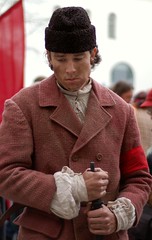
An innocent question in a discussion between Finnish secondary school students and President Halonen earlier this year on the Finnish civil war led to an unsurprising reaction from the President. She hesitated for a moment, clearly felt uncomfortable to answer and finally said:"red rebellion". Halonen´s reaction to events long before she was born showed how deep the civil war is still especially in the generation of my parents. How it is still, in 2008, more or less leading the list of things people don´t want to talk about.
The small article in Helsingin Sanomat earlier this year describing this moment popped into my mind tonight when listening to Kjell Westö talking about his book Missä kuljimme kerran - one of the most widely read Finnish novels of the last 10 years. The book describing the generation born around 1900 has now been translated into Dutch and Westö was visiting the Finnish Embassy for that occasion. He shared with an audience a comment he heard, which describes to a large extent still the attitude of Finns to the tragic events of 1918 where according to some estimates 37.000 people lost their lives:"We have not discussed that for 100 years and we are definitely not going to start now."
Westö´s book is an important book for me. It helped me understand what my grandparents have gone through, what was the world my parents were born into and why the Finnish identity is the way it is. It also helped me start a discussion with my older relatives on the time before I was born. Westö said tonight beautifully that with his books he attempts to help the audience to remember that there were people on these streets before. He also reminded the audience that even when language played a big issue in the civil war, there were Swedish-speaking and Finnish-speaking people on both sides. The histories of people are more complicated than we often allow ourselves to realise.
I always thought that the tragic incidents of 1918 as well as 1939-1945 are issues that I can talk about with an open and critical mind. I mean I had no part in them. This was until 2004 when in a New York subway an American lady in her 60s asked me and my friends in the middle of a casual conversation:"I just wanted to check. During The War, which side were you on? On our side or the other side?" That uncomfortable feeling of shame, that sudden sweat and the blushing caught us all by surprise. We stuttered and it took us a lot of time to deliver an answer. Maybe Westö was right today when he said that it takes 6 generations before a war turns into another historical event.
Tuesday, October 07, 2008
We The Republic
Demos report called Video Republic was just launched at the British Film Institute. The report is fab and written by superb people. Highly recommend refreshing your insight on young people and video. The report makes fascinating recommendations on the way we need to engage with the video republic of the young, what kind of media literacy skills young people need and how we need a serious readjustment of the copyrights system. The project used the StrangerFestival and especially workshops in Romania, Turkey, Finland and the UK as their case studies. I am very proud that it was linked to our initiative.
And all this with just a click - for free. And we even got into The Guardian.
And all this with just a click - for free. And we even got into The Guardian.
Monday, October 06, 2008
Logistics of Aspiration
London always leaves a bit confused. Even when I have visited this town at least a dozen times by now, its promise remains very lucrative. In a way to me London has some of that attraction that in the case of Los Angeles James Frey describes in his book Bright Shiny Morning: that promise of anything being possible, the promise of starting over, the promise of making it. I find myself being very attracted to this city where one can already question whether the default person exists in terms of age, ethnicity or style.
And then there is the London that you only see when you spend time with people who live here. It is those wonderful cafes, those phenomenal people in those lunch parties, its that ambition you catch when you talk to people about their future. Its drinking that last gin tonic at that upstairs bar too late in the evening and biting into that home-made pakora at that cosy kitchen table. Its those discussions ranging from religion in public life to the differences between X Box and Playstation.
And as a journalist this still is the heaven for me in terms of reading. Walking to that newsstand and with only a few pounds accessing the best writing of today. I always come back with lists of books to buy and clippings of superb articles.
And then, yes, then there is the transport. Its that Jubilee Line stopping between stations for 25 minutes, the Circle Line terminating two stations too early, that bus taking ages in crossing the Thames, sweating through those stinking and boiling hot transfer tunnels and that smell of urine from your fellow passenger. Living in Amsterdam I guess makes you into a spoiled brat but spending 90 minutes underground in reaching your destination is not really something that I would see myself doing every morning. It gives you time to read books though.
Now time for bed, tomorrow we are releasing some good thinking.

And then there is the London that you only see when you spend time with people who live here. It is those wonderful cafes, those phenomenal people in those lunch parties, its that ambition you catch when you talk to people about their future. Its drinking that last gin tonic at that upstairs bar too late in the evening and biting into that home-made pakora at that cosy kitchen table. Its those discussions ranging from religion in public life to the differences between X Box and Playstation.
And as a journalist this still is the heaven for me in terms of reading. Walking to that newsstand and with only a few pounds accessing the best writing of today. I always come back with lists of books to buy and clippings of superb articles.
And then, yes, then there is the transport. Its that Jubilee Line stopping between stations for 25 minutes, the Circle Line terminating two stations too early, that bus taking ages in crossing the Thames, sweating through those stinking and boiling hot transfer tunnels and that smell of urine from your fellow passenger. Living in Amsterdam I guess makes you into a spoiled brat but spending 90 minutes underground in reaching your destination is not really something that I would see myself doing every morning. It gives you time to read books though.
Now time for bed, tomorrow we are releasing some good thinking.
Wednesday, October 01, 2008
The Video Republic
On Monday we launch together with Demos a report on youth and video which has been carried out associated to StrangerFestival. From Monday 6 October the report is available for downloading at www.demos.co.uk. I highly recommend reading it. But here as a taster, a video building up the excitement. The report is funded by Helsingin Sanomat Foundation.
Tuesday, September 30, 2008
Kid, Young, Youngish, Aging
Last week at PICNIC I had dinner with someone I have been working with for a year or so. Somehow the discussion drifted into age and aging and I was very surprised by the fact that someone I thought was exactly my age, was significantly younger. Someone I had thought shared the same story of struggling through their 20s, was not even halfway there.
Next to the few jokes made about the age issue, for a moment it threw me off rails. To be exact, my own surprised reaction was more troubling than the age difference. What’s in an age?
I have often been in situations where I am the youngest person and I have found people addressing me in a highly condescending manner. I could list numerous examples where I have got upset by comments such as “oh, you will understand when you are my age’ or ‘you young people’. I just have zero tolerance towards using age difference as a lifeline out of a professional debate. But the dinner last week made me wonder whether I have now gone full circle and started addressing people in a manner that I would not tolerate for a second. Why on earth would it change my approach that there is seven years between me and a colleague?
Due to my work I use the phrase young people several times a day. I use it in discussions, advocacy work, articles and funding applications. But I sincerely hope that last week, I catched myself early enough. I do not want to be that person who looks down on young people with that irritating amusement on their face. I really wish I can be a person who listens without prejudice, who makes judgements based on arguments and who is willing to explain their position to both young and old.
But I also want to recognize that I am getting older. I acknowledge that there are things that just go beyond my taste, my judgement and my understanding. But I wish I can live up to Robert Kennedy’s notion of qualities of youth: "not a time of life but a state of mind, a temper of the will, a quality of the imagination, a predominance of courage over timidity, of the appetite for adventure over the love of ease."

Next to the few jokes made about the age issue, for a moment it threw me off rails. To be exact, my own surprised reaction was more troubling than the age difference. What’s in an age?
I have often been in situations where I am the youngest person and I have found people addressing me in a highly condescending manner. I could list numerous examples where I have got upset by comments such as “oh, you will understand when you are my age’ or ‘you young people’. I just have zero tolerance towards using age difference as a lifeline out of a professional debate. But the dinner last week made me wonder whether I have now gone full circle and started addressing people in a manner that I would not tolerate for a second. Why on earth would it change my approach that there is seven years between me and a colleague?
Due to my work I use the phrase young people several times a day. I use it in discussions, advocacy work, articles and funding applications. But I sincerely hope that last week, I catched myself early enough. I do not want to be that person who looks down on young people with that irritating amusement on their face. I really wish I can be a person who listens without prejudice, who makes judgements based on arguments and who is willing to explain their position to both young and old.
But I also want to recognize that I am getting older. I acknowledge that there are things that just go beyond my taste, my judgement and my understanding. But I wish I can live up to Robert Kennedy’s notion of qualities of youth: "not a time of life but a state of mind, a temper of the will, a quality of the imagination, a predominance of courage over timidity, of the appetite for adventure over the love of ease."
Wednesday, September 24, 2008
Making Sense
First day of networking and learning at PICNIC08 done. Got home at 22.00 after a spontaneous dinner with corporate trend analysts. Great stuff and discussions on how to create governments able to recognise the issues that matter to people. Basically the question was: why is a marketeer able to develop a working model that benefits product development, brand recognition and also profits the individuals taking part? Or more importantly, why governments are not able to do this? More surely to follow on that. As Charlie Leadbeater put it: why does it feel like governments are doing things to us when they claim they are doing things with or for us?
So what else did I grab from today?
- Google is not very good - some even said crap - in suggestings things to us that we were not aware that we are interested in (like for instance newspapers are)
- nearly all creativity requires collaboration but not all collaboration is creative
- "free form internet is a pure myth"
- Aaron Koblin's work on visualising data is amazing (see video above on visualising SMS sending in Amsterdam)
- internet platforms have corrupted the way we use the word friend and the meanings we give to it.
By the way: PICNIC is doing a huge mapping on trends. If you can think of one, let me know by giving a short explanation and an example and I will add it to the mapping exercise they are doing. One I saw added today was sharing rare music via YouTube.
Sunday, September 21, 2008
Prisoners of Broadcasting
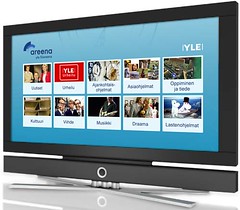
Last Thursday I flew to Helsinki for a reception of the Helsingin Sanomat Foundation, one of the funders of the StrangerFestival. The event started with a seminar on the role of public service in public broadcasting. The discussion on a role of a public service goes to the heart of the Nordic model so it was not a surprise that
a) the seminar gathered all the Finnish big shots in Finnish media
b) the discussion turned very heated when some commercial actors threw punches on YLE, the national public broadcaster
Helsingin Sanomat Foundation picked the subject at a convenient time (and the newspaper continued stirring things in today's paper). YLE has gone threw some rocky waters over the last year with license fee income dropping dramatically, YLE signing an exclusive deal with the American HBO channel and the energetic CEO changing people, reducing staff and increasing subcontracting. But at the same time YLE has grown its market share and is still by far the most trusted news broadcaster. YLE’s turmoil has not been helped by the gossip journalism around the CEO’s private life.
The discussion was bizarre and then again not. When anyone raises discussion around public services, the social democratic jargon kicks in and people start referring to democracy and minorities in a conveniently blurry manner that makes it difficult for the opposite side to continue. Personally I found it a shame – as a supporter of quality public broadcasting - that the argument by many of the defenders of YLE was more or less the following: we need YLE because YLE is needed because YLE provides crucial services and because YLE plays a key role in building a democratic welfare state and because politicians want support the system. This circle argument avoids all specification and making choices.
Even if it would save you in a panel, this argumentation is bad for YLE in the long run. It disregards the problems YLE has in reaching out to younger audiences but also the quality work that is done at YLE in the fields of Finnish drama, culture and current affairs. But I feel the problems go even deeper.
The roles of public broadcasters are currently outlined as educating, informing and entertaining. All these tasks allow the audience to do is the take the message in, enjoy and learn. They exclude all interactive tasks and are by and large the reason why young audiences are zapping to other channels. With the technology and resources public broadcasters have, they could do much better. One could try and let some air into the tasks and think for instance of words like empower, represent, mobilize, voice out, help and encourage. But this would mean radical changes such as opening the conglomerates called YLE, listening to the audiences more, doing programmes in collaboration with stakeholders and acting as a guide through user-generated content.
All and all, I remain a firm supporter of public service media. But I am not sure about the broadcasting.
a) the seminar gathered all the Finnish big shots in Finnish media
b) the discussion turned very heated when some commercial actors threw punches on YLE, the national public broadcaster
Helsingin Sanomat Foundation picked the subject at a convenient time (and the newspaper continued stirring things in today's paper). YLE has gone threw some rocky waters over the last year with license fee income dropping dramatically, YLE signing an exclusive deal with the American HBO channel and the energetic CEO changing people, reducing staff and increasing subcontracting. But at the same time YLE has grown its market share and is still by far the most trusted news broadcaster. YLE’s turmoil has not been helped by the gossip journalism around the CEO’s private life.
The discussion was bizarre and then again not. When anyone raises discussion around public services, the social democratic jargon kicks in and people start referring to democracy and minorities in a conveniently blurry manner that makes it difficult for the opposite side to continue. Personally I found it a shame – as a supporter of quality public broadcasting - that the argument by many of the defenders of YLE was more or less the following: we need YLE because YLE is needed because YLE provides crucial services and because YLE plays a key role in building a democratic welfare state and because politicians want support the system. This circle argument avoids all specification and making choices.
Even if it would save you in a panel, this argumentation is bad for YLE in the long run. It disregards the problems YLE has in reaching out to younger audiences but also the quality work that is done at YLE in the fields of Finnish drama, culture and current affairs. But I feel the problems go even deeper.
The roles of public broadcasters are currently outlined as educating, informing and entertaining. All these tasks allow the audience to do is the take the message in, enjoy and learn. They exclude all interactive tasks and are by and large the reason why young audiences are zapping to other channels. With the technology and resources public broadcasters have, they could do much better. One could try and let some air into the tasks and think for instance of words like empower, represent, mobilize, voice out, help and encourage. But this would mean radical changes such as opening the conglomerates called YLE, listening to the audiences more, doing programmes in collaboration with stakeholders and acting as a guide through user-generated content.
All and all, I remain a firm supporter of public service media. But I am not sure about the broadcasting.
Wednesday, September 17, 2008
Switch
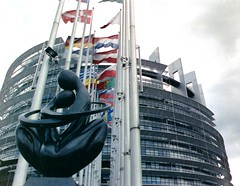
I was asked to speak to our board tonight with the title: what does Europe mean for young people? This is what I said.
---
During my summer holiday I read a great book by a Finnish young philosopher called Tommi Uschanov. The pamphlet by this quite peculiar character is called What is the matter with the Left. In this book that he had apparently been working on for more than six years he wondered why the European left is doing so badly when most of us buy their values of solidarity and compassion nearly to the full. What Uschanov wrote about the Left’s thinking I feel links well to the subject of this intervention. Uschanov claimed that an overall problem of European social democracy has been to tell people that their understanding of themselves and their priorities is wrong and that only if they would understand that they live on false premises, the society would function better. This was very visible in the 1970s idea in the Nordic countries that there is a Social Democrat in all of us.
In my work with young people – once again I wish to stress that I am not part of this group – I meet engaged and worried young people. These people are busy with a million things at the same time on a personal and local scale. The young video makers and fashion designers I meet also seem to be extremely allergic to fake things. If I was asked to describe the generation just shortly, I would dare to state that their jargon tolerance is the lowest of all generations I know. I see people driven by real emotions, real actions and real skills, not by big ideas, great achievements and global movements.
I think this is where it somewhat goes wrong for Europe. When a generation of personal action is coupled with ambitious ideologies, they detach from each other quickly like oil and water. The message being pushed is about big things such as peace and prosperity where people want a role, they want a genuine feeling and they want an emotion. The question I hear is: what should I do with Europe and what does Europe expect me to do? I really don’t have a compelling answer based on the current paradigms.
In the videos I see online on our projects but also on platforms like YouTube, the majority of the videos are not making explicit statements about the state of the world. They are more saying “this is how I think I am feeling today” or “this is what I think matters to me today”. As a research commissioned by the ECF around the StrangerFestival points out, young people use video for deliberation and they very seldom make their work for a specific audience. Video is in most cases a public tool for self exploration.
A superstructure like Europe is not an issue tackled often when it is nothing you can touch, nothing you can strive for and nothing you can influence in your daily practice. Just as an example we can take last year when the European Union celebrated the 50th anniversary of the Treaty of Rome. The message put forward was 50 years of peace. A lot of references were made also to the fall of the Berlin Wall and the progress Europe have made since then. I could not help wondering what this all should mean for an 18-year-old today who was minus 32 when the treaty of Rome was signed and just about born when the wall was hammered down. 50 years of peace and now what? When Europe seems to be a deteriorating mega project, it is very difficult to get excited.
Coming back to Uschanov, I feel we need a switch in our thinking. Young people are not stupid and don’t buy Europe when you attach a popstar to it. Europe needs to be demystified and it needs to start from people’s realities. What this video culture offers us, is this pool of deliberations for us to dive into. Now what we are mostly doing is asking them to adjust their reality to a supersystem without no practical implications.
So what could be done? I would have two suggestions:
1. Provide access for more young people. If we want to see a Europe that goes to the skin and feels like something, we need to make sure that more people are involved. With this I mean work that we do for instance with theoneminutesjr by providing access to culture, supporting self-esteem to enter the public sphere and in that sense tackling the symbolic inequality in the public sphere created mostly by white heterosexual men. But we need to allow people to decide what matters to them, which brings me to my second point.
2. And this is more difficult: We need to support connections and curation and help people – both young and old – to make sense and find their place. We need to build links between strangers but on matters that matter to them. This does not mean that people need to agree but we need to work towards exposing commonalities in interest. We need to allow people – young and old - to test, modify and attach rather than buy a message about a superproject. When you start from something that matters to the people, you are already more than half way there. And when these millions of expressive people with millions of aspirations happen to be in Lisbon, Pieksämäki and Cluj, I bet there is a feeling of being part of something bigger than our own village. I really think free self-expression is the key: if I matter to Europe, Europe could matter to me.
---
During my summer holiday I read a great book by a Finnish young philosopher called Tommi Uschanov. The pamphlet by this quite peculiar character is called What is the matter with the Left. In this book that he had apparently been working on for more than six years he wondered why the European left is doing so badly when most of us buy their values of solidarity and compassion nearly to the full. What Uschanov wrote about the Left’s thinking I feel links well to the subject of this intervention. Uschanov claimed that an overall problem of European social democracy has been to tell people that their understanding of themselves and their priorities is wrong and that only if they would understand that they live on false premises, the society would function better. This was very visible in the 1970s idea in the Nordic countries that there is a Social Democrat in all of us.
In my work with young people – once again I wish to stress that I am not part of this group – I meet engaged and worried young people. These people are busy with a million things at the same time on a personal and local scale. The young video makers and fashion designers I meet also seem to be extremely allergic to fake things. If I was asked to describe the generation just shortly, I would dare to state that their jargon tolerance is the lowest of all generations I know. I see people driven by real emotions, real actions and real skills, not by big ideas, great achievements and global movements.
I think this is where it somewhat goes wrong for Europe. When a generation of personal action is coupled with ambitious ideologies, they detach from each other quickly like oil and water. The message being pushed is about big things such as peace and prosperity where people want a role, they want a genuine feeling and they want an emotion. The question I hear is: what should I do with Europe and what does Europe expect me to do? I really don’t have a compelling answer based on the current paradigms.
In the videos I see online on our projects but also on platforms like YouTube, the majority of the videos are not making explicit statements about the state of the world. They are more saying “this is how I think I am feeling today” or “this is what I think matters to me today”. As a research commissioned by the ECF around the StrangerFestival points out, young people use video for deliberation and they very seldom make their work for a specific audience. Video is in most cases a public tool for self exploration.
A superstructure like Europe is not an issue tackled often when it is nothing you can touch, nothing you can strive for and nothing you can influence in your daily practice. Just as an example we can take last year when the European Union celebrated the 50th anniversary of the Treaty of Rome. The message put forward was 50 years of peace. A lot of references were made also to the fall of the Berlin Wall and the progress Europe have made since then. I could not help wondering what this all should mean for an 18-year-old today who was minus 32 when the treaty of Rome was signed and just about born when the wall was hammered down. 50 years of peace and now what? When Europe seems to be a deteriorating mega project, it is very difficult to get excited.
Coming back to Uschanov, I feel we need a switch in our thinking. Young people are not stupid and don’t buy Europe when you attach a popstar to it. Europe needs to be demystified and it needs to start from people’s realities. What this video culture offers us, is this pool of deliberations for us to dive into. Now what we are mostly doing is asking them to adjust their reality to a supersystem without no practical implications.
So what could be done? I would have two suggestions:
1. Provide access for more young people. If we want to see a Europe that goes to the skin and feels like something, we need to make sure that more people are involved. With this I mean work that we do for instance with theoneminutesjr by providing access to culture, supporting self-esteem to enter the public sphere and in that sense tackling the symbolic inequality in the public sphere created mostly by white heterosexual men. But we need to allow people to decide what matters to them, which brings me to my second point.
2. And this is more difficult: We need to support connections and curation and help people – both young and old – to make sense and find their place. We need to build links between strangers but on matters that matter to them. This does not mean that people need to agree but we need to work towards exposing commonalities in interest. We need to allow people – young and old - to test, modify and attach rather than buy a message about a superproject. When you start from something that matters to the people, you are already more than half way there. And when these millions of expressive people with millions of aspirations happen to be in Lisbon, Pieksämäki and Cluj, I bet there is a feeling of being part of something bigger than our own village. I really think free self-expression is the key: if I matter to Europe, Europe could matter to me.
Monday, September 15, 2008
Fierce TV
One of my regular joys is the New York Times series of podcasts based on their TimesTalks events. As the advertising for the podcast says, it is a series of "compelling conversations" between New York Times editors and their guests. I think the best one I have heard by now was the one with Madeleine Albright on power but they never manage to disappoint me.
The latest podcast was with Lauren Zalaznick, the Director of the Bravo TV channel, and Tim Gunn and Gail Simmons from their programmes. Tim Gunn is the coach in Project Runway, I believe the biggest hit of the channel. Simmons is a judge from Top Chef.
I highly recommend listening to the podcast. Zalaznick sheds light to the way their programmes differ from normal "intervention" reality television and how the changes in television threaten the dominance of the big networks. Zalaznick talks about how Bravo bases its programming on excellence, professionals and people driven by a desire - whether fashion or comedy. Gunn and Simmons talk about how their programmes helps people to understand professionalism and talk in a new way about food and fashion.
I like Bravo, I really do. I watched quite a lot of it while on holiday in the US. The channel is genuinely feel good and free from cynicism. It is about fascinating people doing the only thing they can see themselves doing - great example being Kathy Griffin and her show My Life on the D-List.
Bravo is a good example of clever programming and profiling. It caters for a diverse audience but still manages to put a Bravo label on the programmes. It is not trying to be the most intellectual channel but manages to bring very different people together.
The interview is also a clever example of dedication to understand television. It is a rare example of printed journalism where the journalist actually want to understand television and dares to say she loves television. Highly recommended (easily subscribed through iTunes).

The latest podcast was with Lauren Zalaznick, the Director of the Bravo TV channel, and Tim Gunn and Gail Simmons from their programmes. Tim Gunn is the coach in Project Runway, I believe the biggest hit of the channel. Simmons is a judge from Top Chef.
I highly recommend listening to the podcast. Zalaznick sheds light to the way their programmes differ from normal "intervention" reality television and how the changes in television threaten the dominance of the big networks. Zalaznick talks about how Bravo bases its programming on excellence, professionals and people driven by a desire - whether fashion or comedy. Gunn and Simmons talk about how their programmes helps people to understand professionalism and talk in a new way about food and fashion.
I like Bravo, I really do. I watched quite a lot of it while on holiday in the US. The channel is genuinely feel good and free from cynicism. It is about fascinating people doing the only thing they can see themselves doing - great example being Kathy Griffin and her show My Life on the D-List.
Bravo is a good example of clever programming and profiling. It caters for a diverse audience but still manages to put a Bravo label on the programmes. It is not trying to be the most intellectual channel but manages to bring very different people together.
The interview is also a clever example of dedication to understand television. It is a rare example of printed journalism where the journalist actually want to understand television and dares to say she loves television. Highly recommended (easily subscribed through iTunes).
Wednesday, September 10, 2008
Finland Lived From The Forest
As I was cycling today to the office, my phone beeped:"Check www.hs.fi when you get in to work...ugly day for finnish paper!" I sort of knew what was happening. During the last years the only news related to Finland´s pre-Nokia core business have been closures and strikes. But today´s news was in its own league: both Stora Enso and UPM are closing down several units leaving over 2.000 people unemployed.
But the tragedy does not end here. When an IT-company fires people in the capital region, the employees have still a big sea for job-hunting. But when an industry such as paper and carton closes down a unit, they by and large close down a town. In towns like Kainuu, Valkeakoski and Imatra more or less the whole community is linked to the unit. What starts with the factory workers, will be soon knocking on the doors of shop keepers, sub contractors and truck drivers. Social workers have a busy time ahead.
The most grotesque side of things is how capitalism works in these situations. The stocks bounce up in record-breaking numbers and the analysts congratulate the management for their boldness. For the paper worker with a big mortgage in Imatra it must be like kicking the one already down.

But the tragedy does not end here. When an IT-company fires people in the capital region, the employees have still a big sea for job-hunting. But when an industry such as paper and carton closes down a unit, they by and large close down a town. In towns like Kainuu, Valkeakoski and Imatra more or less the whole community is linked to the unit. What starts with the factory workers, will be soon knocking on the doors of shop keepers, sub contractors and truck drivers. Social workers have a busy time ahead.
The most grotesque side of things is how capitalism works in these situations. The stocks bounce up in record-breaking numbers and the analysts congratulate the management for their boldness. For the paper worker with a big mortgage in Imatra it must be like kicking the one already down.
Monday, September 08, 2008
Responsible Visuals
I love those chats that you cycle to with strategy X and you realise after 30 seconds that this is going to be much more interesting. I met today with Eboman who performed at StrangerFestival´s opening. We discussed possibilities for working together. I expected to hear a lot about technology that I do not and will not understand and ended in a discussion on privacy and civility.
We discussed an idea which will be featured in the up-coming DEMOS report as well: the role of remixing and sampling in giving people tools for self-expression. As Eboman´s work shows, creative use of existing content gives him more tools as an artist. We were brainstorming on equipping young people, NGOs and what have you with better and easier tools for visual interaction, self-reflection and social commentary. I think we need to tackle this issue for different directions: when Eboman comes from the media arts corner, for instance Tactical Tech are doing their share from their corner.
Some people mentioned after Eboman´s performance at StrangerFestival that they were concerned about using intimate and sensitive material for sampling. I felt a bit awkward mentioning this to him today but the response was very different than I would have expected: as an information activist he was not taken back and stressed the role of these kind of examples in fostering debate on what we should put online, how others can use our material and what are the "houserules" of sampling.
As I cycled home, this Monday had turned much better than expected. I really felt inspired by developing ways for StrangerFestival to be in the frontline in equipping people with better tools for social visual literacy and commentary.
Friday, September 05, 2008
Microwave Dish
This week I have been reading Tommi Uschanov´s incredibly brilliant and sharp pamphlet on the false argumentation of today´s Left. Uschanov is a Finnish philosopher and journalist who has been composing his statements over the last 5-10 years. The book is fascinating as Uschanov tears the Left´s argumentation into pieces and accuses them of complete misunderstanding of Marx.
Uschanov is not alone with this confusion and disappointment. So are the voters. One should have spent the last decade in a barrel to not notice how Social Democrats lose elections in Denmark, Sweden, Finland, Italy,… - list could be continued forever. At the same time the French Socialists lose the presidency to Sarkozy, Finnish big cities are governed more and more by Conservative mayors, Boris Johnson rules over London and Angela Merkel leads the coalition government of Germany.
In most countries the Left – once the defender of the working man and international solidarity – has become a machine led by middle-aged pompous men, heavily linked to trade unions (also led by pompous middle-aged men), an advocate of nuclear power and the biggest anti-globalisation movement. The former leaders of the “party of the people” turn into lobbyists for multinational energy corporations. The party that marched people in their early 30s into ministers in the 1970s is now the (only) movement having a City Council group in Helsinki with the average age of 60.
It is true that many issues such as workers´ rights are achievements of the Social Democrats´s struggle but over the last years the Social Democrats have become the Conservative Establishment – the ones with their foot on the break against change - of many European countries.
It seems like the Social Democrats by and large are out of batteries. In Finland I was reading interviews with the new leader of the Finnish Social Democrats, a woman of my age. Jutta Urpilainen´s mission was to take her party to the centre of the political field, get more active on climate change, invest in families, consult people across the country and attach the word “new” in front of the name of her party. It was somehow disappointing to see that all the ideas are luke-warm copies of concepts executed by others 10 years ago. Becoming like everyone else is not the best exercise for better branding. Everything she was trying to offer as new felt pre-chewed, pre-cooked and recycled.
They say that one needs a real crisis in order for new ideas to emerge. But for Marx´s sake, how long does this take to have again a cool, up-to-beat, engaged and passionate left? Even as someone not being a Social Democrat, I miss decent action and debate.

Uschanov is not alone with this confusion and disappointment. So are the voters. One should have spent the last decade in a barrel to not notice how Social Democrats lose elections in Denmark, Sweden, Finland, Italy,… - list could be continued forever. At the same time the French Socialists lose the presidency to Sarkozy, Finnish big cities are governed more and more by Conservative mayors, Boris Johnson rules over London and Angela Merkel leads the coalition government of Germany.
In most countries the Left – once the defender of the working man and international solidarity – has become a machine led by middle-aged pompous men, heavily linked to trade unions (also led by pompous middle-aged men), an advocate of nuclear power and the biggest anti-globalisation movement. The former leaders of the “party of the people” turn into lobbyists for multinational energy corporations. The party that marched people in their early 30s into ministers in the 1970s is now the (only) movement having a City Council group in Helsinki with the average age of 60.
It is true that many issues such as workers´ rights are achievements of the Social Democrats´s struggle but over the last years the Social Democrats have become the Conservative Establishment – the ones with their foot on the break against change - of many European countries.
It seems like the Social Democrats by and large are out of batteries. In Finland I was reading interviews with the new leader of the Finnish Social Democrats, a woman of my age. Jutta Urpilainen´s mission was to take her party to the centre of the political field, get more active on climate change, invest in families, consult people across the country and attach the word “new” in front of the name of her party. It was somehow disappointing to see that all the ideas are luke-warm copies of concepts executed by others 10 years ago. Becoming like everyone else is not the best exercise for better branding. Everything she was trying to offer as new felt pre-chewed, pre-cooked and recycled.
They say that one needs a real crisis in order for new ideas to emerge. But for Marx´s sake, how long does this take to have again a cool, up-to-beat, engaged and passionate left? Even as someone not being a Social Democrat, I miss decent action and debate.
Tuesday, September 02, 2008
Scary Little Thing Called Hope
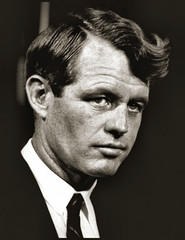
If I would ever call someone my hero, Robert F. Kennedy would be on top of that list. Having just finished Thurston Clarke´s magnificent new book The Last Campaign on his presidential bid leading to his assassination in Los Angeles in 1968, my fondness towards this exceptional politician just grew stronger. Clarke - like a good journalist does - had combined extensive literary research and interviews with RFK staff with meeting normal Americans who met him often very briefly. Clarke´s ambition with the book is to explain why Robert F. Kennedy gave such hope to people and why his death is often seen as the end of politics of hope.
I admire RFK for his peculiarity and strength in idealism. He is characterised as a shy and slightly awkward person with a tendency to come across as arrogant. In his earlier years he made some drastic mistakes in his career such as approving the wiretapping of Martin Luther King but he did not allow this to stop him from changing course. As he beautifully explained his U-turn in terms of agenda when running for president, a previous misjudgement is no excuse for its continuation. He dared to be human, show emotions and admit having been wrong.
I am still most struck by the way he was moved by seeing people suffering, which often led him manically talking about the living conditions of African Americans in the Mississippi Delta or Native Americans in the reservations. He dared to step outside the normal "on the other hand" language and used words like immoral, right and wrong. According to his staff and the people who met him, Kennedy had an exceptional capacity to understand people´s conditions and see himself living in the same situation. He was driven into anger by the injustice and poverty within the United States, which led him to step on many toes, make unneccessary enemies and act in haste. He talked often about the equality of sacrifice if America wants to become truly one nation. This was for instance the reason why he was against freeing college students from Vietnam drafts. He explained his position simply on this issue as well in moral terms.
What makes him even more fascinating is that he was no softy social democrat when it came to politics. He always saw work-based assistance as the best way for people to lift themselves and their families out of poverty with still keeping their dignity. In the same way he had zero tolerance towards lawlessness - whether carried out by the ones oppressing or being oppressed.
When reading the descriptions of the emotions he generated especially in the African American and Latino communities, I find myself wondering how wonderful but scary hope is when it is truly released. People saw Kennedy as the man who could change things to an extent that threatened his life, made him lose shoes and shirts while making his way through crowds and made the establishment extremely worried. He was giving people a role and seeing them as the ones needed to change the course of America. As many of his opponents said in 1968, they were afraid of RFK as he was seen as someone who really would carry out his ideas on redistribution of wealth.
One only wonders what the world would be today if this man would have lived to be president and could have executed his dream of "taming the savageness of man and making gentle the life of this world." And why we have never seen a leader of his league after that.
I admire RFK for his peculiarity and strength in idealism. He is characterised as a shy and slightly awkward person with a tendency to come across as arrogant. In his earlier years he made some drastic mistakes in his career such as approving the wiretapping of Martin Luther King but he did not allow this to stop him from changing course. As he beautifully explained his U-turn in terms of agenda when running for president, a previous misjudgement is no excuse for its continuation. He dared to be human, show emotions and admit having been wrong.
I am still most struck by the way he was moved by seeing people suffering, which often led him manically talking about the living conditions of African Americans in the Mississippi Delta or Native Americans in the reservations. He dared to step outside the normal "on the other hand" language and used words like immoral, right and wrong. According to his staff and the people who met him, Kennedy had an exceptional capacity to understand people´s conditions and see himself living in the same situation. He was driven into anger by the injustice and poverty within the United States, which led him to step on many toes, make unneccessary enemies and act in haste. He talked often about the equality of sacrifice if America wants to become truly one nation. This was for instance the reason why he was against freeing college students from Vietnam drafts. He explained his position simply on this issue as well in moral terms.
What makes him even more fascinating is that he was no softy social democrat when it came to politics. He always saw work-based assistance as the best way for people to lift themselves and their families out of poverty with still keeping their dignity. In the same way he had zero tolerance towards lawlessness - whether carried out by the ones oppressing or being oppressed.
When reading the descriptions of the emotions he generated especially in the African American and Latino communities, I find myself wondering how wonderful but scary hope is when it is truly released. People saw Kennedy as the man who could change things to an extent that threatened his life, made him lose shoes and shirts while making his way through crowds and made the establishment extremely worried. He was giving people a role and seeing them as the ones needed to change the course of America. As many of his opponents said in 1968, they were afraid of RFK as he was seen as someone who really would carry out his ideas on redistribution of wealth.
One only wonders what the world would be today if this man would have lived to be president and could have executed his dream of "taming the savageness of man and making gentle the life of this world." And why we have never seen a leader of his league after that.
Subscribe to:
Posts (Atom)


 Posts
Posts


